


From Argo Astronautics | Max Crew4 | In-Game Status Flight Ready
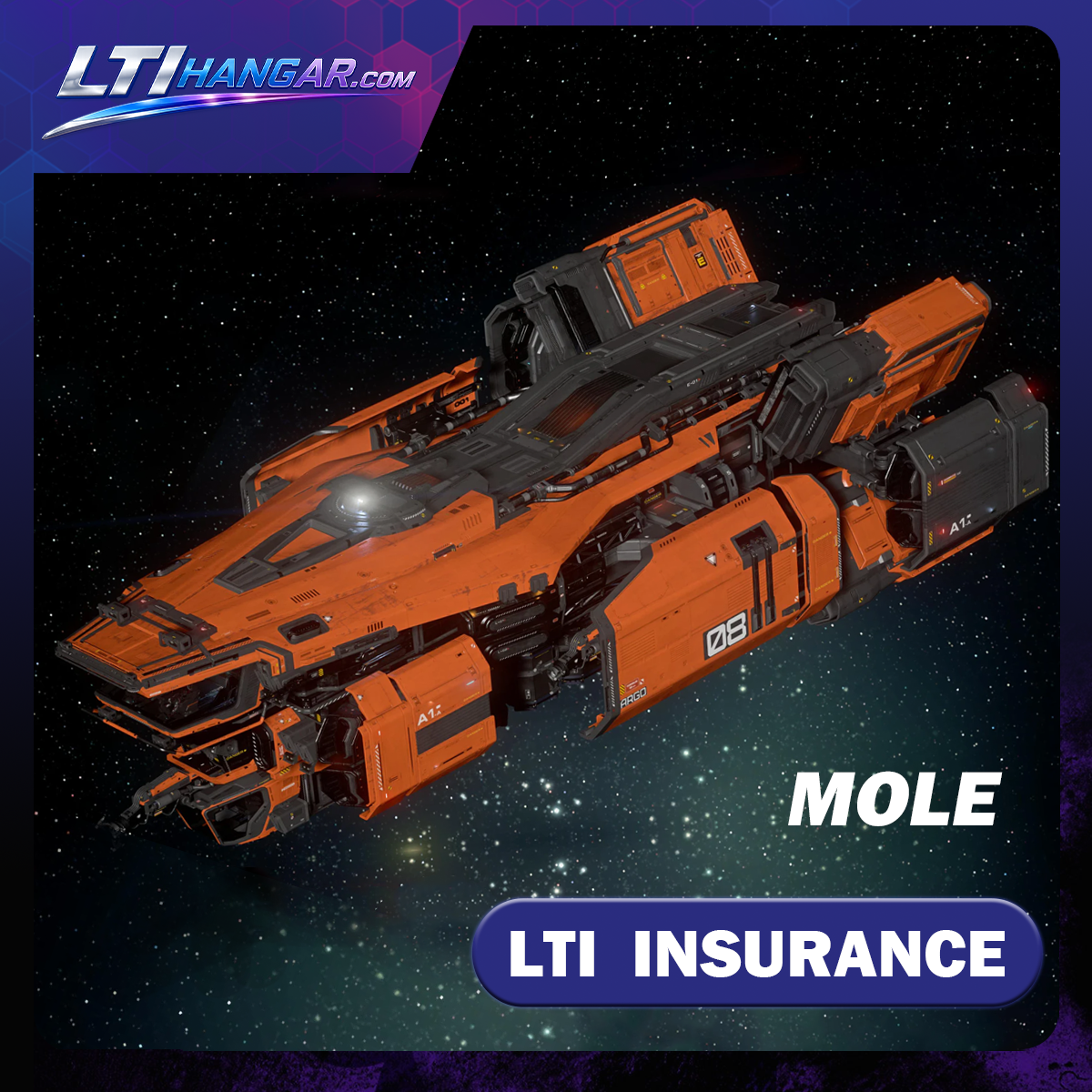
MOLE - Standalone Ship
Consultez nos délais de livraison.
aUEC Star Citizen : livraison en 3 à 5 minutes.
Vaisseaux Star Citizen : livraison généralement sous 20 à 30 minutes, 12 heures maximum.
CCU Star Citizen : livraison généralement sous 20 à 30 minutes, 12 heures maximum.
Paints Star Citizen : livraison généralement sous 5 minutes, 12 heures maximum.
Items Star Citizen : livraison généralement sous 5 minutes, 12 heures maximum.
Comment claim vos Ships, CCU, Paints et Items Star Citizen
Pour accepter cet item, vous devez avoir un compte sur robertsspaceindustries.com. L’accès à Star Citizen nécessite un Game Package.
Toutes les commandes seront envoyées à l’adresse e-mail utilisée lors du paiement. Vous recevrez un e-mail intitulé « Someone sent you a gift from Roberts Space Industries », envoyé par no-reply@robertsspaceindustries.com.
Ouvrez l’e-mail, puis cliquez sur le bouton bleu « Claim Gift » pour claim votre commande.
Si vous souhaitez recevoir votre commande sur un autre compte RSI que celui lié à l’e-mail fourni, connectez-vous simplement au bon compte RSI dans un autre onglet avant de claim l’item. Pensez à rafraîchir la page RSI pour vérifier que vous êtes bien connecté au bon compte.
Si vous achetez cet item comme cadeau, faites un clic droit sur le bouton bleu « Claim Gift », puis copiez l’adresse du lien. Assurez-vous d’être déconnecté de votre propre compte RSI afin de ne pas claim l’item par erreur.
Instructions de sécurité importantes
ATTENTION : tous les Ships et Items ne peuvent être gift qu’une seule fois.
Une fois claim, l’item — Ship, CCU, Paint, Armor, Weapon, etc. — est définitivement lié au compte qui l’a accepté.
Veuillez donc vérifier avec attention que vous êtes connecté au bon compte RSI avant de claim votre Gift Email.
Assurez-vous d’être connecté, dans le même navigateur, au compte RSI sur lequel vous souhaitez recevoir l’item avant de cliquer sur « Claim Gift ».
Nous ne sommes pas responsables si vous claim l’item sur le mauvais compte RSI.
Comment apply un CCU (Ship Upgrade)
Si vous avez acheté un Cross Chassis Upgrade (CCU) pour upgrade un Ship vers un autre, voici les étapes à suivre :
1. Claim l’item
Suivez les étapes de livraison ci-dessus pour ajouter le CCU à votre RSI Hangar.
2. Trouver le CCU dans le Hangar
Allez dans la section « My Hangar » sur le site RSI.
3. Apply Upgrade
Cliquez sur la flèche à côté de votre CCU pour ouvrir les détails, puis cliquez sur « Apply Upgrade ».
Choisissez le « Source Ship » que vous souhaitez upgrade, puis entrez votre mot de passe RSI pour terminer le processus.
Note importante :
L’assurance, comme la LTI, ainsi que les autres bonus du Ship de base seront conservés et transférés vers le nouveau Ship.
Un upgrade d’un Ship moins cher vers un Ship plus cher peut nécessiter plusieurs CCU.
Par exemple, si vous achetez un upgrade de Merchantman vers Polaris, nous vous enverrons deux CCU : Merchantman vers Hammerhead, puis Hammerhead vers Polaris.
Plus l’écart de prix est grand, plus vous pouvez recevoir de CCU à apply.
Achetez en toute confiance : protection client
Protection d’achat
Lorsque vous passez commande sur notre site, nous vous garantissons que vous recevrez l’item correct, conforme à sa description.
Si nous ne pouvons pas livrer l’item commandé, nous vous proposerons un remplacement ou un remboursement intégral, selon votre préférence.
Protection après-vente
Tous les items proposés sur notre site proviennent de notre propre stock et sont couverts par notre protection après-vente.
Si un problème survient pendant la livraison, ou dans un délai allant jusqu’à 6 mois après la livraison, nous effectuerons une vérification.
Si le problème est confirmé comme étant de notre responsabilité, nous vous proposerons un remplacement ou un remboursement.
Selon la situation, cela peut prendre la forme d’un remplacement complet, d’un remboursement intégral ou d’un upgrade vers un meilleur item si le remplacement exact n’est pas disponible.
Assistance client 24h/24 et 7j/7
Bénéficiez d’un support en ligne 24h/24 et 7j/7.
Questions, assistance ou besoin d’une solution rapide ? Notre équipe est toujours disponible pour vous aider. À tout moment, nous sommes à un clic de vous.
Rejoignez notre Discord dès maintenant et découvrez la différence LTI Hangar !
En stock · Livraison via RSI Gift · Livraison en moyenne sous 20 min

Contact our Discord live support; we are online 24/7.

Pourquoi les joueurs choisissent LTI Hangar
Livraison rapide de Ships, vrai support client, et processus de RSI Gift clair — pensé pour les joueurs Star Citizen qui veulent une expérience d’achat plus simple et plus fluide.
Livraison moyenne en 20 à 30 min
Support Discord 24/7
Équipe de gamers avec plus de 10 ans d’expérience
Achat sécurisé · Stock propre · Aucun vendeur tiers
Support après-vente fiable
Suivi de commande en temps réel
FAQ — Questions fréquentes
Combien de temps prend généralement la livraison ?
Les commandes de Ships, CCU, Paints et Items Star Citizen sont généralement livrées sous 20 à 30 minutes.
Dans de rares cas, la livraison peut prendre jusqu’à 12 heures en raison du volume de commandes, des limites de gifting RSI, du statut du compte ou d’une vérification manuelle nécessaire.
Dans la plupart des cas, nous ne laissons pas les livraisons de Ships dépasser 12 heures, sauf en cas de problème exceptionnel, comme une limitation du système RSI, une restriction de compte ou une vérification client requise.
Ma commande de Ship est-elle protégée ?
Oui. La sécurité et la fiabilité sont nos priorités absolues.
Tous les Ships vendus par LTI Hangar viennent de notre propre stock. Aucun vendeur externe ni fournisseur tiers inconnu n’intervient dans la commande.
Chaque commande de Ship est traitée avec un suivi clair de la livraison, afin que le processus puisse être vérifié et retracé si notre support doit intervenir.
Nous offrons également une protection après-vente à vie pour les problèmes éligibles liés à la livraison.
Grâce à notre propre stock, à une livraison traçable et à notre protection après-vente, l’achat est plus sûr que sur de nombreuses marketplaces tierces. C’est l’une des raisons pour lesquelles de nombreux joueurs choisissent LTI Hangar pour acheter leurs Ships Star Citizen.
Qu’est-ce que la protection après-vente à vie ?Pourquoi les autres marketplaces ne peuvent-elles pas offrir ce niveau de protection ?
Dans le cas extrêmement rare où un problème survient avec un item pendant la livraison ou à tout moment après celle-ci, nous mènerons une vérification.
Si le problème est confirmé comme étant de notre responsabilité, nous vous proposerons soit un remplacement, soit un remboursement.
Pour nous aider à examiner le cas avec précision, il pourra vous être demandé de nous fournir des preuves pertinentes, comme des screenshots de votre RSI Hangar, les détails de commande ou les logs du RSI Hangar.
Le RSI Hangar Log permet de suivre l’état et l’historique de chaque Ship, notamment si l’item a été claim, échangé, melt, transféré ou modifié d’une autre manière après la livraison.
Nous examinerons les preuves fournies afin de déterminer la cause du problème.
Ce niveau de protection n’est pas courant sur de nombreuses marketplaces tierces, car elles dépendent souvent de vendeurs externes ou de sources de stock mélangées.
Chez LTI Hangar, tous les Ships proviennent de notre propre stock, et chaque commande dispose de records de livraison clairs. Cela nous permet d’offrir un support plus sûr, plus fiable et plus transparent.
Puis-je demander un remboursement après avoir claim le Ship, CCU, Paint ou Item ?
Une fois le RSI Gift claim, le Ship, CCU, Paint ou Item est lié au compte RSI qui l’a reçu.
En raison des limites du système de gifting de Star Citizen, un item déjà claim ne peut normalement pas être gift à nouveau, retourné, annulé ou relivré. Pour cette raison, les items déjà claim ne sont généralement pas éligibles à une annulation ou à un remboursement.
Une correction, un remplacement ou un remboursement ne peut être proposé que si nous confirmons que le problème vient de notre côté, par exemple si un mauvais item a été envoyé, s’il y a eu une erreur de livraison de commande, ou un autre problème de livraison vérifié causé par nous.
Avant de claim le RSI Gift, veuillez vous assurer que vous êtes connecté au bon compte RSI. Une fois le gift claim sur le mauvais compte, il ne peut normalement pas être transféré vers un autre compte.
Que se passe-t-il si le mauvais Ship, CCU, Paint ou Item est livré ?
Si nous confirmons qu’un mauvais item a été livré à cause d’une erreur de notre côté, nous examinerons le cas et proposerons une correction, un remplacement ou un remboursement lorsque cela est applicable.
Veuillez nous contacter avec votre numéro de commande, l’e-mail utilisé lors du paiement, ainsi que des screenshots clairs de votre RSI Hangar.
Pourquoi les noms des Ships Star Citizen que j’ai reçus sont-ils différents ?
Un Standalone CCU’ed est un vaisseau ou un véhicule complet. Ce n’est pas une amélioration à appliquer !
CCU’ed signifie simplement que le vaisseau ou véhicule a été obtenu en améliorant un modèle plus petit vers celui que vous achetez.
Veuillez également noter que, dans l’e-mail cadeau, seul le vaisseau utilisé comme base de l’upgrade sera indiqué. Pas d’inquiétude : le vaisseau qui apparaîtra réellement dans votre hangar sera bien celui que vous avez commandé.
Par exemple, voici à quoi ressemble un Polaris CCU’ed dans le hangar sur le site RSI.
COMMENT ÇA FONCTIONNE
Simple, rapide et sécurisé : découvrez comment ça fonctionne !

EST-CE VRAIMENT SÉCURISÉ ?
La sécurité est notre priorité n°1.
Contrairement à d’autres sites, nous vendons uniquement notre propre stock. Aucun vendeur externe n’est autorisé sur notre plateforme.
Cela garantit un achat plus sûr, une vraie tranquillité d’esprit, ainsi que des livraisons ultra-rapides.

COMMENT FONCTIONNE LA LIVRAISON ?
L’item sera livré via le système de RSI Gift.
Après avoir passé commande, nous enverrons l’item à l’adresse e-mail que vous avez indiquée au checkout.
Une fois le Gift Email reçu, ouvrez-le simplement, puis cliquez sur « Claim ». L’item sera alors ajouté au compte RSI sur lequel vous êtes connecté.

PROTECTION APRÈS-VENTE
Tous les items que nous vendons proviennent de notre propre stock et sont couverts par notre politique de protection après-vente.
Si un problème survient avec un item pendant la livraison, ou jusqu’à 6 mois après la livraison, nous mènerons une vérification.
Si le problème est confirmé comme étant de notre responsabilité, nous proposerons soit un remplacement, soit un remboursement.

CONTACTEZ-NOUS
Star Citizen est un univers vaste et complexe ! Si vous avez des questions, notre équipe est toujours là pour vous aider.
Nous sommes disponibles 24h/24 pour vous accompagner. En plus, notre Discord propose des codes promo supplémentaires, des giveaways et les dernières annonces.
ARGO MOLE Standalone Ship Gameplay Guide
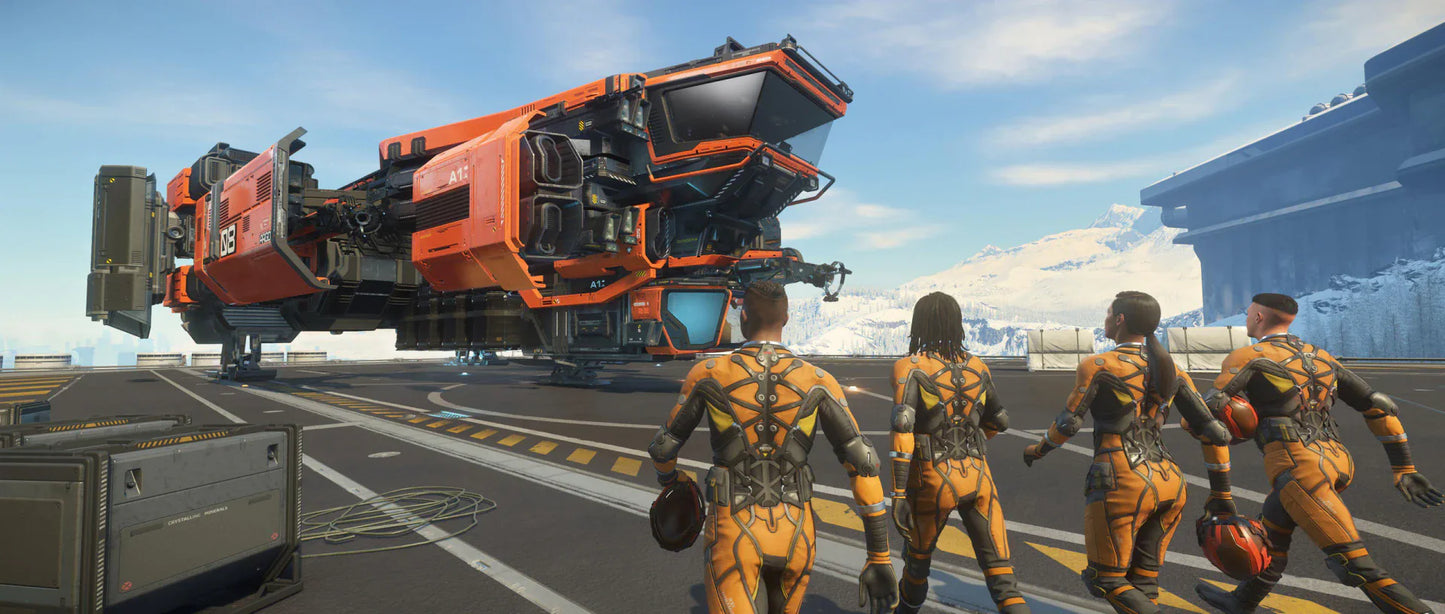
The ARGO MOLE is a dedicated multi-crew mining ship built for Star Citizen players who want larger crewed mining output, coordinated gameplay, and a practical step above the solo-focused MISC Prospector. Developed by Argo Astronautics, the MOLE is not a cargo hauler, combat ship, refinery ship, or casual daily driver. It is a working industrial mining platform designed around three independent mining stations and a crew that can break larger rocks faster when properly coordinated.
Official RSI material describes the MOLE as a multi-crew mining ship with three independently controlled articulated extraction stations, built to make bigger mining jobs feel smaller. The ship also uses ARGO’s trilateral mining system and carries 24 mineral pods, each holding 12 SCU, with official sale material referencing 96 SCU flying capacity.
The MOLE is the mining ship you choose when you want crewed extraction power, not solo convenience or built-in refining.
Build Your ARGO Mining Fleet with the MOLE
The MOLE is one of the more direct upgrades for players who enjoy mining but feel limited by the standalone Prospector's yield boundaries. If you are looking to acquire this ARGO industrial miner, you can explore our available options in the Star Citizen Ships and Vehicles Collection.
MOLE Key Specifications
| Specification | ARGO MOLE | Gameplay Meaning |
|---|---|---|
| Manufacturer | Argo Astronautics | Industrial manufacturer focused on practical work ships and utility craft. |
| Role | Multi-Crew Mining | Built for coordinated extraction, not cargo hauling or combat. |
| Status | Flight Ready / current gameplay reference | The MOLE launched as part of Star Citizen Alpha 3.8’s ship content, with RSI describing ARGO’s new miner as taking to the stars. |
| Mining Stations | 3 independent crew-operated stations | The main reason to buy the MOLE; each laser requires a player in its dedicated mining seat and cannot be toggled from the pilot deck. |
| Mineral Pods | 24 pods, 12 SCU each | Gives the MOLE a significantly larger operational mining loop than the Prospector. |
| Flying Capacity | 96 SCU current reference capacity | Supports longer mining runs than smaller single-seat hulls, though yield relies heavily on crew skill and ore composition. |
| Crew Focus | Multi-operator mining crew | Designed around a dedicated pilot plus mining turret operators, not a solo flight deck setup. |
| Refinery | No onboard refinery | The MOLE extracts and stores unrefined material; refining requires orbital station workflows or external cargo loops. |
| Crew Facilities | 4 bunk beds, rest area, shower, toilet | Fully supports extended industrial operations and multi-player deployment out in the field. |
| Core Gameplay | Asteroid, surface, and group mining | Best for players who want accelerated mining output with friends or organizational fleets. |
Note: Star Citizen mining balance, mining modules, HUD behavior, refinery economy, and ore values can change between patches. Current RSI support material also notes a temporary Prospector loaner for the MOLE due to a mining HUD issue, so product pages should treat current mining usability notes as patch-dependent.
What Makes the MOLE Valuable?
The MOLE is valuable because it gives mining players more extraction power without jumping all the way into capital-scale logistics. It acts as the definitive intermediate step between the solo Prospector and massive future industrial platforms like the Arrastra or Orion.
Its core selling point centers directly on its three specialized mining lasers. RSI’s Q&A confirms that each laser is controlled entirely independently from its respective turret station. There is no method for a single pilot to direct all three lasers simultaneously from the cockpit seat.
The MOLE is not a bigger solo miner. It is a proper crewed mining ship.
For a player who mines alone every day, the Prospector remains the easier loop. For a player with friends, crew networks, or an industrial organization, the MOLE becomes much more appealing because multiple people can contribute directly to fracturing, extraction, and load management at the exact same time.
Multi-Crew Mining Gameplay Role
The MOLE’s main role is coordinated mining. It is designed for a crew that wants to locate, fracture, extract, and store mass quantities of high-value ore far more efficiently than a solitary mining laser can manage.
In practical gameplay, the MOLE excels across several roles:
| Gameplay Use | Why the MOLE Fits |
|---|---|
| Group mining sessions | Three independent mining seats give multiple players active, highly engaging jobs. |
| Larger rock breaking | Multiple lasers can converge energy outputs on exceptionally difficult or massive deposits. |
| Industrial org gameplay | Integrates cleanly alongside dedicated refinery systems, transport hauling, and combat escorts. |
| Mining training ship | Allows newer miners to practice laser management safely while a pilot handles flight position. |
| Longer mining trips | Expanded pod arrays and complete crew living quarters facilitate sustained orbital or surface loops. |
The MOLE should be described as a crew mining ship, not a casual solo profit button.
Three Independent Mining Lasers
The defining mechanical layout of the MOLE is its three independently operated mining stations. RSI’s Q&A highlights this framework clearly: each laser requires an active player inside the mining seat, and the laser array will instantly safely deactivate if the operator leaves their terminal.
This creates a completely different gameplay rhythm compared to single-seat extraction. The pilot focuses on scanning and ship placement, maintaining alignment with the ore face, while the mining operators manage energy sliders, resistance windows, extraction throttles, and rock volatility.
The MOLE is at its best when one player flies and three players mine.
That core dynamic sets the right expectation immediately. Solo use is structurally possible via seat swapping, but it skips the mechanical intent and efficiency limits of the hull's design.
Mineral Pod Capacity and Mining Storage
The MOLE delivers a massive storage workflow expansion. Official documentation specifies 24 integrated mineral pods, each boasting a 12 SCU volume, combining for a referenced 96 SCU operating flight capacity.
The MOLE offers much more mining storage than a Prospector, but it still depends on refinery and logistics support after the ore is collected.
This capacity allows teams to sustain longer operations, collect more high-tier material per run, and make maximum use of group coordination before heading back to port.
No Onboard Refinery
The MOLE does not possess built-in refining capabilities. RSI’s Q&A confirms that ore refinement remains a completely distinct step in the industrial loop, noting that neither the MOLE nor the Prospector filters raw elements inside their frames.
The MOLE extracts ore; it does not refine it.
This means complete industrial loops require strategic planning. After filling the pods, crews must transition their raw hauls to orbital refinery stations, dedicated transport ships, or future logistics partners to process and sell the market commodities efficiently.
Mining Attachments and Laser Setup
The MOLE supports highly customizable laser loadouts. Operators can mount distinct attachments across each individual mining arm, allowing groups to think critically about mixing complementary laser attributes for tricky tasks.
A practical MOLE crew may utilize various configurations:
- Balanced Lasers: Standardized multi-purpose heads ideal for general exploration runs.
- High-Power Cracking: Heavy-output heads configured specifically to break massive, resistant deposits.
- Extraction Focus: Optimization heads optimized for clean material collection after fracturing is complete.
The MOLE rewards preparation, crew coordination, and mining knowledge more than basic point-and-click mining.
Solo Gameplay Expectations
While a lone operator can technically alternate between the pilot deck and the lower turret chairs, the workflow is highly inefficient because lasers instantly power down when a seat is vacated. Lasers cannot be automated or fired from the flight console using computer blades.
Solo MOLE mining is possible, but the Prospector is usually the better solo mining experience.
This is one of the most critical customer expectations to clarify. The MOLE is not intrinsically "better" than the Prospector across the board; it is significantly better with a crew, but less optimized for a completely solo player.
Crew Roles on the MOLE
The MOLE operates at peak efficiency when every player understands their specific job profile:
- Pilot / Captain: Locates mining sectors, manages precise hover positioning, monitors external environment safety, and directs laser focus.
- Mining Operators (1-3): Control their respective independent laser stations, adjusting power throttles to crack or extract materials cleanly.
- Logistics / Escort Partners: Optional external support to scout high-tier deposits, protect the loaded ship from hostiles, or transport refined commodities.
A practical MOLE session should feel like a coordinated mining job, not a solo Prospector run with a larger hold. The pilot searches for deposits, positions the ship, keeps the crew aware of terrain or threats, and decides when the run is worth continuing. The mining operators need to communicate about laser power, fracture windows, instability, and which rocks are worth extracting. Sometimes all three lasers focus on one difficult deposit; other times each operator works a separate target to save time. Once the pods start filling, the crew still needs to think about ore quality, refinery location, route safety, and whether staying longer is worth the risk. In real use, the MOLE rewards communication and mining knowledge more than simply having more mining lasers.
Crew Facilities and Living Spaces
The interior layout features extensive habitability elements, including four bunk beds that double as escape pods, integrated shower and toilet fixtures, gear lockers, and a central rest lounge equipped with basic galley systems. This transforms the hull into a genuine mobile home base capable of supporting operations deep into isolated asteroid belts.
ARGO MOLE vs MISC Prospector
The MOLE and Prospector represent two entirely separate stages of an industrial career path:
| Ship | Best For | Main Difference |
|---|---|---|
| MISC Prospector | Solo mining | Cheaper, highly accessible, and streamlined for individual pilots. |
| ARGO MOLE | Multi-crew mining | Three independent extraction lasers and a quadrupled raw ore pod volume. |
Choose the Prospector if you mostly mine solo. Choose the MOLE if you want a real crewed mining ship.
MOLE vs Arrastra & Orion
| Ship | Best For | Compared with MOLE |
|---|---|---|
| ARGO MOLE | Medium multi-crew mining | Fully flyable, practical, and highly manageable for small teams today. |
| RSI Arrastra | Large mining / refining concept | A larger future-facing industrial platform with built-in refining bays. |
| RSI Orion | Capital-scale industrial mining | Massive, capital-class fleet asset geared for massive corporate operations. |
MOLE vs Other Star Citizen Industrial Ships
| Ship Fleet Option | Primary Core Role | Compared with MOLE |
|---|---|---|
| MISC Expanse | Refining Support | The Expanse focuses purely on processing raw material; the MOLE focuses on raw extraction. They complement each other perfectly. |
| ARGO RAFT | Cargo Transport | The RAFT is built to move standard freight containers; the MOLE is built exclusively to extract raw ore. |
| Drake Vulture | Solo Salvage | The Vulture generates profit via hull scraping and salvaging; the MOLE generates profit through geology loops. |
| Aegis Reclaimer | Heavy Salvage | The Reclaimer is a massive, multi-crew scrap reclamation asset; the MOLE is a medium-sized mining platform. |
| Caterpillar / C2 Hercules | Cargo Hauling | Heavy haulers transport refined commodities to major market hubs; the MOLE feeds material into that logistics chain. |
Explore MOLE CCU Upgrade Options
Ready to upgrade your current pledge or starter ship into a proper crewed industrial miner? View our available Star Citizen MOLE CCU Upgrades to take the next step.
MOLE Strengths and Limitations
| Strategic Strengths | Operational Limitations |
|---|---|
| Three independent mining stations create high multi-crew output value. | Highly inefficient for pure solo gameplay due to seat-swapping constraints. |
| 24 mineral pods providing a referenced 96 SCU capacity for longer runs. | Mining lasers are completely locked out from the pilot console deck. |
| Supports diverse mining attachments across arms for custom setup layouts. | Does not feature an onboard refinery; relies on station drop-offs. |
| Complete habitability facilities provide excellent roleplay immersion. | Lacks offensive weaponry and relies heavily on escorts in dangerous space. |
| Fully flyable, field-tested medium miner available in-game today. | Usability can fluctuate based on live patch HUD behaviors and mining balance. |
Who Should Buy the ARGO MOLE?
The MOLE is best for players who enjoy industrial gameplay and want to move cleanly past the limitations of solo Prospector loops. It is perfectly suited for active mining teams, small corporate organizations, players who fly consistently with friends, and anyone looking for a authentic industrial platform with deeply integrated cooperative loops.
Crews looking for isolated solo profit paths should remain with the Prospector. Those looking for integrated refinery loops or capital-scale investments should evaluate long-term concepts like the Arrastra or Orion. But for an immediately accessible, hard-working multi-laser extraction ship, the ARGO MOLE is an exceptional industrial upgrade.
MOLE FAQ
Is the MOLE worth buying in Star Citizen?
The MOLE is highly worth buying if you regularly mine with a group and want to tackle larger, high-value deposits that solo lasers cannot crack. It is not recommended if you primarily play alone, as the Prospector handles solo extraction much more seamlessly.
Is the MOLE Flight Ready?
Yes. The ARGO MOLE launched officially during Alpha 3.8 and has been an active, fully flyable part of Star Citizen's live industrial gameplay loops ever since.
Can the pilot operate any mining lasers from the cockpit?
No. All three mining lasers are mounted to independent lower articulating turrets. The pilot can scan for rocks and maneuver the vessel, but cannot activate or fire the lasers from the flight deck.
Can the MOLE be used solo?
It can be done by landing the ship, leaving the pilot seat, and climbing into a mining turret. However, because the laser shuts off the moment you exit the chair, you cannot fly and mine at the same time, making solo operation incredibly slow and tedious.
How much cargo/ore storage does the MOLE have?
The MOLE utilizes an external pod framework containing 24 mineral pods at 12 SCU each, resulting in an official flying capacity reference of 96 SCU.
Does the MOLE have an onboard refinery?
No. The MOLE is an extraction and containment platform only. It holds unrefined ore inside its pods, which must be brought to an orbital refinery station or industrial processing hub to turn into sellable cargo.
Can the MOLE mount different mining heads?
Yes. Each mining arm can be customized independently with various lasers, modules, and filtering attachments, allowing your crew to create specialized loadouts for fracturing or pure collection.
Does the MOLE contain crew living quarters?
Yes. The habitability deck contains four bunk beds that serve as escape pods, clothes lockers, a shared bathroom/shower unit, and a small kitchen lounge area for the crew.
Why is there a temporary Prospector loaner listed for MOLE owners?
The RSI Loaner Ship Matrix occasionally assigns a temporary Prospector loaner to MOLE, Arrastra, or Orion owners to ensure players retain basic solo mining access during specific patch phases or HUD issue resolutions. This is temporary and subject to patch notes.
Is the MOLE a good choice for organizations?
Absolutely. It is one of the foundational multi-crew ships for industrial gameplay, offering an excellent team-based activity where everyone has an active role in generating organizational profit.


