


From Drake Interplanetary | Max Crew4 | In-Game Status Flight Ready
Caterpillar - Standalone Ship
Consultez nos délais de livraison.
aUEC Star Citizen : livraison en 3 à 5 minutes.
Vaisseaux Star Citizen : livraison généralement sous 20 à 30 minutes, 12 heures maximum.
CCU Star Citizen : livraison généralement sous 20 à 30 minutes, 12 heures maximum.
Paints Star Citizen : livraison généralement sous 5 minutes, 12 heures maximum.
Items Star Citizen : livraison généralement sous 5 minutes, 12 heures maximum.
Comment claim vos Ships, CCU, Paints et Items Star Citizen
Pour accepter cet item, vous devez avoir un compte sur robertsspaceindustries.com. L’accès à Star Citizen nécessite un Game Package.
Toutes les commandes seront envoyées à l’adresse e-mail utilisée lors du paiement. Vous recevrez un e-mail intitulé « Someone sent you a gift from Roberts Space Industries », envoyé par no-reply@robertsspaceindustries.com.
Ouvrez l’e-mail, puis cliquez sur le bouton bleu « Claim Gift » pour claim votre commande.
Si vous souhaitez recevoir votre commande sur un autre compte RSI que celui lié à l’e-mail fourni, connectez-vous simplement au bon compte RSI dans un autre onglet avant de claim l’item. Pensez à rafraîchir la page RSI pour vérifier que vous êtes bien connecté au bon compte.
Si vous achetez cet item comme cadeau, faites un clic droit sur le bouton bleu « Claim Gift », puis copiez l’adresse du lien. Assurez-vous d’être déconnecté de votre propre compte RSI afin de ne pas claim l’item par erreur.
Instructions de sécurité importantes
ATTENTION : tous les Ships et Items ne peuvent être gift qu’une seule fois.
Une fois claim, l’item — Ship, CCU, Paint, Armor, Weapon, etc. — est définitivement lié au compte qui l’a accepté.
Veuillez donc vérifier avec attention que vous êtes connecté au bon compte RSI avant de claim votre Gift Email.
Assurez-vous d’être connecté, dans le même navigateur, au compte RSI sur lequel vous souhaitez recevoir l’item avant de cliquer sur « Claim Gift ».
Nous ne sommes pas responsables si vous claim l’item sur le mauvais compte RSI.
Comment apply un CCU (Ship Upgrade)
Si vous avez acheté un Cross Chassis Upgrade (CCU) pour upgrade un Ship vers un autre, voici les étapes à suivre :
1. Claim l’item
Suivez les étapes de livraison ci-dessus pour ajouter le CCU à votre RSI Hangar.
2. Trouver le CCU dans le Hangar
Allez dans la section « My Hangar » sur le site RSI.
3. Apply Upgrade
Cliquez sur la flèche à côté de votre CCU pour ouvrir les détails, puis cliquez sur « Apply Upgrade ».
Choisissez le « Source Ship » que vous souhaitez upgrade, puis entrez votre mot de passe RSI pour terminer le processus.
Note importante :
L’assurance, comme la LTI, ainsi que les autres bonus du Ship de base seront conservés et transférés vers le nouveau Ship.
Un upgrade d’un Ship moins cher vers un Ship plus cher peut nécessiter plusieurs CCU.
Par exemple, si vous achetez un upgrade de Merchantman vers Polaris, nous vous enverrons deux CCU : Merchantman vers Hammerhead, puis Hammerhead vers Polaris.
Plus l’écart de prix est grand, plus vous pouvez recevoir de CCU à apply.
Achetez en toute confiance : protection client
Protection d’achat
Lorsque vous passez commande sur notre site, nous vous garantissons que vous recevrez l’item correct, conforme à sa description.
Si nous ne pouvons pas livrer l’item commandé, nous vous proposerons un remplacement ou un remboursement intégral, selon votre préférence.
Protection après-vente
Tous les items proposés sur notre site proviennent de notre propre stock et sont couverts par notre protection après-vente.
Si un problème survient pendant la livraison, ou dans un délai allant jusqu’à 6 mois après la livraison, nous effectuerons une vérification.
Si le problème est confirmé comme étant de notre responsabilité, nous vous proposerons un remplacement ou un remboursement.
Selon la situation, cela peut prendre la forme d’un remplacement complet, d’un remboursement intégral ou d’un upgrade vers un meilleur item si le remplacement exact n’est pas disponible.
Assistance client 24h/24 et 7j/7
Bénéficiez d’un support en ligne 24h/24 et 7j/7.
Questions, assistance ou besoin d’une solution rapide ? Notre équipe est toujours disponible pour vous aider. À tout moment, nous sommes à un clic de vous.
Rejoignez notre Discord dès maintenant et découvrez la différence LTI Hangar !
En stock · Livraison via RSI Gift · Livraison en moyenne sous 20 min
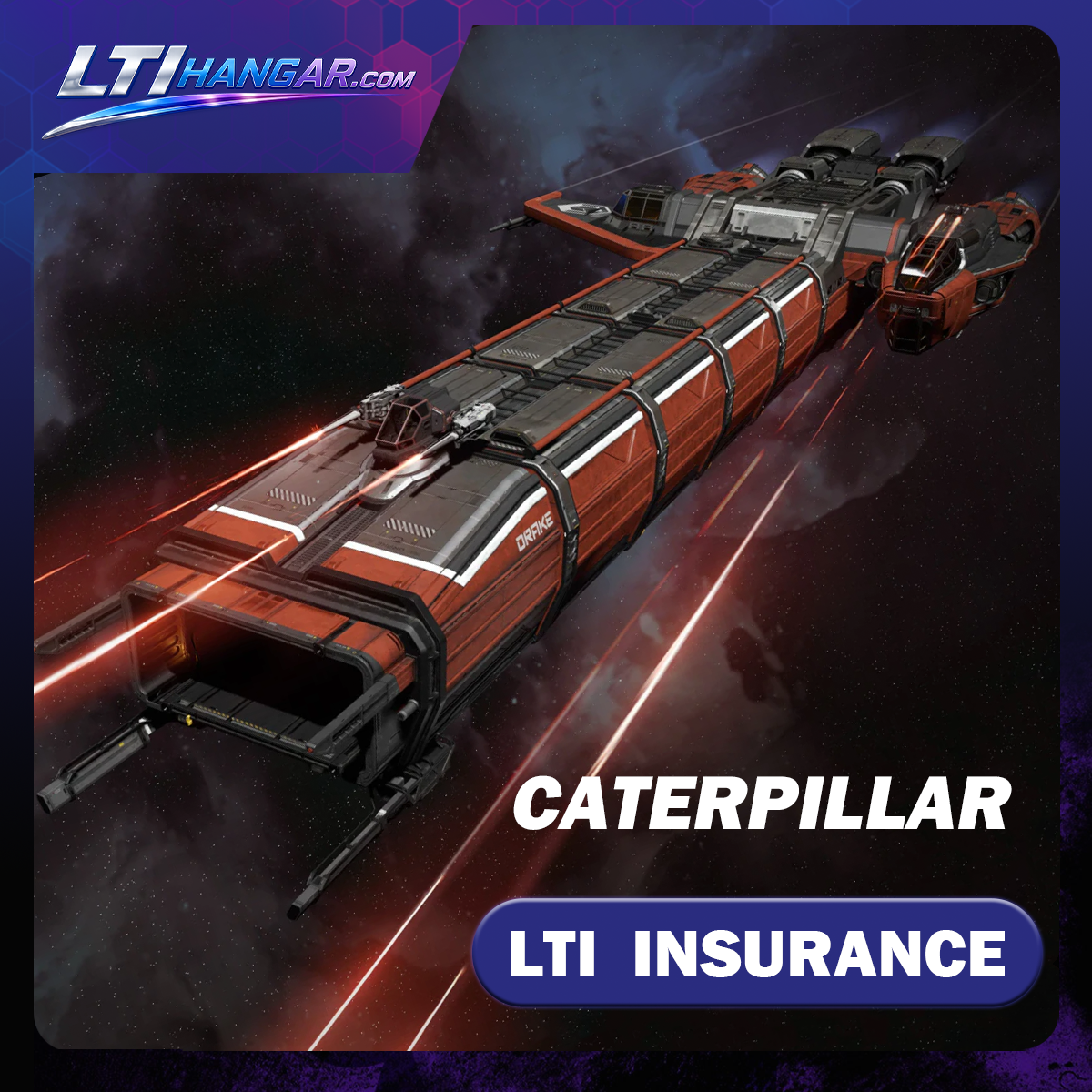
Contact our Discord live support; we are online 24/7.

Pourquoi les joueurs choisissent LTI Hangar
Livraison rapide de Ships, vrai support client, et processus de RSI Gift clair — pensé pour les joueurs Star Citizen qui veulent une expérience d’achat plus simple et plus fluide.
Livraison moyenne en 20 à 30 min
Support Discord 24/7
Équipe de gamers avec plus de 10 ans d’expérience
Achat sécurisé · Stock propre · Aucun vendeur tiers
Support après-vente fiable
Suivi de commande en temps réel
FAQ — Questions fréquentes
Combien de temps prend généralement la livraison ?
Les commandes de Ships, CCU, Paints et Items Star Citizen sont généralement livrées sous 20 à 30 minutes.
Dans de rares cas, la livraison peut prendre jusqu’à 12 heures en raison du volume de commandes, des limites de gifting RSI, du statut du compte ou d’une vérification manuelle nécessaire.
Dans la plupart des cas, nous ne laissons pas les livraisons de Ships dépasser 12 heures, sauf en cas de problème exceptionnel, comme une limitation du système RSI, une restriction de compte ou une vérification client requise.
Ma commande de Ship est-elle protégée ?
Oui. La sécurité et la fiabilité sont nos priorités absolues.
Tous les Ships vendus par LTI Hangar viennent de notre propre stock. Aucun vendeur externe ni fournisseur tiers inconnu n’intervient dans la commande.
Chaque commande de Ship est traitée avec un suivi clair de la livraison, afin que le processus puisse être vérifié et retracé si notre support doit intervenir.
Nous offrons également une protection après-vente de 6 mois pour les problèmes éligibles liés à la livraison.
Grâce à notre propre stock, à une livraison traçable et à notre protection après-vente, l’achat est plus sûr que sur de nombreuses marketplaces tierces. C’est l’une des raisons pour lesquelles de nombreux joueurs choisissent LTI Hangar pour acheter leurs Ships Star Citizen.
Qu’est-ce que la protection après-vente de 6 mois ?Pourquoi les autres marketplaces ne peuvent-elles pas proposer cela ?
Dans le cas extrêmement rare où un problème survient avec un item pendant la livraison, ou jusqu’à 6 mois après la livraison, nous mènerons une vérification.
Si le problème est confirmé comme étant de notre responsabilité, nous vous proposerons soit un remplacement, soit un remboursement.
Pour nous aider à examiner le cas avec précision, il pourra vous être demandé de nous fournir des preuves pertinentes, comme des screenshots de votre RSI Hangar, les détails de commande ou les logs du RSI Hangar.
Le RSI Hangar Log permet de suivre l’état et l’historique de chaque Ship, notamment si l’item a été claim, échangé, melt, transféré ou modifié d’une autre manière après la livraison.
Nous examinerons les preuves fournies afin de déterminer la cause du problème.
Ce niveau de protection n’est pas courant sur de nombreuses marketplaces tierces, car elles dépendent souvent de vendeurs externes ou de sources de stock mélangées.
Chez LTI Hangar, tous les Ships proviennent de notre propre stock, et chaque commande dispose de records de livraison clairs. Cela nous permet d’offrir un support plus sûr, plus fiable et plus transparent.
Puis-je demander un remboursement après avoir claim le Ship, CCU, Paint ou Item ?
Une fois le RSI Gift claim, le Ship, CCU, Paint ou Item est lié au compte RSI qui l’a reçu.
En raison des limites du système de gifting de Star Citizen, un item déjà claim ne peut normalement pas être gift à nouveau, retourné, annulé ou relivré. Pour cette raison, les items déjà claim ne sont généralement pas éligibles à une annulation ou à un remboursement.
Une correction, un remplacement ou un remboursement ne peut être proposé que si nous confirmons que le problème vient de notre côté, par exemple si un mauvais item a été envoyé, s’il y a eu une erreur de livraison de commande, ou un autre problème de livraison vérifié causé par nous.
Avant de claim le RSI Gift, veuillez vous assurer que vous êtes connecté au bon compte RSI. Une fois le gift claim sur le mauvais compte, il ne peut normalement pas être transféré vers un autre compte.
Que se passe-t-il si le mauvais Ship, CCU, Paint ou Item est livré ?
Si nous confirmons qu’un mauvais item a été livré à cause d’une erreur de notre côté, nous examinerons le cas et proposerons une correction, un remplacement ou un remboursement lorsque cela est applicable.
Veuillez nous contacter avec votre numéro de commande, l’e-mail utilisé lors du paiement, ainsi que des screenshots clairs de votre RSI Hangar.
Pourquoi les noms des Ships Star Citizen que j’ai reçus sont-ils différents ?
Un Standalone CCU’ed est un vaisseau ou un véhicule complet. Ce n’est pas une amélioration à appliquer !
CCU’ed signifie simplement que le vaisseau ou véhicule a été obtenu en améliorant un modèle plus petit vers celui que vous achetez.
Veuillez également noter que, dans l’e-mail cadeau, seul le vaisseau utilisé comme base de l’upgrade sera indiqué. Pas d’inquiétude : le vaisseau qui apparaîtra réellement dans votre hangar sera bien celui que vous avez commandé.
Par exemple, voici à quoi ressemble un Polaris CCU’ed dans le hangar sur le site RSI.
COMMENT ÇA FONCTIONNE
Simple, rapide et sécurisé : découvrez comment ça fonctionne !

EST-CE VRAIMENT SÉCURISÉ ?
La sécurité est notre priorité n°1.
Contrairement à d’autres sites, nous vendons uniquement notre propre stock. Aucun vendeur externe n’est autorisé sur notre plateforme.
Cela garantit un achat plus sûr, une vraie tranquillité d’esprit, ainsi que des livraisons ultra-rapides.

COMMENT FONCTIONNE LA LIVRAISON ?
L’item sera livré via le système de RSI Gift.
Après avoir passé commande, nous enverrons l’item à l’adresse e-mail que vous avez indiquée au checkout.
Une fois le Gift Email reçu, ouvrez-le simplement, puis cliquez sur « Claim ». L’item sera alors ajouté au compte RSI sur lequel vous êtes connecté.

PROTECTION APRÈS-VENTE
Tous les items que nous vendons proviennent de notre propre stock et sont couverts par notre politique de protection après-vente.
Si un problème survient avec un item pendant la livraison, ou jusqu’à 6 mois après la livraison, nous mènerons une vérification.
Si le problème est confirmé comme étant de notre responsabilité, nous proposerons soit un remplacement, soit un remboursement.

CONTACTEZ-NOUS
Star Citizen est un univers vaste et complexe ! Si vous avez des questions, notre équipe est toujours là pour vous aider.
Nous sommes disponibles 24h/24 pour vous accompagner. En plus, notre Discord propose des codes promo supplémentaires, des giveaways et les dernières annonces.
Drake Caterpillar Standalone Ship Gameplay Guide
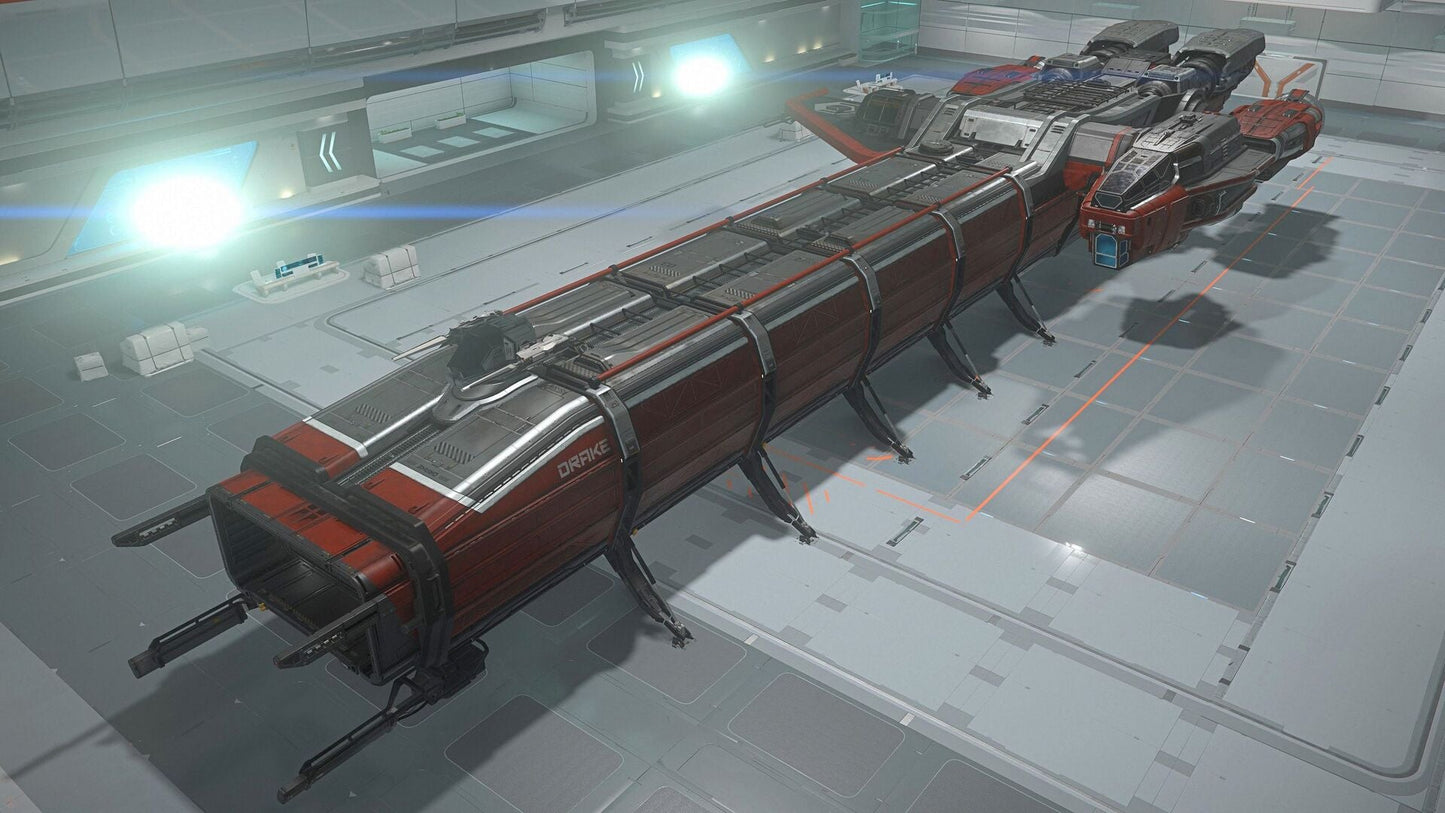
The Drake Caterpillar is a large heavy freight ship built for Star Citizen players who want large internal cargo capacity, Drake industrial style, multi-crew utility, and a more rugged alternative to clean corporate haulers. Designed by Drake Interplanetary, the Caterpillar is not a luxury ship, fighter, explorer, or beginner daily driver. It is a large modular freighter made for players who want to move cargo, support group operations, and fly something that feels practical, rough, and unmistakably Drake.
Unlike external-cargo ships from the Hull series, the Caterpillar carries freight through a large internal modular cargo body. Official RSI material describes the Caterpillar as a reliable, cost-effective multi-role vessel that can be outfitted for mercantile operations or combat support, with a customizable cargo-segment layout and Drake’s signature off-center detachable command module.
The Caterpillar is a heavy Drake freighter for players who want internal cargo, modular utility, and multi-crew industrial gameplay — not a polished luxury hauler or pure combat ship.
Build Your Drake Cargo Fleet with the Caterpillar
The Caterpillar is one of Star Citizen’s more recognizable large cargo ships. If you are looking to acquire this Drake freighter, you can explore our available options in the Star Citizen Ships and Vehicles Collection.
Caterpillar Key Specifications
| Specification | Drake Caterpillar | Gameplay Meaning |
|---|---|---|
| Manufacturer | Drake Interplanetary | Rugged, practical, industrial ship design with a clear outlaw / independent hauler identity. |
| Role | Heavy Freight | Built mainly for cargo transport, trade, and large-scale hauling. |
| Status | Flight Ready / current gameplay reference | RSI’s Caterpillar material says it joined the PU fleet with Alpha 2.6 and was made flight ready. |
| Size | Large | Much bigger than medium cargo ships, but easier to understand than capital logistics vessels. |
| Length | 111.5m official technical reference | Large freighter scale with a clear multi-room layout. |
| Cargo Capacity | 576 SCU internal cargo reference | Large internal cargo capacity for freight, trade, and logistics, but route safety, loading access, cargo economy, and patch behavior should still be considered. |
| Crew | 2 min / 4 max official reference | Best with a small crew, though many players use it solo for cargo. |
| Modular Identity | Future modular cargo-segment reference | The Caterpillar has a clear modular design identity, but exact module options and future segment behavior should not be treated as guaranteed current gameplay. |
| Command Module | Off-center detachable command-module concept | A signature Drake design feature, but buyers should check current patch behavior before purchasing specifically for detachment gameplay. |
| Core Gameplay | Cargo hauling, trade, logistics, piracy support, group transport | Best for players who want a practical large freighter with character. |
Note: Star Citizen ship specifications and cargo mechanics can change between patches. For product pages, exact handling, tractor beams, cargo loading behavior, command-module functionality, and future modular options should be treated as gameplay-reference information rather than permanent final values.
What Makes the Caterpillar Valuable?
The Caterpillar is valuable because it gives players a large internal-cargo ship with personality. It is not as clean as a Crusader ship, not as corporate as an RSI ship, and not as purely external-freight focused as the Hull series. It feels like a working ship: rough, modular, practical, and slightly dangerous.
Its main selling point is 576 SCU of internal cargo capacity. That makes it much larger than smaller cargo ships like the Cutlass Black, C1 Spirit, Freelancer MAX, or Constellation Taurus, while still being more approachable than very large external freight ships such as the Hull D or Hull E.
The second selling point is the ship’s layout. The Caterpillar’s long body, cargo rooms, side access, crew areas, and command section give it a clear “space truck / industrial hauler” feeling. It is not just a cargo number. It feels like a ship that can support operations, carry supplies, and serve as the center of a small freight crew.
Heavy Freight Gameplay Role
The Caterpillar’s main role is heavy freight. It is built to move large amounts of cargo and support players who enjoy trade routes, logistics, and large-hauler ownership.
In practical gameplay, the Caterpillar fits several roles:
| Gameplay Use | Why the Caterpillar Fits |
|---|---|
| Cargo trading | 576 SCU gives it useful earning potential when cargo routes are working well. |
| Mission hauling | Large internal storage helps with freight, supplies, and logistics. |
| Small organization logistics | Can support mining, salvage, combat, or exploration groups by moving materials. |
| Pirate / outlaw support | RSI material has long connected the Caterpillar with raid-leader and outlaw logistics identity. |
| Multi-crew hauling | Crew can help with defense, loading awareness, and ship management. |
| Industrial roleplay | Clear Drake style makes it a good fit for players who like rough working ships. |
The Caterpillar should be described as a large internal-cargo freighter, not a refined luxury hauler or pure external container ship.
Cargo Capacity and Internal Layout
The Caterpillar’s 576 SCU cargo capacity is its core practical value. Unlike the Hull series, which focuses on external freight spindles, the Caterpillar’s cargo is carried in its long internal body. This makes it feel more hands-on and ship-like for players who enjoy walking through their cargo area, loading freight, and using the ship as a working platform.
The Caterpillar is the Drake freighter you choose when you want large internal cargo capacity with a rugged multi-room ship layout.
It is important not to oversell it as the most efficient hauler in every situation. The C2 Hercules is often better for vehicle transport and ground loading. The Hull C and larger Hull ships are better for station-to-station bulk freight. The Caterpillar sits in the middle as a rugged, modular, internal-cargo ship with clear personality.
Modular Cargo Segment Identity
The Caterpillar’s long-term appeal is tied to modularity. RSI describes the ship as having a customizable set of cargo segments and notes that additional functionality and upgrades for its segments were planned beyond the original flight-ready release.
The Caterpillar has useful modular identity, but exact future module options should be treated as long-term potential rather than guaranteed current gameplay.
That avoids promising too much while still explaining why many players like the ship. Buyers are not only purchasing current cargo capacity; they are also buying into one of Drake’s more flexible large-ship concepts.
Command Module Identity
One of the Caterpillar’s most distinctive features is its off-center command module. RSI describes the Caterpillar as having Drake’s signature off-center detachable command module, making it visually and functionally different from most cargo ships.
The Caterpillar’s command module is one of its signature Drake features, but customers should check current patch behavior before buying specifically for detachment gameplay.
This keeps the page accurate. The command module is part of the ship’s identity, but patch-by-patch implementation details can change.
Solo and Multi-Crew Gameplay
The Caterpillar can be flown solo, and many cargo players use it that way. However, its official crew reference is 2 minimum / 4 maximum, and it clearly becomes easier to manage with support players.
A practical Caterpillar crew may include:
| Crew Role | Purpose |
|---|---|
| Pilot / Captain | Handles route planning, flight, landing, and cargo decisions. |
| Co-Pilot / Systems Operator | Helps with navigation, shields, power, and situational awareness. |
| Cargo Operator | Manages loading, unloading, cargo checks, and physical freight work. |
| Turret / Security Crew | Helps defend the ship during risky routes or loading operations. |
| Escort Pilot | Useful when moving valuable cargo outside safer areas. |
The Caterpillar is best for players who like the idea of a working cargo ship, even if they sometimes fly alone. A solo owner can use it for basic hauling, but a crew makes the ship easier to manage when the route is risky, the cargo value is high, or loading and unloading require more attention.
Combat and Defense Expectations
The Caterpillar is not defenseless, but it should not be sold as a gunship. Its weapons and turrets are there to protect the ship, discourage attackers, and support crewed defense. They do not turn it into a dedicated combat platform.
The Caterpillar can defend itself better than many pure haulers, but its best combat strategy is planning, escort support, and avoiding bad fights.
This is especially important because a loaded Caterpillar can become a valuable target. Cargo profit always creates risk. The more freight you carry, the more careful your route planning needs to be.
Caterpillar vs C2 Hercules
The Caterpillar and C2 Hercules are both popular large cargo ships, but they feel very different.
| Ship | Best For | Main Difference |
|---|---|---|
| Drake Caterpillar | Rugged internal cargo, modular identity, Drake industrial style | More characterful, segmented, and rough. Clear cargo identity with future modular appeal. |
| Crusader C2 Hercules | Vehicle transport, clean ground loading, practical large cargo | Better for vehicle hauling and easy ramp-based cargo work. |
Choose the Caterpillar if you want a rugged Drake freighter with modular identity. Choose the C2 if you want cleaner vehicle transport and easier ground-loading utility.
Caterpillar vs Hull Series
The Caterpillar is often compared with the Hull series, but they serve different cargo styles.
| Ship | Cargo Style | Compared with Caterpillar |
|---|---|---|
| Hull B / Hull C | External cargo spindle | Better for dedicated freight routes, especially station-style cargo. |
| Caterpillar | Internal cargo body | Better for players who want a walkable large freighter with internal rooms and Drake character. |
| Hull D / Hull E | Massive external bulk freight | Much larger and more organization-focused, but less flexible for internal ship utility. |
The Caterpillar is not the highest-capacity cargo ship, but it is one of the more distinctive large internal haulers.
Cargo Risk and Route Planning
The Caterpillar rewards careful route planning. A fully loaded Caterpillar can represent a major investment, so players should think about where they are buying cargo, where they are selling it, whether the route is safe, and whether they need escorts.
A practical Caterpillar owner should consider:
| Cargo Factor | Why It Matters |
|---|---|
| Route safety | Large cargo ships are attractive targets. |
| Commodity margin | A big ship only earns well when the trade route is profitable. |
| Landing location | Large ships need suitable space and access. |
| Loading time | More cargo can mean more time exposed during freight handling. |
| Escort value | Friends can protect the ship during high-value runs. |
| Patch economy | Cargo profits and routes can change between updates. |
A practical Caterpillar cargo run starts before the ship leaves the hangar. The pilot needs to check the route, cargo price, sell location, landing access, and how much money is being locked into the load. Once the ship is full, the Caterpillar becomes a valuable target, so the safest run is not always the most profitable one. During loading and unloading, the ship can spend a long time exposed, especially when physical cargo handling or busy landing zones are involved. In real use, the Caterpillar feels like a working freight ship: plan the route, load carefully, avoid unnecessary stops, watch for pirates, sell before the market shifts, and use crew or escorts when the cargo value is high.
The Caterpillar is not just a ship; it is a business tool. Good route planning matters as much as the cargo capacity.
Explore Caterpillar Upgrade Paths
If you prefer to build toward the Caterpillar from an existing ship, you can view our Star Citizen Caterpillar CCU Upgrades and plan a more flexible Drake cargo or heavy-freight upgrade path over time.
Caterpillar vs Other Star Citizen Cargo Ships
| Ship Fleet Option | Primary Core Role | Compared with Caterpillar |
|---|---|---|
| C2 Hercules | Heavy Cargo / Vehicle Transport | The C2 is better for vehicles and ramp loading. The Caterpillar has stronger Drake modular-freighter identity. |
| M2 Hercules | Military Transport | The M2 is more armored and combat-support focused. The Caterpillar is more cargo-business focused. |
| Hull C | Station-to-Station Bulk Freight | The Hull C is more specialized for external cargo. The Caterpillar is more internal and walkable. |
| Starlancer MAX | Long-Range Cargo | The Starlancer MAX is more modern and comfortable for smaller crews. The Caterpillar carries much more cargo. |
| Constellation Taurus | Cargo / Multi-Role | The Taurus is easier for solo daily use. The Caterpillar is much larger and more cargo-focused. |
| Ironclad | Armored Heavy Freight | The Ironclad is a newer armored Drake heavy hauler concept. The Caterpillar is the classic flyable Drake freighter. |
| Merchantman | Trade Bazaar / Heavy Cargo | The Merchantman has alien trade and market identity. The Caterpillar is a rough human freight platform. |
| Reclaimer | Heavy Salvage | The Reclaimer is for salvage. The Caterpillar is for freight and logistics. |
Caterpillar vs C2 Hercules
The C2 Hercules is better for players who want easier ramp loading, vehicle transport, and a cleaner modern cargo experience. The Caterpillar is better for players who want a rugged Drake freighter with internal cargo rooms, modular identity, and a more industrial ship layout. Choose the C2 for practical vehicle and ground-loading convenience. Choose the Caterpillar for Drake style, internal freight, and classic large-hauler character.
Caterpillar vs Hull C
The Hull C is better for players who want dedicated station-to-station bulk freight with external cargo. The Caterpillar is better for players who want a walkable internal freighter with cargo rooms, ship interior utility, and Drake personality. Choose the Hull C for specialized bulk freight routes. Choose the Caterpillar for internal cargo hauling and a more hands-on freighter experience.
Caterpillar vs Starlancer MAX
The Starlancer MAX is better for players who want a newer, more comfortable long-range cargo ship that is easier to manage with a small crew. The Caterpillar carries much more cargo and feels more like a true large industrial freighter. Choose the Starlancer MAX for modern everyday cargo convenience. Choose the Caterpillar for larger internal freight capacity and classic Drake hauling.
Caterpillar Strengths and Limitations
| Strategic Strengths | Operational Limitations |
|---|---|
| 576 SCU gives it large internal cargo capacity. | Not as easy for vehicle loading as ramp-based ships like the C2. |
| Clear Drake industrial identity makes it memorable and easy to explain. | Older interior and handling may feel less polished than newer ships. |
| Large walkable cargo body feels like a working freighter. | Large size makes landing and route planning more important. |
| Modular segment concept gives long-term flexibility appeal. | Future modules should not be overpromised. |
| Small-crew freighter gameplay supports friends and organizations. | Solo use is possible, but full value improves with crew. |
| Useful defensive layout compared with many pure cargo ships. | Still not a gunship and should avoid unnecessary fights. |
| Classic Drake ship with clear cargo reputation. | A fully loaded Caterpillar can be a valuable pirate target. |
Who Should Buy the Caterpillar?
The Caterpillar is best for players who want a large Drake cargo ship with internal freight capacity and rugged personality. It is especially suitable for cargo traders, small organizations, Drake fans, industrial players, outlaw-roleplay groups, logistics crews, and players who want a large hauler that feels less polished and more practical.
It is also a good choice for players who enjoy ships with character. The Caterpillar is not the cleanest, fastest, or most luxurious cargo ship. That is part of the appeal. It feels like a real working freighter.
Players who want easy vehicle transport may prefer the C2 Hercules. Players who want smaller daily cargo may prefer the Taurus, C1, or Starlancer MAX. Players who want maximum external bulk freight should look at the Hull series. But for players who want a classic Drake internal-cargo freighter with 576 SCU and useful long-term modular appeal, the Caterpillar remains one of Star Citizen’s more important cargo ships.
Caterpillar FAQ
Is the Caterpillar worth buying in Star Citizen?
The Caterpillar is worth buying if you want a large internal-cargo freighter with 576 SCU, rugged Drake design, and a clear cargo-trading identity. It is not ideal if you want a small daily ship, luxury interior, or easy vehicle transport.
Is the Caterpillar Flight Ready?
Yes. RSI material states that the Caterpillar joined the PU fleet around Alpha 2.6 and that it would be available flight ready with that release.
What is the main role of the Caterpillar?
The Caterpillar’s main role is heavy freight. RSI’s technical overview lists its focus as Heavy Freight, and the ship is described as a reliable, cost-effective multi-role vessel for mercantile operations and combat support.
How much cargo does the Caterpillar have?
The Caterpillar has 576 SCU cargo capacity in RSI’s official technical overview. That makes it a large internal-cargo ship, far above smaller medium freight options.
How big is the Caterpillar?
RSI’s official technical overview lists the Caterpillar at 111.5m length, 39m beam, and 13.5m height, with a large size classification.
How many crew does the Caterpillar need?
RSI’s official technical overview lists the Caterpillar with 2 minimum crew and 4 maximum crew. Many players can fly it alone, but it becomes more effective with crew support.
Can the Caterpillar be used solo?
Yes, the Caterpillar can be used solo for basic cargo hauling, but it is not at its best that way. A crew can help with cargo handling, defensive coverage, systems, and route safety.
Is the Caterpillar good for cargo trading?
Yes. Cargo trading is the Caterpillar’s core practical role. Its 576 SCU capacity gives it useful profit potential when trade routes are working well, but players should also account for cargo risk, loading time, and route safety.
Is the Caterpillar better than the C2 Hercules?
The Caterpillar is better if you want rugged Drake style, internal segmented cargo, and modular-freighter identity. The C2 Hercules is better for vehicle transport, ramp loading, and cleaner current cargo convenience.
Should I choose the Caterpillar or C2 Hercules?
Choose the C2 Hercules if you want easier ramp loading, vehicle transport, and a cleaner cargo experience for current gameplay. Choose the Drake Caterpillar if you want a rugged internal-cargo freighter with 576 SCU, segmented cargo rooms, Drake industrial style, and long-term modular appeal. The C2 is the better practical vehicle and ramp-loading hauler, while the Caterpillar is the better classic Drake internal-freight ship.
Is the Caterpillar better than the Hull C?
They serve different cargo styles. The Hull C is more specialized for external station-to-station freight. The Caterpillar is better for players who want a large internal walkable freighter with Drake personality.
Is the Caterpillar better than the Starlancer MAX?
The Caterpillar carries much more cargo and feels like a true large freighter. The Starlancer MAX is smaller, newer, more comfortable, and easier for everyday cargo use. Choose Caterpillar for heavy freight. Choose Starlancer MAX for modern long-range cargo convenience.
Can the Caterpillar carry vehicles?
The Caterpillar can sometimes support small vehicles depending on current game physics and access, but it should not be marketed as a dedicated vehicle transport ship. The C2 Hercules, M2 Hercules, Valkyrie, and Ironclad-style haulers are better choices for vehicle-focused gameplay.
Does the Caterpillar have modular cargo sections?
Yes, modularity is part of the Caterpillar’s identity. RSI describes it as having customizable cargo segments and notes that future upgrades for segments and mounts were planned. Product pages should still treat exact module options as future or patch-dependent.
Does the Caterpillar have a detachable command module?
The Caterpillar’s off-center detachable command module is a signature feature described in official RSI material. However, customers should check current patch behavior before buying specifically for command-module detachment gameplay.
Is the Caterpillar good for combat?
The Caterpillar can defend itself, but it is not a dedicated combat ship. Its weapons and crew stations are best treated as defensive tools. Players who want a true gunship should consider ships like the Redeemer, Paladin, Hammerhead, or Perseus.
Does the Caterpillar have good long-term value?
Yes. The Caterpillar has useful long-term value because it combines large internal cargo capacity, Drake identity, modular appeal, and small-crew freight gameplay. Its main limitations are size, cargo risk, older layout feel, and the need to avoid overpromising future modules.


