Contact our Discord live support; we are online 24/7.
Pourquoi les joueurs choisissent LTI Hangar
Livraison rapide de Ships, vrai support client, et processus de RSI Gift clair — pensé pour les joueurs Star Citizen qui veulent une expérience d’achat plus simple et plus fluide.
Livraison moyenne en 20 à 30 min
Support Discord 24/7
Équipe de gamers avec plus de 10 ans d’expérience
Achat sécurisé · Stock propre · Aucun vendeur tiers
Support après-vente fiable
Suivi de commande en temps réel
FAQ — Questions fréquentes
Combien de temps prend généralement la livraison ?
Les commandes de Ships, CCU, Paints et Items Star Citizen sont généralement livrées sous 20 à 30 minutes.
Dans de rares cas, la livraison peut prendre jusqu’à 12 heures en raison du volume de commandes, des limites de gifting RSI, du statut du compte ou d’une vérification manuelle nécessaire.
Dans la plupart des cas, nous ne laissons pas les livraisons de Ships dépasser 12 heures, sauf en cas de problème exceptionnel, comme une limitation du système RSI, une restriction de compte ou une vérification client requise.
Ma commande de Ship est-elle protégée ?
Oui. La sécurité et la fiabilité sont nos priorités absolues.
Tous les Ships vendus par LTI Hangar viennent de notre propre stock. Aucun vendeur externe ni fournisseur tiers inconnu n’intervient dans la commande.
Chaque commande de Ship est traitée avec un suivi clair de la livraison, afin que le processus puisse être vérifié et retracé si notre support doit intervenir.
Nous offrons également une protection après-vente de 6 mois pour les problèmes éligibles liés à la livraison.
Grâce à notre propre stock, à une livraison traçable et à notre protection après-vente, l’achat est plus sûr que sur de nombreuses marketplaces tierces. C’est l’une des raisons pour lesquelles de nombreux joueurs choisissent LTI Hangar pour acheter leurs Ships Star Citizen.
Qu’est-ce que la protection après-vente de 6 mois ?Pourquoi les autres marketplaces ne peuvent-elles pas proposer cela ?
Dans le cas extrêmement rare où un problème survient avec un item pendant la livraison, ou jusqu’à 6 mois après la livraison, nous mènerons une vérification.
Si le problème est confirmé comme étant de notre responsabilité, nous vous proposerons soit un remplacement, soit un remboursement.
Pour nous aider à examiner le cas avec précision, il pourra vous être demandé de nous fournir des preuves pertinentes, comme des screenshots de votre RSI Hangar, les détails de commande ou les logs du RSI Hangar.
Le RSI Hangar Log permet de suivre l’état et l’historique de chaque Ship, notamment si l’item a été claim, échangé, melt, transféré ou modifié d’une autre manière après la livraison.
Nous examinerons les preuves fournies afin de déterminer la cause du problème.
Ce niveau de protection n’est pas courant sur de nombreuses marketplaces tierces, car elles dépendent souvent de vendeurs externes ou de sources de stock mélangées.
Chez LTI Hangar, tous les Ships proviennent de notre propre stock, et chaque commande dispose de records de livraison clairs. Cela nous permet d’offrir un support plus sûr, plus fiable et plus transparent.
Puis-je demander un remboursement après avoir claim le Ship, CCU, Paint ou Item ?
Une fois le RSI Gift claim, le Ship, CCU, Paint ou Item est lié au compte RSI qui l’a reçu.
En raison des limites du système de gifting de Star Citizen, un item déjà claim ne peut normalement pas être gift à nouveau, retourné, annulé ou relivré. Pour cette raison, les items déjà claim ne sont généralement pas éligibles à une annulation ou à un remboursement.
Une correction, un remplacement ou un remboursement ne peut être proposé que si nous confirmons que le problème vient de notre côté, par exemple si un mauvais item a été envoyé, s’il y a eu une erreur de livraison de commande, ou un autre problème de livraison vérifié causé par nous.
Avant de claim le RSI Gift, veuillez vous assurer que vous êtes connecté au bon compte RSI. Une fois le gift claim sur le mauvais compte, il ne peut normalement pas être transféré vers un autre compte.
Que se passe-t-il si le mauvais Ship, CCU, Paint ou Item est livré ?
Si nous confirmons qu’un mauvais item a été livré à cause d’une erreur de notre côté, nous examinerons le cas et proposerons une correction, un remplacement ou un remboursement lorsque cela est applicable.
Veuillez nous contacter avec votre numéro de commande, l’e-mail utilisé lors du paiement, ainsi que des screenshots clairs de votre RSI Hangar.
Pourquoi les noms des Ships Star Citizen que j’ai reçus sont-ils différents ?
Un Standalone CCU’ed est un vaisseau ou un véhicule complet. Ce n’est pas une amélioration à appliquer !
CCU’ed signifie simplement que le vaisseau ou véhicule a été obtenu en améliorant un modèle plus petit vers celui que vous achetez.
Veuillez également noter que, dans l’e-mail cadeau, seul le vaisseau utilisé comme base de l’upgrade sera indiqué. Pas d’inquiétude : le vaisseau qui apparaîtra réellement dans votre hangar sera bien celui que vous avez commandé.
Par exemple, voici à quoi ressemble un Polaris CCU’ed dans le hangar sur le site RSI.
COMMENT ÇA FONCTIONNE
Simple, rapide et sécurisé : découvrez comment ça fonctionne !
RSI Zeus Mk II ES Standalone Ship Gameplay Guide
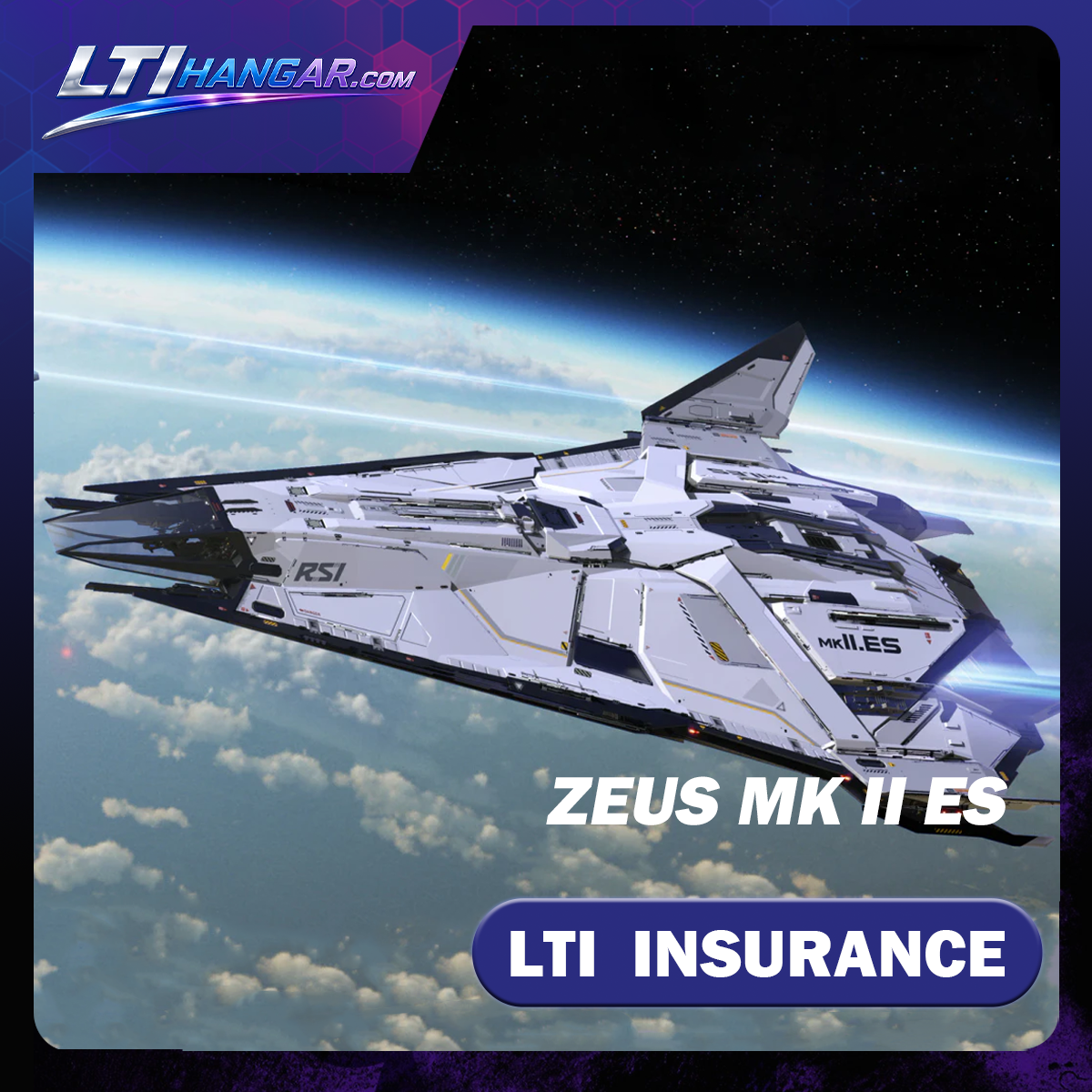
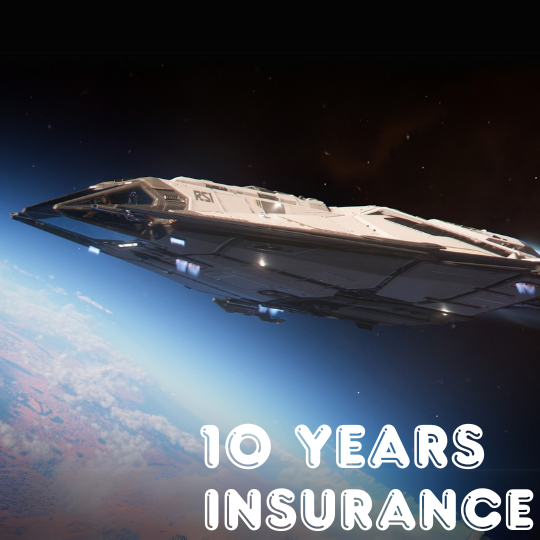
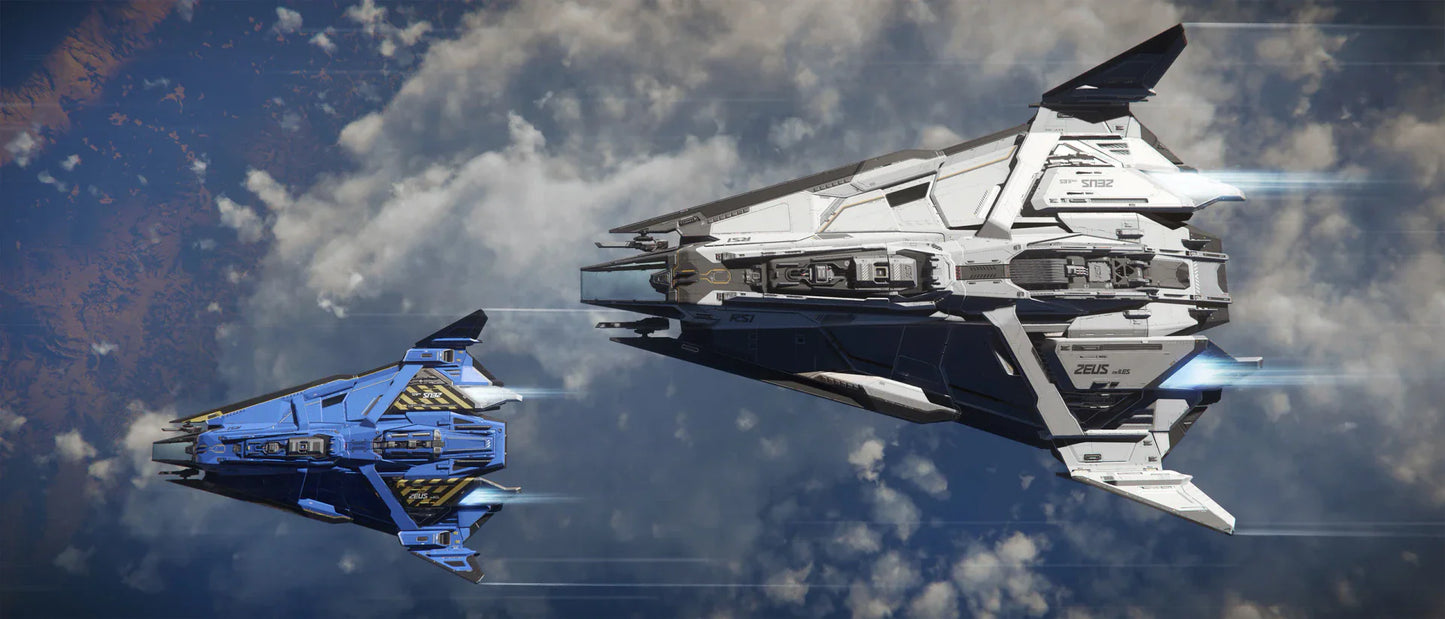
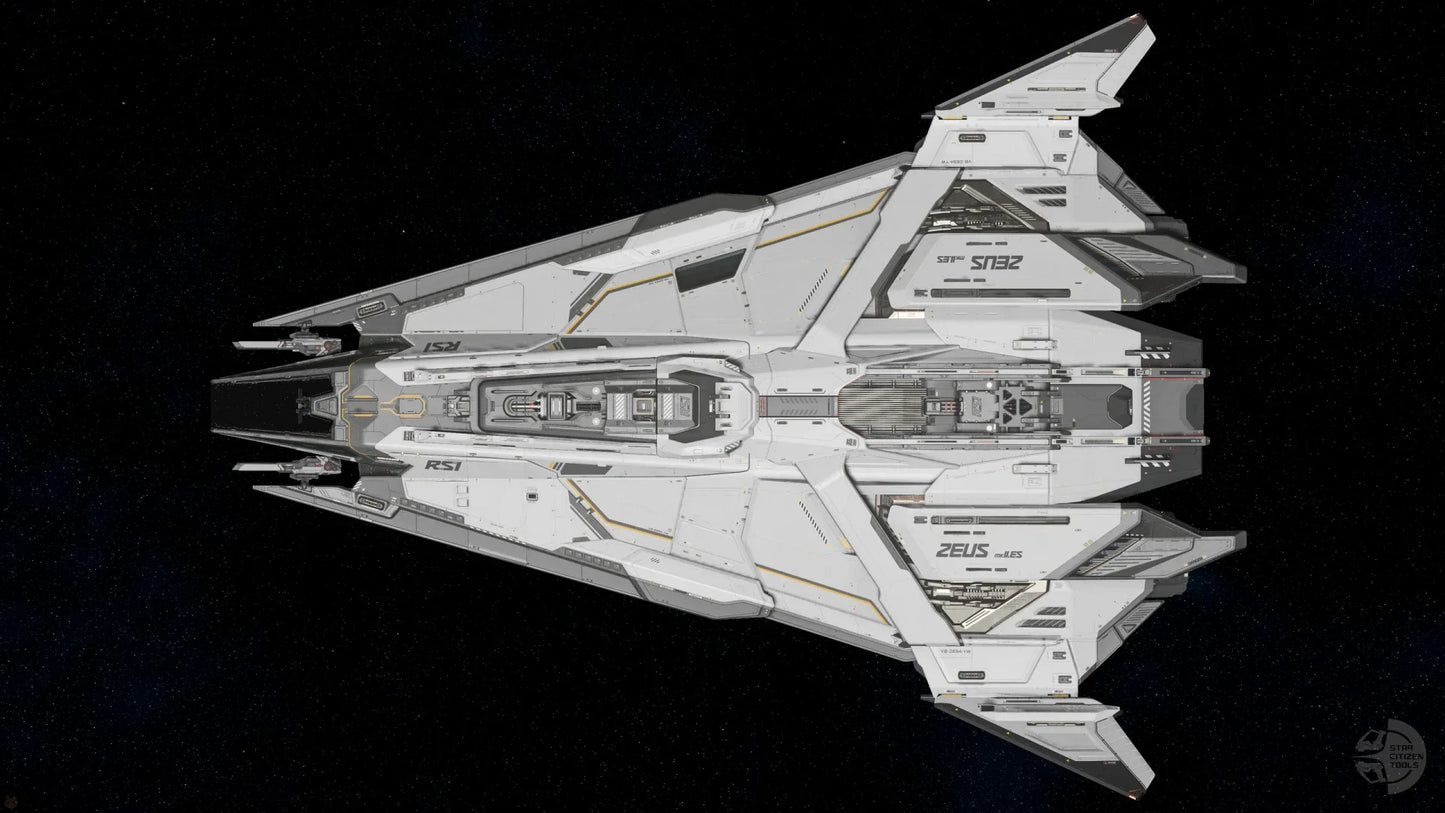
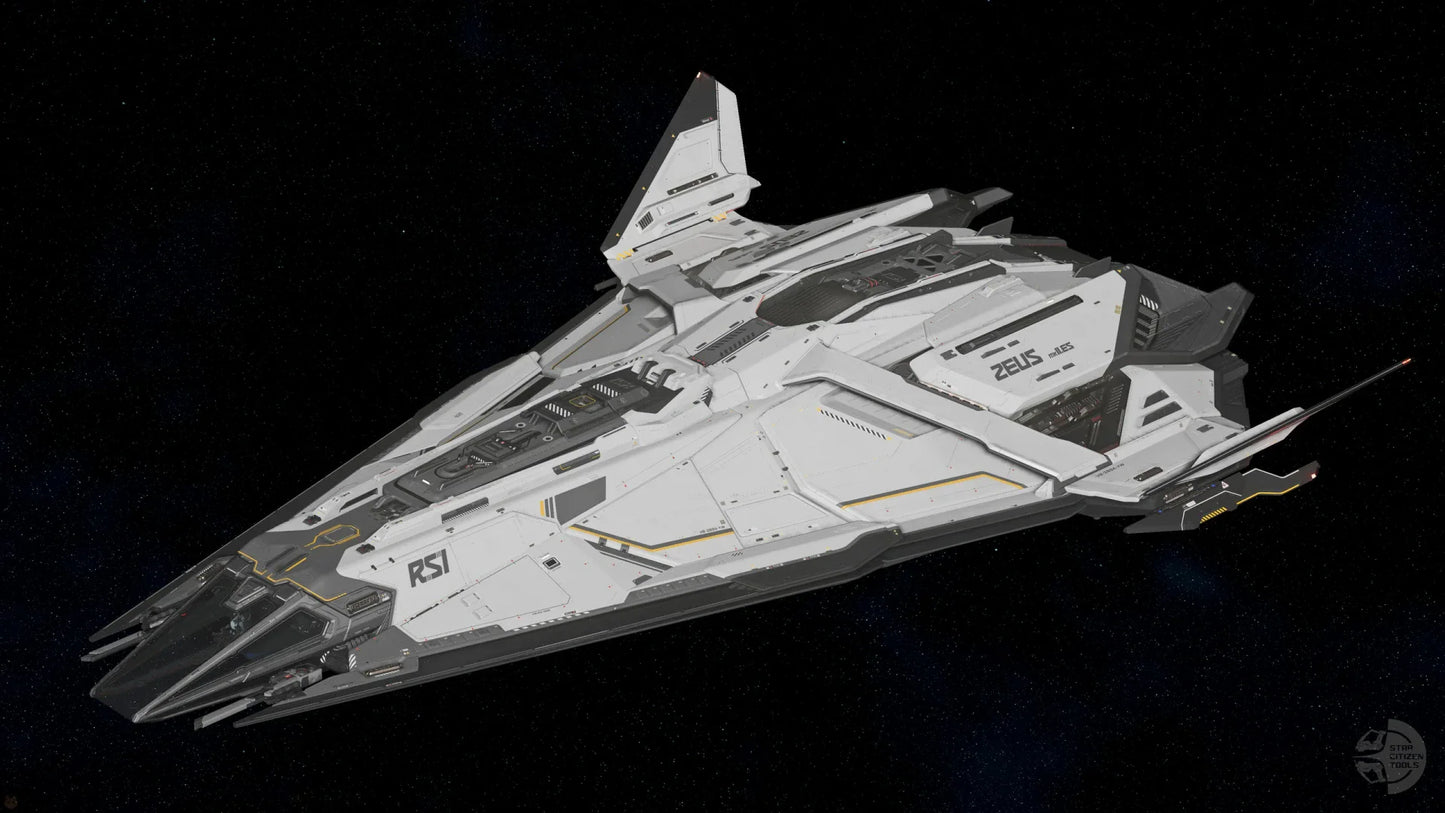
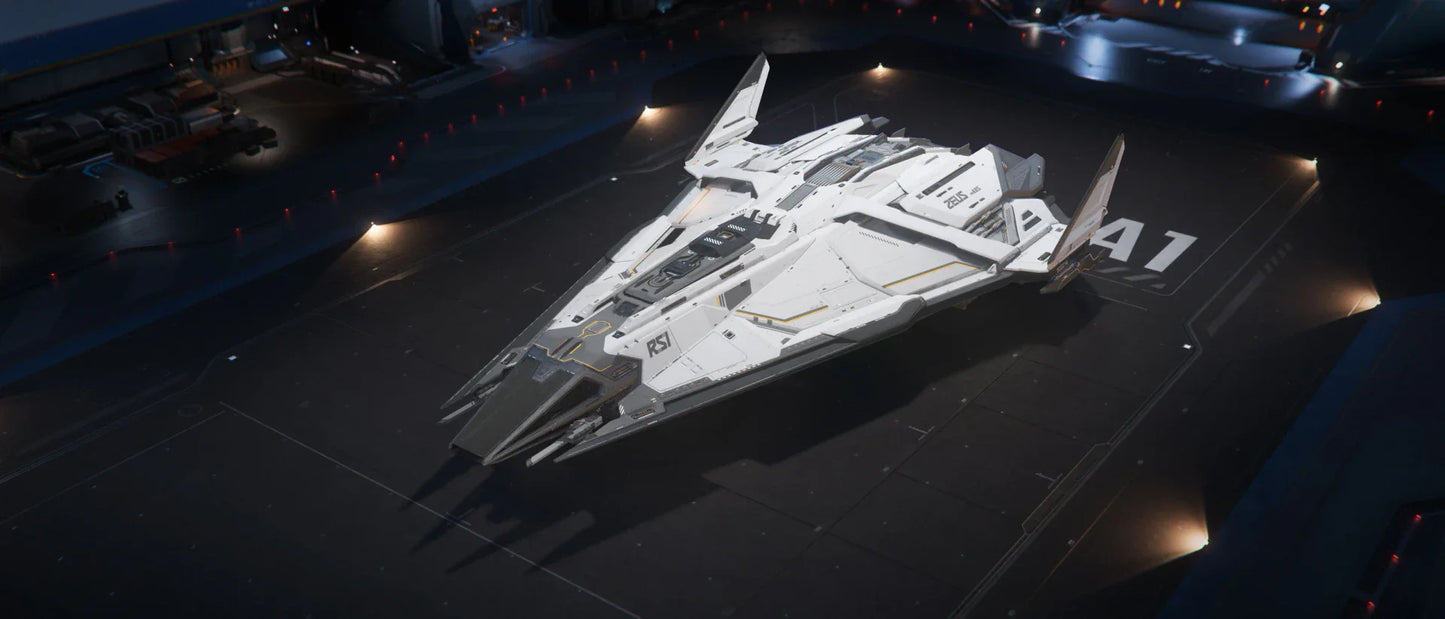
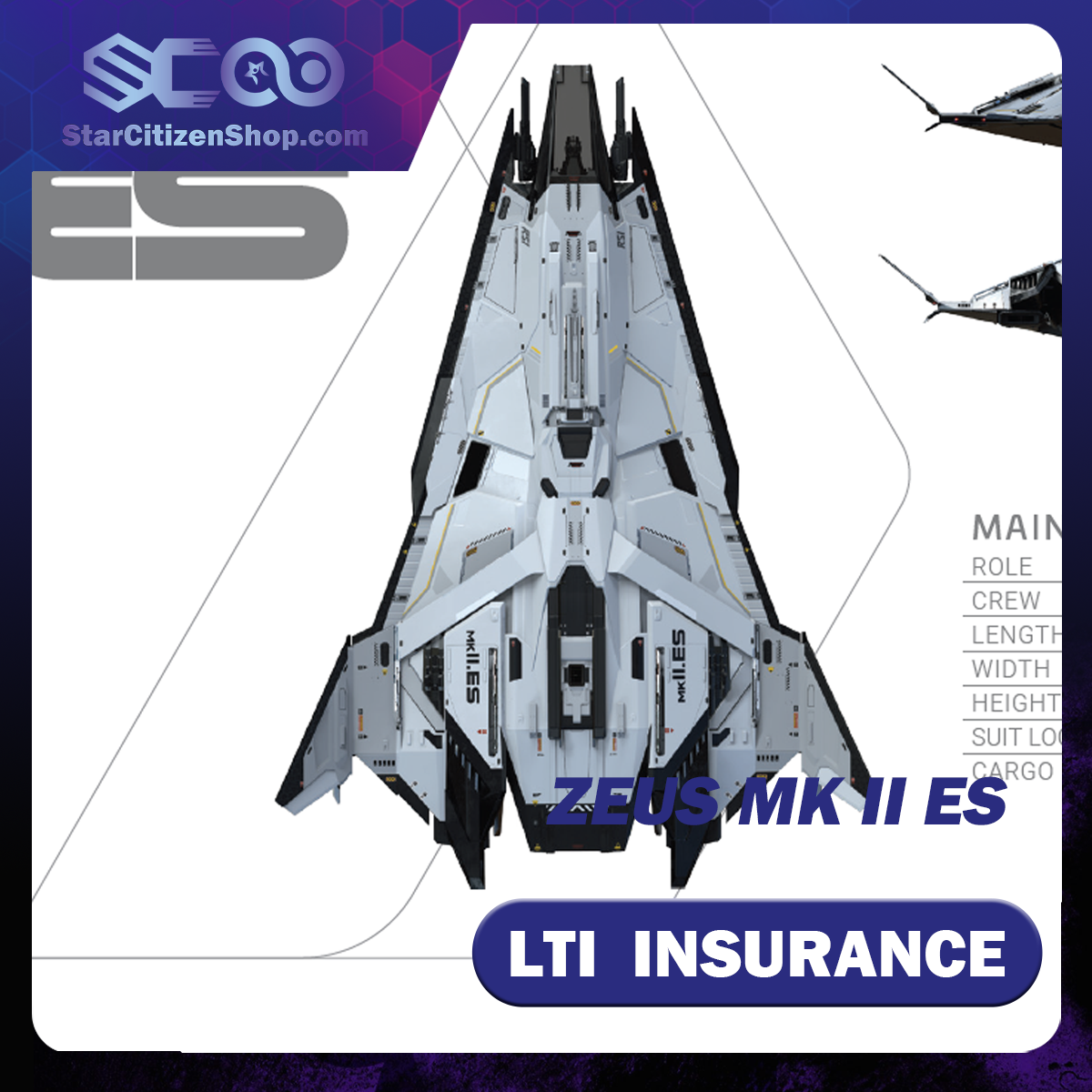
The RSI Zeus Mk II ES is a three-person medium exploration ship built for Star Citizen players who want extended-range travel, enhanced scanning, strong defensive shielding, a practical interior, 32 SCU of cargo capacity, and a manageable multicrew exploration platform.
It is not a dedicated cargo hauler, heavily armed gunship, luxury touring ship, armored reconnaissance craft, or capital-scale expedition vessel. The Zeus Mk II ES is best understood as the small-crew exploration member of the Zeus Mk II family: a compact expedition ship that combines a Size 3 radar, four Size 2 shield generators, crew habitation, cargo space, pilot weapons, a remote turret, and enough range-focused equipment to support travel beyond normal short-distance daily missions.
The Zeus Mk II ES became flyable with Star Citizen Alpha 3.24.2 alongside the Zeus Mk II CL. Current live-reference data lists 32 SCU, approximately 46 × 35 × 9 meters, 205 m/s SCM speed, 1,100 m/s maximum speed, two Size 4 pilot weapons, a two-gun Size 3 remote turret, eight Size 2 missiles, and four Size 2 shield generators. These live values remain subject to patch balancing.
The safest product-page positioning is simple:
The Zeus Mk II ES is the exploration ship you choose for three-person expeditions, enhanced radar, useful shields, practical cargo, and a complete compact interior — not for maximum cargo, maximum firepower, solo-fighter agility, or Carrack-level expedition support.
Build Your RSI Exploration Fleet with the Zeus Mk II ES
The Zeus Mk II ES occupies an useful position between smaller pathfinders and larger multicrew exploration ships. It offers more living space, protection, cargo capacity, and crew functionality than a single-seat explorer, while remaining smaller and easier to organize than ships such as the Constellation Aquila, 600i Explorer, or Carrack.
If you are looking to acquire this RSI expedition ship, you can explore our available options in the Star Citizen Ships and Vehicles Collection.
RSI Zeus Mk II ES Key Specifications
RSI’s current promotional specifications list the Zeus Mk II ES at 45.69 meters long, 34.3 meters wide in flight, 26.3 meters wide when landed, with three bridge crew positions, 32 SCU of cargo, four Size 2 shield generators, a Size 3 radar, and a larger exploration-focused fuel configuration. Current live data rounds the dimensions to approximately 46 × 35 × 9 meters and provides patch-specific weapon and speed values.
| Specification | RSI Zeus Mk II ES | Gameplay Meaning |
|---|---|---|
| Manufacturer | Roberts Space Industries | Part of RSI’s long-running civilian exploration and transport heritage. |
| Role | Expedition / Exploration | Designed for scanning, travel, discovery, and small-crew expeditions. |
| Status | Flight Ready | Available for current live gameplay. |
| Intended Crew | 3 | Built around a pilot, co-pilot, and turret operator. |
| Length | 45.69 m official / approximately 46 m current | Medium multicrew ship rather than a small pathfinder. |
| Width | 34.3 m in flight / 26.3 m landed | Folding configuration reduces its landed footprint. |
| Height | Approximately 9 m | Provides a full interior while remaining below larger exploration-ship scale. |
| Cargo Capacity | 32 SCU | Supports supplies, mission cargo, recovered items, or limited commercial hauling. |
| Current SCM Speed | 205 m/s | Reasonable medium-ship combat speed, but slower than lighter daily ships. |
| Current Maximum Speed | 1,100 m/s | Supports travel and disengagement without making the Zeus a fast interceptor. |
| Pilot Weapons | 2× Size 4 | Meaningful forward defense controlled by the pilot. |
| Remote Turret | 2× Size 3 | Gives the turret operator defensive coverage away from the pilot’s nose. |
| Missiles | 8× Size 2 | Useful secondary defense rather than a missile-ship identity. |
| Shield Generators | 4× Size 2 | The main defensive difference from the cargo-focused CL variant. |
| Radar | 1× Size 3 | Central exploration advantage over the cargo-focused CL variant. |
| Power Plants | 2× Size 2 current configuration | Supports shields, radar, weapons, life support, and ship systems. |
| Coolers | 2× Size 2 current configuration | Supports sustained operation of the medium ship’s systems. |
| Quantum Drive | 1× Size 2 current component | Current drive can be replaced with compatible alternatives. |
| Exploration Fuel Specification | Larger exploration-focused fuel arrangement | Intended to support travel beyond short-distance commercial routes. |
| Hydrogen Fuel Intakes | Included across Zeus variants | Can recover hydrogen fuel during suitable normal flight conditions. |
| Suit Lockers | 3 | Provides equipment storage aligned with the intended three-person crew. |
| Escape System | Escape-pod beds | Crew beds are designed to eject through the lower hull during emergencies. |
| External Access | Rear ramp, docking collar, and ground ladder | Provides multiple methods of boarding and connecting with other locations. |
| Core Gameplay | Exploration, scanning, travel, mission support, limited cargo | Best as a compact expedition ship with real crew workflow. |
The current live weapon setup includes two Size 4 Omnisky XII laser cannons for the pilot, two Size 3 Panther laser repeaters on the remote turret, and eight Size 2 Dominator II missiles. Factory equipment and performance may change between patches, so the permanent purchase decision should be based on the hardpoints and ship role rather than one specific stock loadout.
What Makes the RSI Zeus Mk II ES Valuable?
The Zeus Mk II ES is valuable because it combines exploration equipment, defensive strength, cargo space, and crew habitation inside a relatively compact multicrew hull. Smaller explorers often sacrifice cargo, crew facilities, protection, or long-range capability. Larger expedition ships provide more features but require more crew, more operating preparation, and substantially more space.
The Zeus Mk II ES sits between those groups.
The Zeus Mk II ES is large enough to feel like a real expedition ship, but small enough that a three-person crew can operate it without organizing an entire fleet.
Its defining qualities include:
- Size 3 exploration radar
- Four Size 2 shields
- Three-person bridge
- 32 SCU cargo grid
- Complete crew habitation
- Escape-pod beds
- Multiple ship entrances
- Pilot-controlled Size 4 weapons
- Crewed remote turret
- Medium-ship travel capability
- RSI civilian interior design
- Flight Ready status
The Zeus ES should not be marketed as a replacement for every explorer. Its value comes from balancing several exploration needs rather than maximizing one category.
Medium Expedition Gameplay Role
The Zeus Mk II ES is officially classified as an expedition spacecraft. Its purpose is to carry a small crew beyond routine commercial routes, locate useful contacts or discoveries through its radar system, transport supplies and recovered materials, and provide enough defensive equipment to improve the crew’s chances of returning safely.
RSI describes the ES as carrying a robust radar package alongside enhanced weaponry and shielding. Galactapedia similarly identifies it as a medium exploration spacecraft with an advanced radar system and updated defenses for frontier travel.
In practical gameplay, the Zeus Mk II ES fits several roles:
| Gameplay Use | Why the Zeus Mk II ES Fits |
|---|---|
| System exploration | Size 3 radar, crew habitation, fuel capacity, and quantum travel support longer routes. |
| Scanning and reconnaissance | The larger radar is the central specialist feature of the ES variant. |
| Pyro travel | Shields, living space, cargo capacity, and crew support suit less predictable regions. |
| Bunker missions | Rear cargo space and equipment storage support ground-combat crews. |
| Cargo-supported expeditions | 32 SCU can carry supplies, mission items, or discoveries. |
| Small-group daily play | Three bridge positions provide meaningful jobs without requiring a large crew. |
| Escort-independent travel | Pilot guns, missiles, turret coverage, and four shields provide basic self-defense. |
| Jump-point travel | Expedition role and jump-drive support fit cross-system travel. |
| Search and recovery | Radar, cargo capacity, and rear access support locating and retrieving items. |
| Mobile crew base | Beds, suit lockers, living facilities, and internal component access support repeated missions. |
The Zeus Mk II ES is designed to support the journey, the crew, and the discoveries — not merely travel from one landing zone to another.
Size 3 Radar and Exploration Scanning
The Size 3 radar is the main specialist reason to choose the Zeus Mk II ES over the Zeus Mk II CL. RSI describes the ES as having a robust radar package intended to locate discoveries. The official concept specifications list one Size 3 radar, while the CL uses a smaller cargo-focused equipment configuration.
The Zeus ES is the Zeus variant built to search the space around it, not simply carry cargo through it.
However, buyers should avoid treating a Size 3 radar as automatic omniscience. Practical sensor performance can still depend on distance, target signatures, environmental interference, and version tuning parameters.
The Zeus ES provides stronger exploration hardware, but the crew still needs to interpret and act on the information it finds.
Four Size 2 Shields and Defensive Exploration
The Zeus Mk II ES was originally specified with four Size 2 shield generators, compared with three Size 2 shields for the Zeus Mk II CL. RSI confirmed that the fourth shield was reserved for the exploration model. The additional defensive emphasis supports the ES’s intended role of travelling farther from normal support while protecting its crew and discoveries.
The Zeus ES carries stronger shielding because an exploration crew may not have a repair station or friendly escort nearby.
The four shields do not make the Zeus ES a heavy combat ship. Its survival still depends on early detection, pilot maneuvering choices, and tactical placement. The ship should be presented as a well-defended explorer, not as a gunship or armored frontline vessel.
Pilot Weapons and Defensive Firepower
The current Zeus Mk II ES gives the pilot two Size 4 weapon mounts. The current stock configuration uses two Omnisky XII laser cannons.
| Weapon Feature | Player Meaning |
|---|---|
| 2× Size 4 pilot weapons | Provides meaningful forward damage without requiring the turret operator. |
| Current laser-cannon loadout | Supports controlled medium-range energy fire. |
| Pilot-controlled | The ship remains capable of basic defense when flown alone. |
| Limited forward weapon count | Does not match the concentrated pilot firepower of the Corsair. |
| Replaceable compatible weapons | Final performance depends on the selected loadout and current balance. |
The Zeus ES carries enough pilot firepower to defend an expedition, but not enough to turn exploration into its excuse for hunting every ship it sees.
The Zeus ES should avoid prolonged direct engagements against dedicated combat vessels. Its exploration value disappears quickly if the crew repeatedly treats the ship as a medium gunship.
Remote Turret and Three-Person Combat Coverage
The Zeus Mk II ES carries one remote turret fitted with two Size 3 weapons in the current live configuration. RSI’s crew-role explanation identifies one bridge seat as the dedicated turret-operator position. The gunner currently controls the lower remote turret on the Zeus variants.
The turret gives the Zeus ES defensive coverage beyond the pilot’s forward view, but it becomes most valuable when a real third crew member is aboard.
A coordinated crew allows the pilot to focus on movement, the co-pilot to manage radar and systems, and the gunner to maintain defensive pressure.
Missile Capability
The current Zeus Mk II ES carries eight Size 2 missiles through two bespoke Size 4 missile launchers.
The Zeus ES carries missiles for defensive flexibility, not because it is a missile boat.
Players who want missile-heavy gameplay should choose a dedicated combat or missile platform instead.
32 SCU Cargo and Expedition Supplies
The Zeus Mk II ES carries 32 SCU of cargo. This is significantly less than the cargo-focused Zeus Mk II CL, but it gives the ES enough capacity to support real expedition logistics rather than functioning as a ship with only personal storage.
The ES cargo bay exists to support exploration first and generate cargo profit second.
Based on its rear-ramp arrangement and physical cargo area, compact ground vehicles may be usable when their dimensions fit the current interior. However, exact vehicle compatibility should always be tested in the current build, and carrying a vehicle may block or consume part of the cargo area. The ES should not be sold as a freight ship. Players who want maximum Zeus cargo capacity should choose the CL.
Crew Habitation and Expedition Interior
The Zeus Mk II ES provides a complete interior intended for a three-person crew. Official material identifies three suit lockers, three bridge positions, escape-pod beds, an airlock with a small docking collar, a nearby ground-access ladder, and the rear entrance.
The Zeus ES gives a small crew the rooms and equipment needed to treat the ship as a home between missions, not just a cockpit with a cargo box behind it.
The interior is still compact. Three players need to share corridors, equipment areas, cargo access, and bridge space. Buyers looking for large private rooms or luxury accommodations should compare larger Origin or expedition ships.
Escape-Pod Beds and Emergency Design
RSI confirmed that the Zeus’s beds are designed as escape pods that eject through the underside of the ship.
The Zeus does not simply give the crew somewhere to sleep; its beds are also part of the planned emergency-survival system.
This reinforces the ES’s expedition identity because distant crews may be operating far from stations or immediate rescue.
Docking Collar, Ladder, and Multiple Entrances
The Zeus Mk II includes a small-metric docking collar and a ground ladder in addition to its rear cargo entrance.
The Zeus gives its crew more than one way to board, leave, or connect with another location.
Fuel and Long-Range Travel Expectations
The Zeus Mk II ES is designed for expedition travel and carries a larger exploration-focused fuel arrangement than a typical short-range daily ship. The official concept specifications list an exploration-focused fuel tank, while the Q&A confirms that all Zeus variants include fuel intakes capable of recovering hydrogen fuel.
The Zeus ES is designed to remain useful after a starter ship would already be thinking about the next fuel stop.
The Zeus ES does not produce quantum fuel and should not be treated as an indefinitely self-sustaining vessel.
Speed and Handling Expectations
Current live-reference data lists the Zeus Mk II ES at approximately 205 m/s SCM speed and 1,100 m/s maximum speed. RSI stated during development that the Zeus Mk II would be slower than the C1 Spirit, which favors agility and speed over the Zeus’s larger system, shield, and cargo capacity.
The Zeus ES handles like a compact multicrew expedition ship, not like an oversized fighter or a fast Crusader courier.
Solo Gameplay Expectations
The Zeus Mk II ES can be flown solo. The pilot controls flight and the two Size 4 forward weapons, so one player can travel, scan, carry cargo, land, and complete many PvE or ground-based missions without additional crew.
Solo Zeus ES is practical for travel and missions, but a crewed Zeus ES makes better use of the radar, turret, systems, and expedition interior.
The Zeus ES is solo-capable, but it should not be marketed as a ship that gains nothing from crew.
Two-Player Gameplay Expectations
The Zeus ES can work especially well with two players. One player can fly while the second alternates between scanning, co-pilot support, turret use, cargo handling, engineering, and ground-mission preparation.
Two players can cover most Zeus ES activities comfortably, even though three players fill the intended bridge layout.
Three-Person Gameplay Expectations
Three players provide the intended Zeus Mk II ES crew experience. The pilot can focus on flight, the co-pilot can manage navigation and ship systems, and the turret operator can maintain defensive coverage.
Three players let the Zeus ES operate as a small expedition team rather than one pilot carrying two unused seats.
Real Player Use: Where the Zeus Mk II ES Feels Good
The Zeus Mk II ES feels best when a mission involves more than one simple objective. A real expedition may require the crew to fly across a system, scan contacts, land near a hostile site, retrieve equipment, store mission items, repair or reorganize inside the ship, and continue to another destination without returning immediately to a station.
The Zeus ES feels valuable when the crew uses the radar, interior, cargo bay, beds, shields, and multiple stations during the same journey.
A practical Zeus ES session can also feel less special when the ship is used only as a larger daily driver. If the pilot flies alone, ignores scanning, never uses the turret, carries only a few boxes, and stays on short safe routes, the ES can feel slower and heavier than a C1 Spirit or Cutlass Black while carrying far less cargo than the Zeus CL. The ship feels best when the mission actively uses its expedition tools: radar, crew space, shields, cargo support, and the ability to stay out for multiple tasks.
When the Zeus ES Advantage Becomes Less Important
The Zeus Mk II ES should not be presented as the best medium ship for every player. Its exploration advantage becomes less important when the route is short and fully known, the owner only hauls cargo, or the player wants maximum pilot-controlled damage.
When scanning, range, crew space, and expedition support do not matter, the Zeus ES becomes a medium ship carrying exploration equipment the owner is not using.
Cargo and Vehicle Expectations
The Zeus Mk II ES has enough cargo space to support useful equipment and limited freight, but the cargo bay is not the largest in its class.
The Zeus ES can carry supplies or a compact expedition load, but the crew must choose between cargo volume, open working space, and any vehicle it attempts to bring.
Combat and Survivability Expectations
The Zeus ES has useful defense for a medium explorer, but its purpose is to survive danger rather than seek it.
The Zeus ES can protect an expedition, but it should not turn every unknown radar contact into a combat mission.
Direct Vehicle Comparisons
Zeus Mk II ES vs Zeus Mk II CL
The ES is the exploration version. The CL is the cargo version.
| Ship | Best For | Main Difference |
|---|---|---|
| RSI Zeus Mk II ES | Exploration, scanning, range, and defensive travel | Size 3 radar, four Size 2 shields, and 32 SCU hold. |
| RSI Zeus Mk II CL | Medium cargo hauling | 128 SCU capacity, specialized cargo tractor-beam, and three Size 2 shields. |
Choose the Zeus ES if you want the exploration Zeus. Choose the Zeus CL if you want the cargo Zeus.
Zeus Mk II ES vs Origin 400i & Drake Corsair
Medium multi-crew exploration lines contrast industrial utilitarian setups against heavily armed combat superiority chassis.
| Ship | Best For | Main Difference |
|---|---|---|
| RSI Zeus Mk II ES | Practical small-crew expeditions | RSI working interior, four defensive shields, and integrated Size 3 sensor grid. |
| Origin 400i | Luxury exploration and fast touring | Premium structural presentation, customized forward nose bike bay, and high top speeds. |
| Drake Corsair | Armed exploration and pilot firepower | Significantly larger frame with devastating front-facing pilot weapon systems. |
Choose the Zeus ES if you want a compact protected explorer. Choose the Origin 400i if you want a luxury explorer with style. Choose the Corsair if you want massive pilot firepower and more vehicle capacity.
Zeus Mk II ES vs Constellation Aquila & Anvil Carrack
| Ship | Best For | Main Difference |
|---|---|---|
| RSI Zeus Mk II ES | Compact small-crew exploration | Lower organizational requirements, filled comfortably by a few friends. |
| RSI Constellation Aquila | Large RSI planetary expeditions | Larger classic Constellation framework including direct stock support for an Ursa Rover or snub-ship hook. |
| Anvil Carrack | Large deep-space flagship expeditions | Sub-capital tier platform providing onboard medical beds, support ship bays, and multiple cargo modules. |
Choose the Zeus ES if you want a compact explorer for small teams. Choose the Constellation Aquila for mid-tier planetary rover expeditions. Choose the Carrack for capital-tier deep space operations.
Zeus Mk II ES vs Freelancer DUR & Anvil Terrapin
| Ship | Best For | Main Difference |
|---|---|---|
| RSI Zeus Mk II ES | Modern medium exploration | Modern multi-room habitation layout, larger shield grids, and wider bridge workflow. |
| MISC Freelancer DUR | Compact solo-friendly exploration | Older traditional MISC workhorse frame with narrow cockpit viewing lanes. Built on the structural lineage of variants like the Freelancer MAX. |
| Anvil Terrapin | Armored military scouting and recon | Heavy armor shell configuration focusing on sensor tracking; lacks an internal cargo grid. Variant options trace into the Terrapin Medic. |
Choose the Freelancer DUR if you want a simple solo-friendly long-range workhorse. Choose the Anvil Terrapin for armored scanning depth. Choose the Zeus ES for a modern, well-defended three-person expedition platform.
Zeus ES vs C1 Spirit & Cutlass Black Daily Drivers
| Ship | Best For | Main Difference |
|---|---|---|
| RSI Zeus Mk II ES | Exploration-style travel and system pathfinding | Size 3 exploration scanner arrays and four defensive medium shield units. |
| Crusader C1 Spirit | Fast agile freight running | Sleeker lines with a more agile response curve and open cargo utility layouts. |
| Drake Cutlass Black | Broad flexible multi-role combat daily operations | Scrappy utility design featuring side doors and twin-manned turret mounts. |
Choose the C1 Spirit or Cutlass Black if you want a fast, versatile everyday daily driver. Choose the Zeus ES when cross-system travel, sensor scanning, and advanced shielding are central to your loop.
Cargo, Exploration, and Practical Expectations
The Zeus Mk II ES is a versatile explorer, but it should not be sold as the right ship for every mission.
If the buyer wants:
- Compact three-person exploration, choose the Zeus Mk II ES.
- Maximum Zeus cargo capacity, choose the Zeus Mk II CL.
- Luxury exploration, choose the Origin 400i.
- Heavy pilot firepower, choose the Drake Corsair.
- A rover and snub-equipped RSI explorer, choose the Constellation Aquila.
- A smaller long-range ship, choose the Freelancer DUR.
- Armored reconnaissance, compare the Terrapin.
- A complete large expedition platform, choose the Carrack.
- Fast medium cargo gameplay, choose the C1 Spirit.
- Solo pathfinding, consider the 315p or another small explorer.
- Medical expedition support, choose a ship with a medical facility.
- Large vehicle transport, choose a larger cargo or vehicle carrier.
The Zeus Mk II ES is valuable because it balances exploration hardware, crew space, defense, and cargo inside a manageable hull — not because it is the largest or strongest explorer.
Explore RSI Zeus Mk II ES Upgrade Paths
Players who prefer to build toward the Zeus Mk II ES from another pledge can explore available Star Citizen Zeus Mk II ES CCU Upgrades and plan an RSI, exploration, or medium-multicrew upgrade path.
Before purchasing, buyers should confirm whether the listing is a standalone ship or a CCU upgrade. Standard variants and custom configurations use the same baseline specifications. For full selection options, browse the Star Citizen Ships and Vehicles Collection.
Zeus ES vs Other Exploration and Daily Ships
| Ship Fleet Option | Primary Core Role | Compared with the Zeus Mk II ES |
|---|---|---|
| RSI Zeus Mk II ES | Medium Small-Crew Expedition | Good balance of radar, shields, cargo, and three-person operation. |
| RSI Zeus Mk II CL | Medium Freight | Better for cargo, but weaker as a dedicated exploration configuration. |
| Origin 400i | Luxury Exploration | Better for premium travel and Origin styling. |
| Drake Corsair | Armed Exploration | Better for pilot firepower and larger cargo or vehicle flexibility. |
| RSI Constellation Aquila | Large Exploration | Better for rover, snub craft, cargo, and broader expedition capability. |
| MISC Freelancer DUR | Compact Long-Range Exploration | Better for smaller-scale and mostly solo travel. |
| Anvil Terrapin | Armored Reconnaissance | Better for focused sensor work and hardened scouting. |
| Anvil Carrack | Large Expedition | Better for medical, support craft, rover, cargo, and extended multicrew operations. |
| Crusader C1 Spirit | Medium Cargo / Daily Ship | Better for speed and straightforward cargo utility. |
| Drake Cutlass Black | Multirole Daily Ship | Better for combat, cargo, and general versatility without specialist exploration focus. |
RSI Zeus Mk II ES vs Zeus Mk II CL
The Zeus CL is better for players who want the cargo Zeus. Its 128 SCU and rear tractor beam make it much more useful for freight and commercial logistics. The Zeus ES is better for players who want the exploration Zeus with a Size 3 radar, four shields, crew support, and 32 SCU for expedition supplies. Choose the Zeus CL for hauling. Choose the Zeus ES for scanning and protection.
RSI Zeus Mk II ES vs Corsair
The Drake Corsair is better for players who want heavier pilot firepower and a more aggressive armed-explorer identity. The Zeus ES is better for players who want a smaller, more defensive, more expedition-focused ship with a Size 3 radar and four shields. Choose the Corsair for weapons. Choose the Zeus ES for compact pathfinding safety.
RSI Zeus Mk II ES vs C1 Spirit
The Crusader C1 Spirit is better for faster daily hauling and simpler medium-ship utility. The Zeus ES is better for exploration-style travel, radar use, crew habitation, and expedition support. Choose the C1 for easy daily runs. Choose the Zeus ES when the journey itself is part of the gameplay.
RSI Zeus Mk II ES General Strengths and Limitations
| Strategic Strengths | Operational Limitations |
|---|---|
| Dedicated medium expedition identity | Exploration gameplay remains partly dependent on evolving scanning systems. |
| Size 3 radar array | Larger radar does not automatically reveal every discovery. |
| Four Size 2 shield generators | Still not a heavy combat or frontline ship. |
| 32 SCU cargo capacity | Much less cargo than the Zeus Mk II CL version. |
| Three intended bridge positions | Full value requires two or three coordinated players. |
| Practical solo operation | Solo pilots cannot use the turret and bridge support roles simultaneously. |
| Two Size 4 pilot weapons | Considerably less pilot firepower than the Corsair platform. |
| Two Size 3 turret weapons | Turret value is lost when no additional player is aboard. |
| Complete crew habitation | Interior spaces are compact for three active players. |
| Escape-pod bed installations | Full escape and rescue mechanics remain implementation-dependent. |
| Rear ramp, ladder, and docking collar | Cargo and vehicle access may become tight when the bay is heavily loaded. |
| Hydrogen fuel intakes included | Does not produce quantum fuel or remove the need to refuel. |
Who Should Buy the RSI Zeus Mk II ES?
The RSI Zeus Mk II ES is best for players who want a compact exploration ship that remains manageable for a small crew. It is especially suitable for two- or three-player groups, solo pilots who regularly invite friends, exploration-focused crews, and pilots upgrading from basic starters who want a well-defended vessel for frontier routes.
It works best when the crew uses the radar, interior, and shield parameters together. Players who only want to haul commodities should look into the Zeus CL, while those seeking heavy pilot guns should evaluate the Corsair.
RSI Zeus Mk II ES FAQ
Is the RSI Zeus Mk II ES worth buying in Star Citizen?
Yes, if you want a medium exploration ship with a Size 3 radar, four Size 2 shields, 32 SCU, crew habitation, and meaningful roles for up to three players. It is not ideal if you only want maximum cargo, heavy combat, luxury, or the smallest possible solo ship.
Is the Zeus Mk II ES Flight Ready?
Yes. The Zeus Mk II ES was added to the live game with Star Citizen Alpha 3.24.2 alongside the Zeus Mk II CL.
What is the main role of the Zeus Mk II ES?
It is a medium expedition and exploration spacecraft. RSI describes it as carrying a robust radar package, enhanced weapons, and stronger shielding to help its crew find discoveries and return safely.
Can the Zeus Mk II ES be flown solo?
Yes. The pilot controls the ship and its two forward Size 4 weapons. However, solo operation leaves the remote turret and some crew-management capacity unused.
How much cargo does the Zeus Mk II ES carry?
It carries 32 SCU of cargo. The cargo-focused CL version carries 128 SCU instead.
What radar does the Zeus Mk II ES have?
The official specification lists one Size 3 radar, which is a central feature of the exploration variant.
How many shields does the Zeus Mk II ES have?
It has four Size 2 shield generators. RSI confirmed that the fourth shield was reserved for the ES exploration model.
Does the Zeus Mk II ES have a tractor beam?
No, the exploration-focused ES does not use the CL’s cargo tractor-beam configuration. Buyers who want the dedicated rear tractor beam and maximum cargo capacity should choose the Zeus Mk II CL.
Can the Zeus Mk II ES carry an Ursa Rover?
The Zeus ES should not be purchased with the expectation that it can reliably carry a full-size Ursa. Buyers who require dedicated Ursa transport should compare the Constellation Aquila or a larger vehicle carrier.
Zeus Mk II ES or Zeus Mk II CL: which should I choose?
Choose the Zeus ES for exploration, a Size 3 radar, stronger shielding, and expedition gameplay. Choose the Zeus CL for 128 SCU and cargo handling.
Will the Zeus Mk II ES specifications change?
Possibly. Star Citizen remains under active development, and weapons, shields, radar, speed, fuel, cargo behavior, components, engineering, and exploration systems can change between patches.