Contact our Discord live support; we are online 24/7.
Pourquoi les joueurs choisissent LTI Hangar
Livraison rapide de Ships, vrai support client, et processus de RSI Gift clair — pensé pour les joueurs Star Citizen qui veulent une expérience d’achat plus simple et plus fluide.
Livraison moyenne en 20 à 30 min
Support Discord 24/7
Équipe de gamers avec plus de 10 ans d’expérience
Achat sécurisé · Stock propre · Aucun vendeur tiers
Support après-vente fiable
Suivi de commande en temps réel
FAQ — Questions fréquentes
Combien de temps prend généralement la livraison ?
Les commandes de Ships, CCU, Paints et Items Star Citizen sont généralement livrées sous 20 à 30 minutes.
Dans de rares cas, la livraison peut prendre jusqu’à 12 heures en raison du volume de commandes, des limites de gifting RSI, du statut du compte ou d’une vérification manuelle nécessaire.
Dans la plupart des cas, nous ne laissons pas les livraisons de Ships dépasser 12 heures, sauf en cas de problème exceptionnel, comme une limitation du système RSI, une restriction de compte ou une vérification client requise.
Ma commande de Ship est-elle protégée ?
Oui. La sécurité et la fiabilité sont nos priorités absolues.
Tous les Ships vendus par LTI Hangar viennent de notre propre stock. Aucun vendeur externe ni fournisseur tiers inconnu n’intervient dans la commande.
Chaque commande de Ship est traitée avec un suivi clair de la livraison, afin que le processus puisse être vérifié et retracé si notre support doit intervenir.
Nous offrons également une protection après-vente de 6 mois pour les problèmes éligibles liés à la livraison.
Grâce à notre propre stock, à une livraison traçable et à notre protection après-vente, l’achat est plus sûr que sur de nombreuses marketplaces tierces. C’est l’une des raisons pour lesquelles de nombreux joueurs choisissent LTI Hangar pour acheter leurs Ships Star Citizen.
Qu’est-ce que la protection après-vente de 6 mois ?Pourquoi les autres marketplaces ne peuvent-elles pas proposer cela ?
Dans le cas extrêmement rare où un problème survient avec un item pendant la livraison, ou jusqu’à 6 mois après la livraison, nous mènerons une vérification.
Si le problème est confirmé comme étant de notre responsabilité, nous vous proposerons soit un remplacement, soit un remboursement.
Pour nous aider à examiner le cas avec précision, il pourra vous être demandé de nous fournir des preuves pertinentes, comme des screenshots de votre RSI Hangar, les détails de commande ou les logs du RSI Hangar.
Le RSI Hangar Log permet de suivre l’état et l’historique de chaque Ship, notamment si l’item a été claim, échangé, melt, transféré ou modifié d’une autre manière après la livraison.
Nous examinerons les preuves fournies afin de déterminer la cause du problème.
Ce niveau de protection n’est pas courant sur de nombreuses marketplaces tierces, car elles dépendent souvent de vendeurs externes ou de sources de stock mélangées.
Chez LTI Hangar, tous les Ships proviennent de notre propre stock, et chaque commande dispose de records de livraison clairs. Cela nous permet d’offrir un support plus sûr, plus fiable et plus transparent.
Puis-je demander un remboursement après avoir claim le Ship, CCU, Paint ou Item ?
Une fois le RSI Gift claim, le Ship, CCU, Paint ou Item est lié au compte RSI qui l’a reçu.
En raison des limites du système de gifting de Star Citizen, un item déjà claim ne peut normalement pas être gift à nouveau, retourné, annulé ou relivré. Pour cette raison, les items déjà claim ne sont généralement pas éligibles à une annulation ou à un remboursement.
Une correction, un remplacement ou un remboursement ne peut être proposé que si nous confirmons que le problème vient de notre côté, par exemple si un mauvais item a été envoyé, s’il y a eu une erreur de livraison de commande, ou un autre problème de livraison vérifié causé par nous.
Avant de claim le RSI Gift, veuillez vous assurer que vous êtes connecté au bon compte RSI. Une fois le gift claim sur le mauvais compte, il ne peut normalement pas être transféré vers un autre compte.
Que se passe-t-il si le mauvais Ship, CCU, Paint ou Item est livré ?
Si nous confirmons qu’un mauvais item a été livré à cause d’une erreur de notre côté, nous examinerons le cas et proposerons une correction, un remplacement ou un remboursement lorsque cela est applicable.
Veuillez nous contacter avec votre numéro de commande, l’e-mail utilisé lors du paiement, ainsi que des screenshots clairs de votre RSI Hangar.
Pourquoi les noms des Ships Star Citizen que j’ai reçus sont-ils différents ?
Un Standalone CCU’ed est un vaisseau ou un véhicule complet. Ce n’est pas une amélioration à appliquer !
CCU’ed signifie simplement que le vaisseau ou véhicule a été obtenu en améliorant un modèle plus petit vers celui que vous achetez.
Veuillez également noter que, dans l’e-mail cadeau, seul le vaisseau utilisé comme base de l’upgrade sera indiqué. Pas d’inquiétude : le vaisseau qui apparaîtra réellement dans votre hangar sera bien celui que vous avez commandé.
Par exemple, voici à quoi ressemble un Polaris CCU’ed dans le hangar sur le site RSI.
COMMENT ÇA FONCTIONNE
Simple, rapide et sécurisé : découvrez comment ça fonctionne !
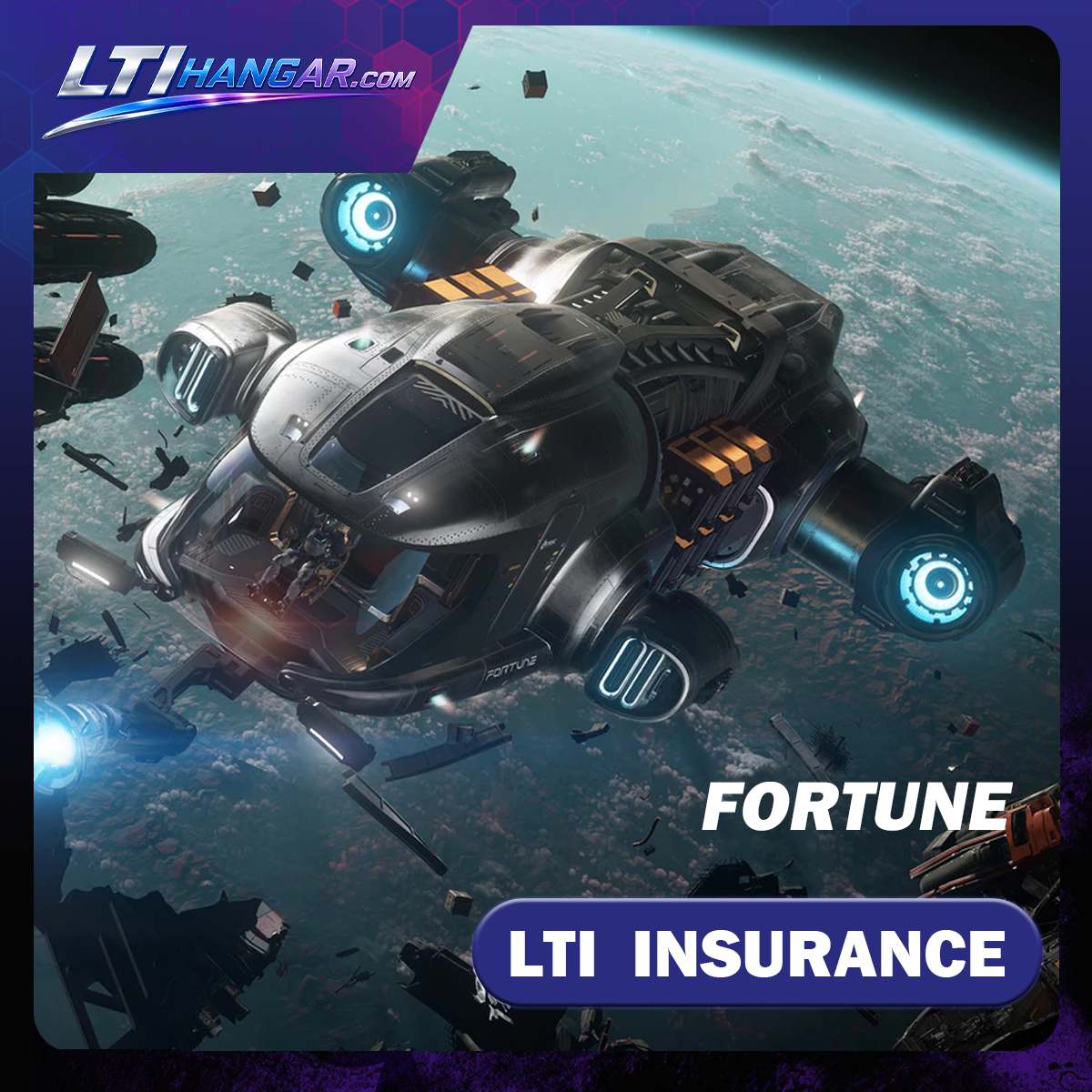
MISC Fortune Standalone Ship Gameplay Guide
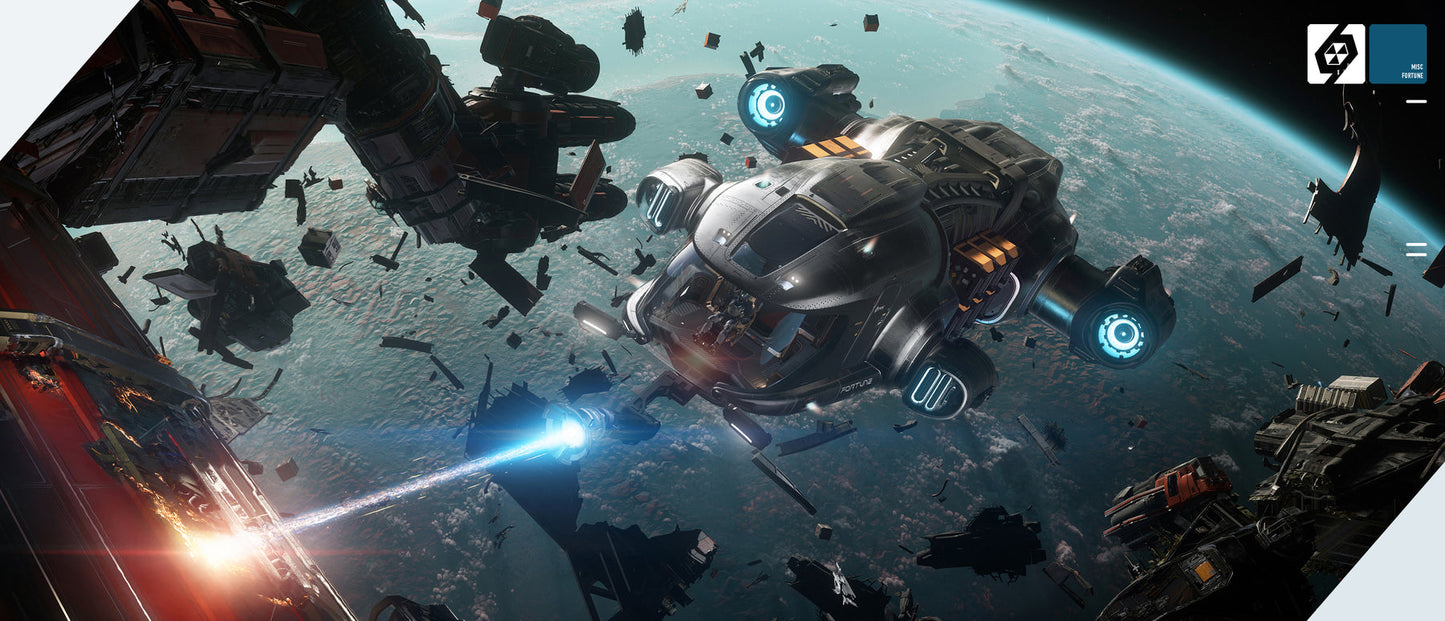
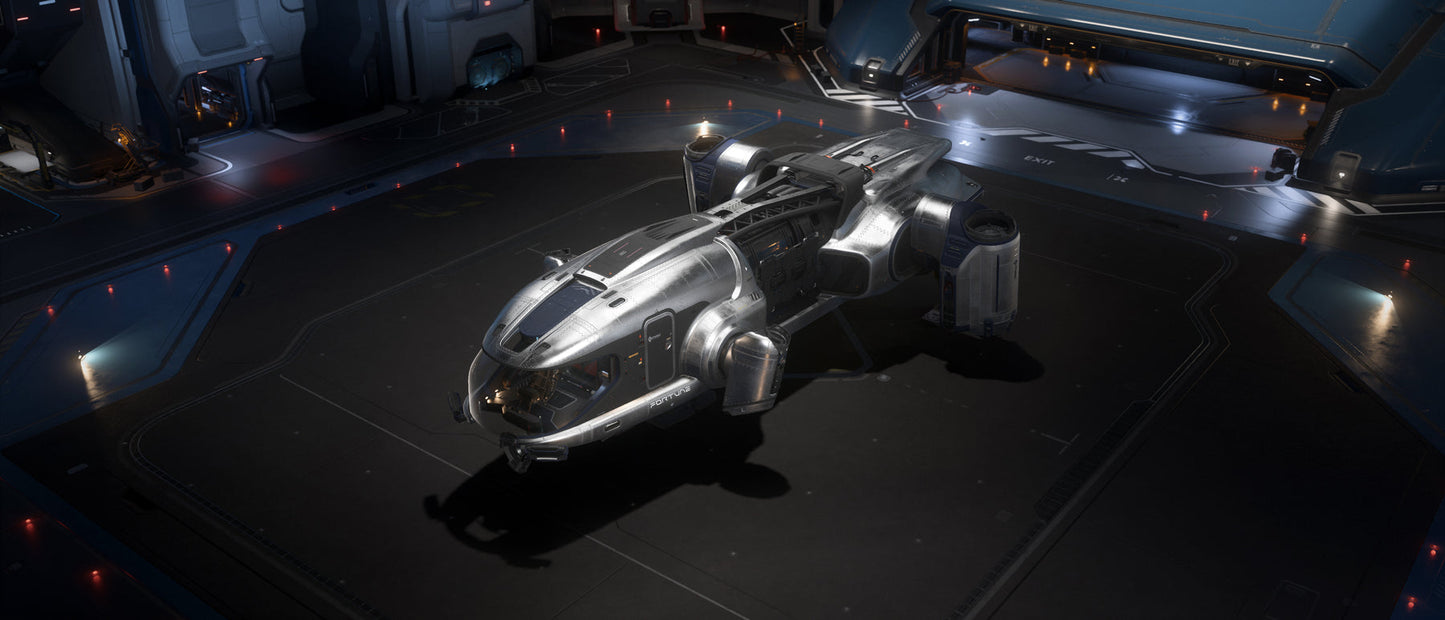
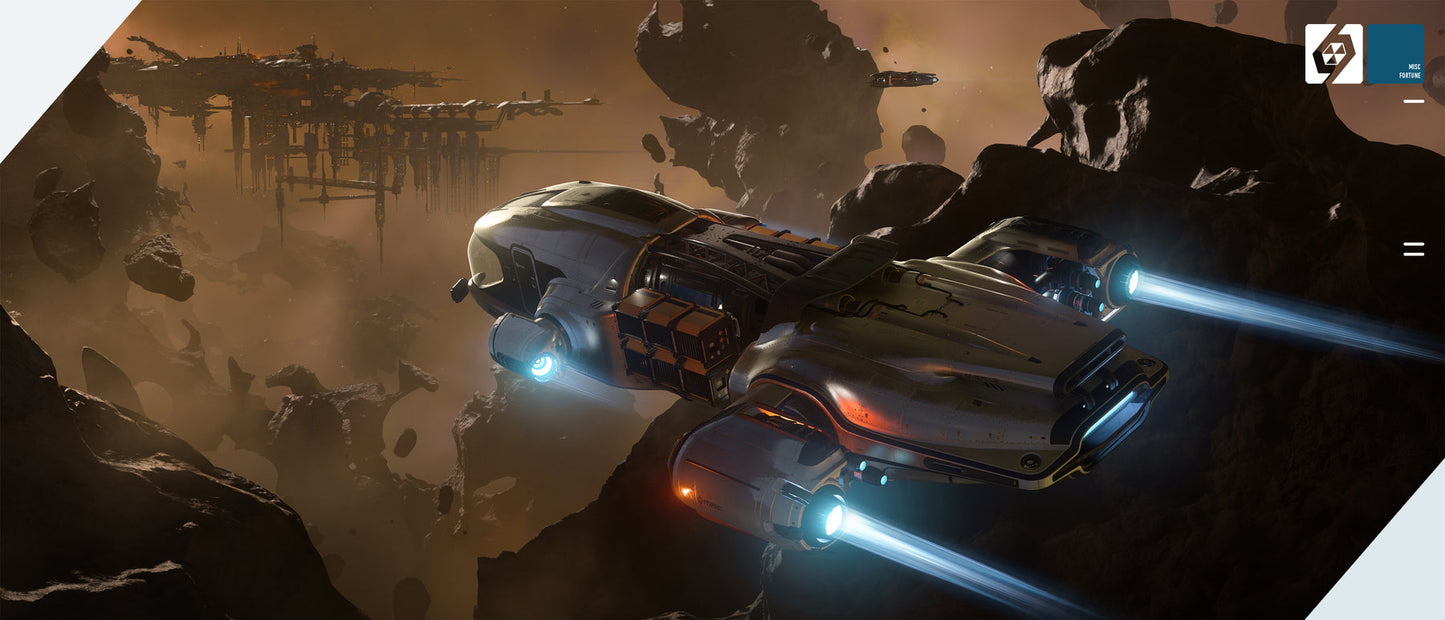
The MISC Fortune is a single-seat light salvage ship built for Star Citizen players who want hull scraping, structural salvage, automatic cargo-box handling, crew habitation, and a more organized solo industrial workflow.
It is not a combat ship, cargo hauler, mining vessel, heavy industrial platform, or multicrew salvage factory. The Fortune is best understood as the MISC solo salvager: a compact industrial ship that combines one articulated salvage arm, automated external cargo loading, 16 SCU of physical cargo capacity, a processing buffer, living facilities, and enough protection to support independent recovery operations.
MISC designed the Fortune around one-person salvage. Its external container system can automatically place up to twelve 1-SCU salvage boxes onto exterior cargo pylons, while an additional 4-SCU grid sits on the rear cargo lift. The current official salvage guide describes it as a balanced light salvager that favors hull scraping over structural salvage.
The safest product-page positioning is simple:
The Fortune is the salvage ship you choose for an organized solo workflow and automatic cargo handling — not for maximum structural-salvage speed, heavy combat, large-scale industrial output, or general cargo hauling.
Build Your MISC Industrial Fleet with the Fortune
The Fortune occupies the personal-salvage position within MISC’s industrial lineup. It is larger and more complete than an entry-level utility craft, but it remains small enough for one player to operate without organizing a crew. Its cockpit, salvage controls, external cargo dispenser, internal cargo lift, component access, bed, and hygiene facilities allow a pilot to remain away from a station for more than one short recovery job.
If you are looking to acquire this MISC solo salvager, you can explore our available options in the Star Citizen Ships and Vehicles Collection.
MISC Fortune Key Specifications
The official Fortune technical document lists a 26-meter hull, one pilot seat, 12 SCU of exterior cargo, 4 SCU of internal cargo, three Size 1 shield generators, two Size 1 pilot weapons, and one Size 1 salvage arm. Current live-reference data keeps the same basic role, dimensions, cargo layout, and solo salvage identity, but salvage values, tool balance, cargo behavior, and component performance can still change between patches.
| Specification | MISC Fortune | Gameplay Meaning |
|---|---|---|
| Manufacturer | Musashi Industrial & Starflight Concern | Uses MISC’s organized civilian-industrial design philosophy. |
| Role | Light Salvage | Built for personal wreck recovery rather than large industrial operations. |
| Status | Flight Ready | Available for current live gameplay. |
| Crew | 1 | All primary salvage and flight systems are operated by one pilot. |
| Length | 26 m | Compact enough to remain a small industrial ship. |
| Width | 16 m | Wider than a starter craft but manageable on normal pads. |
| Height | 7 m | Includes a full cockpit and basic habitation area. |
| Current SCM Speed | 143 m/s | Deliberate industrial handling rather than fighter mobility. |
| Current Maximum Speed | 975 m/s | Adequate for travel, but not intended for pursuit or rapid escape. |
| Physical Cargo Capacity | 16 SCU | Twelve exterior 1-SCU boxes plus a 4-SCU internal grid. |
| External Cargo | 12 SCU | Automatically arranged on two exterior cargo pylons. |
| Internal Cargo | 4 SCU | Located on the rear cargo lift for protected cargo or equipment. |
| Processing Buffer | 13 SCU current reference | Holds processed material before boxes are dispensed. |
| Salvage Equipment | 1× Size 1 articulated salvage arm | Handles scraping, tractor work, and structural salvage functions. |
| Salvage Head | Size 2 Baler head | Core processing and salvage tool assembly. |
| Scraper Module | Cinch scraper | Used for removing hull material. |
| Tractor Module | ReadyGrip tractor | Helps manipulate salvage pieces and debris. |
| Pilot Weapons | 2× Size 1 guns | Emergency defense rather than serious combat firepower. |
| Shield Generators | 3× Size 1 | Useful protection for a small industrial vessel. |
| Power Plant | 1× Size 2 | Supports salvage equipment and ship systems. |
| Cooler | 1× Size 2 | Current industrial cooling configuration. |
| Quantum Drive | 1× Size 1 | Normal small-ship quantum travel capability. |
| Crew Quarters | Bed and toilet/shower | Supports longer solo salvage sessions. |
| Core Gameplay | Hull scraping, structural salvage, cargo dispensing, wreck recovery | Best for independent industrial work. |
The Q&A distinguishes the Fortune’s physical cargo grids from its internal processing buffer: twelve boxes can be held externally, four SCU sits on the rear lift, and the filler station currently maintains a separate 13-SCU buffer.
What Makes the MISC Fortune Valuable?
The Fortune is valuable because it reduces one of the most repetitive parts of solo salvage: moving processed material from the filler station to the cargo grid. On many small salvage ships, the pilot must periodically leave the cockpit, enter the cargo area, eject a box, move it with a tractor beam, place it on the cargo grid, and return to the controls. The Fortune’s external loader automates much of that box-placement process.
The Fortune is not designed to eliminate salvage work — it is designed to eliminate unnecessary walking between the pilot seat and the cargo grid.
Its defining qualities include:
- Automated external box placement
- Twelve external 1-SCU cargo positions
- Four internal SCU
- Separate processing buffer
- Hull-scraping capability
- Structural-salvage capability
- Integrated tractor function
- Three Size 1 shields
- Full solo operation
- Bed and hygiene facilities
- MISC industrial construction
- A compact 26-meter hull
The external loader is the main reason to choose the Fortune over another personal salvager.
Solo Salvage Gameplay Role
The Fortune is purpose-built for one pilot. The pilot handles flight, scanning, wreck positioning, hull scraping, fracture preparation, structural salvage, tractor-beam use, cargo dispensing, power management, shields, quantum travel, and selling or unloading.
The Fortune gives one player a complete salvage ship without requiring a cargo assistant to keep the production line moving.
Its solo role works especially well for players who prefer steady industrial sessions rather than coordinating crew positions.
Hull-Scraping Gameplay
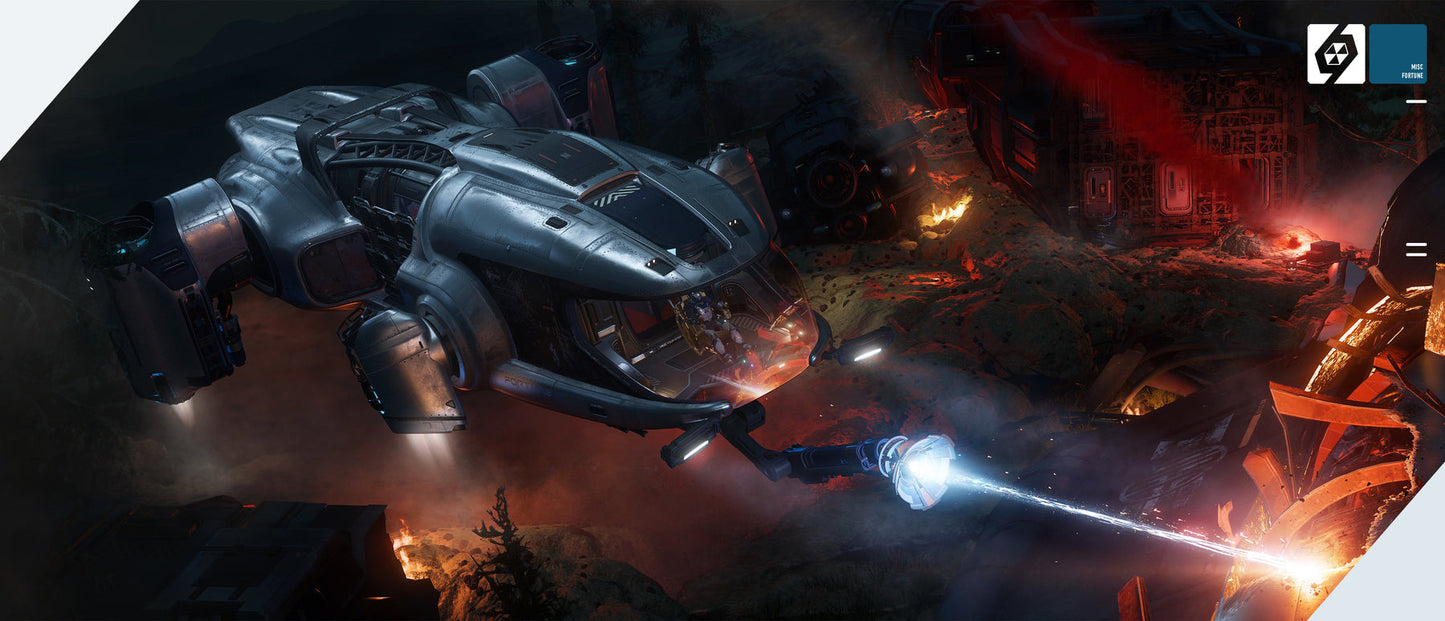
Hull scraping is one of the Fortune’s main activities. The Cinch scraper module removes valuable surface material from damaged or abandoned hulls and feeds it into the ship’s salvage-processing system. Once processed, the material enters the internal buffer and can then be converted into cargo boxes.
The current official salvage guide classifies the Fortune as a balanced light salvager with a stronger preference for hull scraping than structural recovery.
The Fortune is at its best when a wreck still has valuable hull material worth collecting before the frame is broken apart.
The exact income from hull scraping depends on the material recovered, contract costs, market prices, travel time, salvage-head balance, and current economy tuning. The Fortune should be marketed around its workflow and role rather than a guaranteed number of credits per hour.
Structural Salvage and Fracture Capability
The Fortune can perform fracture and structural salvage. Its salvage equipment can break suitable wreck sections into processable pieces, while the ship’s salvage “whiskers” assist with structural-recovery operations. However, the Fortune remains a light solo ship, so structural work is not intended to match the speed or scale of a medium or heavy industrial salvager.
The Fortune can finish the wreck after scraping it, but structural salvage is not the part of the ship designed to outperform every alternative.
The Fortune can perform both primary salvage stages, but buyers should not confuse versatility with heavy-industrial throughput.
Articulated Salvage Arm
The Fortune uses one articulated salvage arm fitted with a Baler head. The arm supports scraping and tractor functionality through the Cinch scraper and ReadyGrip tractor modules. Its articulated design allows the tool head to extend away from the hull and reach surfaces that may be awkward to approach using the ship’s nose alone.
The articulated arm lets the Fortune work around a wreck instead of forcing the entire ship to align perfectly with every surface.
The arm does not remove the need for good ship positioning. A poor angle can still reduce collection efficiency, block the salvage head, place the ship too close to debris, or make the external cargo pylons vulnerable to collision.
Automated External Cargo Loader
The Fortune’s most distinctive system is its automated external container dispenser. Processed salvage can be converted into 1-SCU boxes and placed directly onto two exterior cargo pylons. Each side holds six boxes, providing twelve external SCU in total.
The Fortune moves the boxes for you, allowing the pilot to spend more of the salvage run actually salvaging.
The main trade-off is equally clear: Most of the Fortune’s physical salvage cargo is carried outside the protected hull. This means the pilot should remain aware of nearby ships, cargo theft, collision risk, and tight hangars. The loader improves efficiency, but it does not make cargo invulnerable.
External and Internal Cargo Capacity
The Fortune has two separate physical cargo areas. The official technical document lists 12 SCU externally and 4 SCU internally, while the Q&A identifies the processing buffer as a separate storage stage rather than additional physical cargo-grid space.
The Fortune has 16 SCU of physical cargo space; the processing buffer gives the pilot working room, but it is not another 13 SCU of sale-ready cargo boxes.
This distinction matters because players sometimes add the buffer to the cargo grids and advertise the ship as carrying 29 SCU normally. That is misleading. The buffer stores material before it is converted and dispensed. To sell or transfer most processed salvage normally, it needs to become a physical box.
Rear Cargo Lift
The rear cargo lift provides four SCU of internal cargo capacity. Unlike the external pylons, this area can hold items inside the ship’s hull. It is useful for equipment or recovered objects that should not be exposed outside.
The rear lift gives the Fortune practical storage beyond processed salvage, but four SCU does not make it a cargo hauler.
The lift’s limitations include a small total capacity and no space for meaningful vehicle transport. Players who want to transport large amounts of recovered components may need a second cargo ship or a larger salvage platform.
Living Quarters and Longer Salvage Runs
The Fortune includes a bed, bathroom facilities, and a small living area. The official technical sheet lists standard crew quarters with a bed and toilet/shower, while current vehicle references also describe a compact kitchenette.
The Fortune is a small work ship that still gives its pilot somewhere to sleep and clean up between salvage sites.
The interior remains functional rather than luxurious. Buyers should not expect large crew rooms, passenger accommodations, a medical bed, or extensive storage facilities.
Shields and Survivability
The Fortune carries three Size 1 shield generators. That is a useful defensive package for a small industrial ship, but the Fortune is not built to remain in combat. Current reference data lists approximately 4,320 total shield strength before patch-specific modifiers and component changes.
The Fortune has enough shields to survive a mistake or begin an escape — not enough weapons to turn the salvager into a fighter.
Its vulnerabilities include slow SCM speed, large external cargo exposure, and weak pilot weapons. The correct defensive response is generally to stop salvaging and leave.
Pilot Weapons and Combat Expectations
The Fortune carries two pilot-controlled Size 1 guns. These weapons provide limited emergency defense against minor threats, but their combined damage is far below that of a dedicated fighter.
The Fortune can return fire, but its best combat system is an early quantum jump.
Speed and Handling Expectations
The current Fortune reference lists approximately 143 m/s SCM speed and 975 m/s maximum speed. The ship handles like a compact industrial craft rather than a fighter or fast courier.
The Fortune is maneuverable enough to work around a wreck, but too slow to treat danger as something it can always outrun after the attack begins.
Quantum Range and Remote Operations
The Fortune uses a Size 1 quantum drive and carries more quantum fuel than the Vulture according to its original Q&A comparison. Current live performance still depends on the installed drive, route, fuel balance, and patch.
The Fortune is designed to reach salvage sites without feeling permanently tied to the nearest station, but it is still a small ship with small-ship logistics.
Real Player Use: Where the Fortune Feels Good
The Fortune feels best when the pilot completes several production cycles without leaving the cockpit every time a box is created. A real salvage session may involve lining up beside a wreck, scraping useful hull material, allowing the buffer to fill, dispensing boxes automatically to the external racks, and continuing work with only occasional interruption.
The Fortune feels efficient when the external loader keeps the salvage process moving; it feels less special when the pilot spends most of the session performing structural salvage or manually handling recovered components.
A real pilot also notices the compromises: external boxes remain exposed, only 4 SCU is protected internally, and one salvage arm limits total production. The Fortune rewards organized, low-risk solo salvage rather than aggressive industrial work in contested areas.
A practical Fortune session also includes moments where the automatic loader feels less valuable. If the pilot is mostly doing structural salvage, recovering loose components, working around large wrecks, or operating in a contested area where exposed cargo becomes a risk, the Fortune can feel less efficient than it looks on paper. Once the external pylons are full, the pilot still has to decide whether to sell, transfer cargo, or keep working with limited protected space.
When the Fortune’s Advantage Becomes Less Important
The Fortune should not be presented as the best salvager for every player. Its external-loader advantage becomes less important when a second player is already available to move cargo, or the pilot mainly performs structural salvage.
When automatic box handling is not saving meaningful time, the Fortune becomes a small single-arm salvager carrying most of its cargo outside.
The Fortune is useful in its intended role, but the owner needs the correct mission, transport plan, crew, and battlefield support to reach that role consistently.
Direct Vehicle Comparisons
MISC Fortune vs Drake Vulture
Both are solo light-salvage ships capable of hull scraping and structural recovery. The Fortune focuses on an organized automated cargo workflow, while the Vulture uses a more conventional internal processor and cargo hold.
| Ship | Best For | Main Difference |
|---|---|---|
| MISC Fortune | Automated solo scraping workflow | Automatically dispenses twelve boxes onto external pylons. Scraping preference. |
| Drake Vulture | Direct traditional salvage workflow | Uses an internal cargo area and more manual box handling. Structural focus. Maps to typical Drake design. |
Choose the Fortune if you want automatic cargo handling and a scraping-focused MISC workflow. Choose the Vulture if you want the established Drake salvager and more structural-salvage emphasis.
MISC Fortune vs RSI Salvation & Argo MOTH
Personal light-salvage options step up from basic baseline hull scrapers into medium-tier industrial salvage platforms.
| Ship | Best For | Main Difference |
|---|---|---|
| MISC Fortune | Practical solo light-salvage operations | 16 SCU physical capacity and automated external cargo loaders with full habitation. |
| RSI Salvation | Entry-level salvage introduction | Smaller platform with a simpler introduction to basic hull scraping mechanics. Weaker capacity holds. |
| Argo MOTH | Medium industrial salvage tiers | Greater wreck capacity, larger structural processing grids, and group-operation potential. |
Choose the Salvation if you want a small entry-level starting point. Choose the Fortune if you want an automated, well-equipped solo salvager. Choose the MOTH if your operation requires moving into medium industrial wreck recovery.
MISC Fortune vs Aegis Reclaimer & MISC Prospector
| Ship | Best For | Main Difference |
|---|---|---|
| MISC Fortune | Solo light salvage and hull scraping | Compact solo 26-meter frame with automated exterior box deployment features. |
| Aegis Reclaimer | Heavy organization multicrew salvage | Massive sub-capital tier salvage factory featuring heavy structural crushing modules and large cargo bays. |
| MISC Prospector | Solo planetary and asteroid mining | Swaps the entire salvage processing track for mining laser arrays and natural ore saddlebag pods. Built on basic industrial loops. |
Choose the Fortune if you want to recycle small wrecks alone. Choose the Reclaimer if you want to run a massive multi-person salvage operation. Choose the MISC Prospector if you prefer mining natural mineral resources over wreck recovery.
MISC Fortune vs a General Daily Ship
Multi-role freighters provide versatile daily operation vectors that contrast directly against specialized single-profession industrial craft.
| Ship Type | Best For | Main Difference |
|---|---|---|
| MISC Fortune | Dedicated solo salvage | Carries the processing buffer, scraping arm, and automated box grids needed for wreck recycling. |
| General Daily Ship | Cargo, combat, and vehicle travel | Versatile multi-role profile mapping to hulls like the Crusader C1 Spirit, Drake Cutlass Black, or Freelancer DUR. Cannot perform salvage. |
Choose the Fortune if you are dedicated to the salvage loop. Choose a general multi-role daily driver if you need one vessel to cover combat, trading, vehicle transport, and varied missions.
MISC Fortune vs Solo Salvage Family
The Fortune should be placed carefully within the solo and light-salvage family based on cargo-automation parameters.
| Salvage Option | Best For | Main Difference |
|---|---|---|
| MISC Fortune | Solo hull scraping and automatic box handling | Organized MISC workflow, exterior box placement, bed, bathroom, and 16 SCU physical cargo. |
| Drake Vulture | Established solo salvage workflow | More traditional Drake layout and more structural-salvage emphasis. Internal bay handling. |
| RSI Salvation | Entry-level salvage | Smaller and more accessible introduction to the salvage profession. Lacks long-range habitation. |
| Argo MOTH | Medium industrial salvage | Larger wreck capacity and a step above light personal salvage loops. |
| Aegis Reclaimer | Heavy multicrew salvage | Industrial-scale recovery for large organizations and capital ship processing. |
Choose the Fortune when you want one pilot, living facilities, automated 1-SCU box placement, and a cleaner MISC salvage workflow. Choose the Vulture when you prefer Drake’s established salvage layout and more direct structural-salvage emphasis. Choose the Salvation when you want a smaller entry-level salvager. Choose the MOTH or Reclaimer when the job requires larger wrecks, more cargo, and a bigger operation.
Cargo, Salvage, and Practical Expectations
The Fortune is specialized. It should not be sold as a universal industrial ship.
If the buyer wants:
- Automatic solo salvage cargo handling, choose the Fortune.
- The established Drake light salvager, choose the Vulture.
- Entry-level hull scraping, choose the RSI Salvation.
- Medium industrial salvage, choose the Argo MOTH.
- Heavy multicrew salvage, choose the Reclaimer.
- Solo mining, choose the Prospector.
- General cargo and daily missions, choose a multirole transport.
- Combat, choose a fighter or armed multirole ship.
- Large component recovery, use a larger salvage and cargo operation.
The Fortune is valuable because it improves the solo salvage workflow — not because it replaces every industrial, cargo, or combat ship.
Explore MISC Fortune Upgrade Paths
Players who prefer to build toward the Fortune from another pledge can explore available Star Citizen Fortune CCU Upgrades and plan a MISC or industrial upgrade path.
Before purchasing, buyers should confirm whether the listing is a standalone ship or a CCU upgrade. Standard variants and custom livery packages use the same baseline specifications. For full selection options, browse the Star Citizen Ships and Vehicles Collection.
MISC Fortune vs Other Star Citizen Industrial Ships
| Ship Fleet Option | Primary Core Role | Compared with the Fortune |
|---|---|---|
| MISC Fortune | Solo Light Salvage | Good for automated external cargo loading and hull-scraping workflow. |
| Drake Vulture | Solo Light Salvage | Better for players preferring Drake’s direct workflow and structural focus. |
| RSI Salvation | Entry-Level Salvage | Better as a smaller introduction to hull scraping. |
| Argo MOTH | Medium Salvage | Better for larger wrecks and greater industrial scale. |
| Aegis Reclaimer | Heavy Salvage | Better for large multicrew recovery operations. |
| MISC Prospector | Solo Mining | Better for extracting minerals rather than recovering wrecks. |
| Argo MOLE | Multicrew Mining | Better for crewed mineral extraction. Matches multi-laser configurations. Supports versions like the MOLE Carbon Edition. |
| Greycat ROC | Ground Mining | Better for low-cost surface gem mining. Carried via heavy vehicle holds. Compatible variants scale into ROC-DS configurations. |
| Drake Mule | Cargo Utility | Better for moving freight around ships and facilities. |
| MISC Freelancer | Medium Transport | Better for general cargo and travel. Built on frames like the baseline Freelancer. |
| Drake Cutlass Black | Multirole Transport | Better for combat, cargo, and vehicle utility. Uses Cutlass Black frameworks. |
| Crusader C1 Spirit | Medium Cargo | Better for fast freight and daily use. Maps to C1 Spirit designs. |
MISC Fortune vs Drake Vulture
The Vulture is better for players who prefer Drake’s established salvage layout and a more direct structural-salvage workflow. The Fortune is better for pilots who value automatic exterior box placement, MISC living facilities, and a scraping-focused solo loop. Choose the Vulture for the traditional Drake salvager. Choose the Fortune for a more organized MISC workflow.
MISC Fortune vs RSI Salvation
The Salvation is better for players who want a smaller entry-level salvage platform. The Fortune is better for pilots who already know they want regular solo salvage and want more cargo handling automation, living facilities, and a longer personal workflow. Choose the Salvation to start smaller. Choose the Fortune for a fuller solo salvage ship.
MISC Fortune vs Argo MOTH
The MOTH is better for larger recovery projects and a higher industrial scale. The Fortune is better for personal contracts, smaller wrecks, and low-crew salvage sessions. Choose the Fortune for solo light salvage. Choose the MOTH when the job has moved beyond personal salvage scale.
MISC Fortune vs Reclaimer
The Reclaimer is better for large wrecks, organization salvage, and long industrial operations with a crew. The Fortune is better for independent one-player recovery work. Choose the Fortune to salvage alone. Choose the Reclaimer to run a salvage operation.
MISC Fortune vs Prospector
The Prospector is better for mining natural resources. The Fortune is better for recycling wrecks, abandoned ships, and salvage material. Choose the Prospector for rocks. Choose the Fortune for wrecks.
MISC Fortune General Strengths and Limitations
| Strategic Strengths | Operational Limitations |
|---|---|
| Purpose-built solo salvage ship | No meaningful multicrew expansion options. |
| Automated external container loading | Twelve SCU of cargo remains externally exposed on the pylons. |
| 16 SCU of physical cargo capacity | Only 4 SCU is protected inside the lower hull lift. |
| Separate 13-SCU processing buffer | Buffer material is not the same as physical sale-ready cargo. |
| Can perform hull scraping | One salvage arm limits total production velocity. |
| Can perform structural salvage | Better suited to scraping than heavy structural processing. |
| Integrated tractor module | Does not replace a dedicated cargo or towing ship. |
| Three Size 1 shield generators | Weak offensive weapons and poor combat suitability. |
| Bed and toilet/shower | Small functional interior rather than full crew habitation. |
| Compact 26-meter hull | Too small for industrial-scale wreck recovery. |
| Reduces manual box movement | External loading requires clearance and cargo awareness. |
| Useful rear 4-SCU lift | Cannot carry meaningful vehicles or large freight loads. |
Who Should Buy the MISC Fortune?
The MISC Fortune is best for players who want a practical solo salvage ship with automated cargo handling. It is especially suitable for solo industrial pilots, regular hull-scraping players, MISC collectors, and salvagers who mainly recover smaller wrecks independently.
It is also a useful fleet addition for players who already own combat or cargo specialists. The Fortune can handle the industrial extraction loop while larger freighters manage high-volume commercial hauling runs.
MISC Fortune FAQ
Is the MISC Fortune worth buying in Star Citizen?
Yes, if you want a solo light-salvage ship with automatic exterior cargo loading, hull scraping, structural salvage, 16 SCU of physical cargo, and living facilities. It is not ideal if you want maximum structural throughput, protected cargo, combat, or multicrew industry.
Is the MISC Fortune Flight Ready?
Yes. The Fortune is Flight Ready and available for current live salvage gameplay.
What is the main role of the Fortune?
The Fortune is a light solo salvage ship designed for hull scraping, structural recovery, and automated handling of processed salvage boxes.
How many crew members does the Fortune need?
It requires one pilot. There is one pilot station and no dedicated co-pilot, gunner, or cargo-operator position.
How much cargo does the Fortune carry?
It has 16 SCU of physical cargo capacity: twelve external SCU on the cargo pylons and four internal SCU on the rear lift.
Does the Fortune have 29 SCU?
Not as normal physical cargo. It has 16 SCU of cargo-grid space and a separate current processing buffer of 13 SCU. Buffer material must still be converted into physical cargo boxes for normal transport and sale.
How does the external cargo loader work?
The ship’s container system automatically dispenses processed material into 1-SCU boxes and places up to twelve boxes on the exterior cargo pylons.
Is the Fortune’s external cargo protected?
The boxes are physically attached outside the main hull rather than stored in an enclosed cargo room. Pilots should therefore consider collision, theft, and exposure risks when travelling or operating near other ships.
Can the Fortune perform hull scraping?
Yes. Hull scraping is one of its main roles, and the current official salvage guide describes the Fortune as favoring hull scraping over structural salvage.
Can the Fortune perform structural salvage?
Yes. It can fracture wrecks and process structural material, assisted by its salvage equipment and structural-salvage whiskers.
Should I buy the Fortune if I mostly do structural salvage?
Not usually as the first choice. The Fortune can perform structural salvage, but its main workflow is hull scraping with automatic external box placement. If you mostly want to break down larger wrecks and process structural material, the Vulture, MOTH, or Reclaimer may fit better depending on your budget and crew size. The Fortune is easier to justify when hull scraping, solo workflow, and reduced box handling matter most.
What salvage equipment does the Fortune have?
Current data lists one articulated salvage arm with a Size 2 Baler head, a Cinch scraper module, and a ReadyGrip tractor module.
Does the Fortune have a tractor beam?
Yes. Its salvage-arm equipment includes a tractor module for manipulating debris and salvage objects.
How many shields does the Fortune have?
The Fortune carries three Size 1 shield generators.
What weapons does the Fortune have?
It has two pilot-controlled Size 1 guns. These provide limited emergency defense and should not be treated as serious combat armament.
Does the Fortune have a bed?
Yes. It includes a bed and basic crew habitation for one pilot.
Does the Fortune have a bathroom?
Yes. The official technical sheet lists a toilet/shower as part of its standard crew quarters.
Fortune or Vulture: which should I choose?
Choose the Fortune for automated external cargo handling, MISC habitation, and a scraping-focused workflow. Choose the Vulture for Drake’s established direct salvage layout and more structural-salvage emphasis.
Should I choose the Fortune, Vulture, or Salvation?
Choose the Fortune if you want a solo MISC salvager with automatic exterior box placement, living facilities, and a hull-scraping-focused workflow. Choose the Vulture if you want the established Drake light salvager with a more direct internal cargo workflow and more structural-salvage emphasis. Choose the Salvation if you want a smaller entry-level salvage ship. The Fortune is the better fit when workflow comfort matters more than being the cheapest or most established option.
Fortune or Reclaimer: which should I choose?
Choose the Fortune for independent solo salvage. Choose the Reclaimer for large-scale multicrew industrial recovery, much greater cargo capacity, and larger wrecks.
Fortune or MOTH: which should I choose?
Choose the Fortune if you want a personal light salvager that one pilot can operate comfortably. Choose the MOTH if you want to move into medium industrial salvage with larger wreck capacity and more operational scale.
Is the Fortune better than a daily ship?
No, not for general utility. A daily ship such as a Cutlass Black, Freelancer, or C1 Spirit is better for cargo, combat, deliveries, and vehicle transport. The Fortune is better when ship-based salvage is the main goal.
Is the Fortune good for combat?
No. It has two small pilot guns and three shields, but it is an industrial ship. Its best defensive answer is to leave early rather than fight.
Can the Fortune carry a vehicle?
It should not be purchased for vehicle transport. Its cargo arrangement is designed around salvage boxes and small equipment, not meaningful ground vehicles.
Is the Fortune good for new players?
It can be good for a new industrial player who specifically wants salvage, but it is not a general starter ship. New players who still need combat, cargo, and daily utility may want a more versatile ship first.
Will the Fortune’s specifications change?
Possbly. Star Citizen remains under active development, and salvage income, cargo behavior, tool performance, shields, components, and live handling can change between patches.
The MISC Fortune is not the largest, fastest, most heavily armed, or highest-throughput salvage ship. Its value comes from combining hull scraping, structural salvage, an articulated recovery arm, three shields, living facilities, a separate processing buffer, and an automated twelve-box external cargo system inside one manageable solo hull.
For pilots who want to spend more time recovering material and less time walking boxes around an interior cargo room, the Fortune offers a practical quality-of-life approach to personal salvage.
Choose the Fortune because you want the organized MISC solo-salvage workflow — not because you expect one small industrial ship to replace the Vulture, MOTH, Reclaimer, cargo hauler, and combat escort at the same time.