


From Argo Astronautics | Max Crew4 | In-Game Status Flight Ready
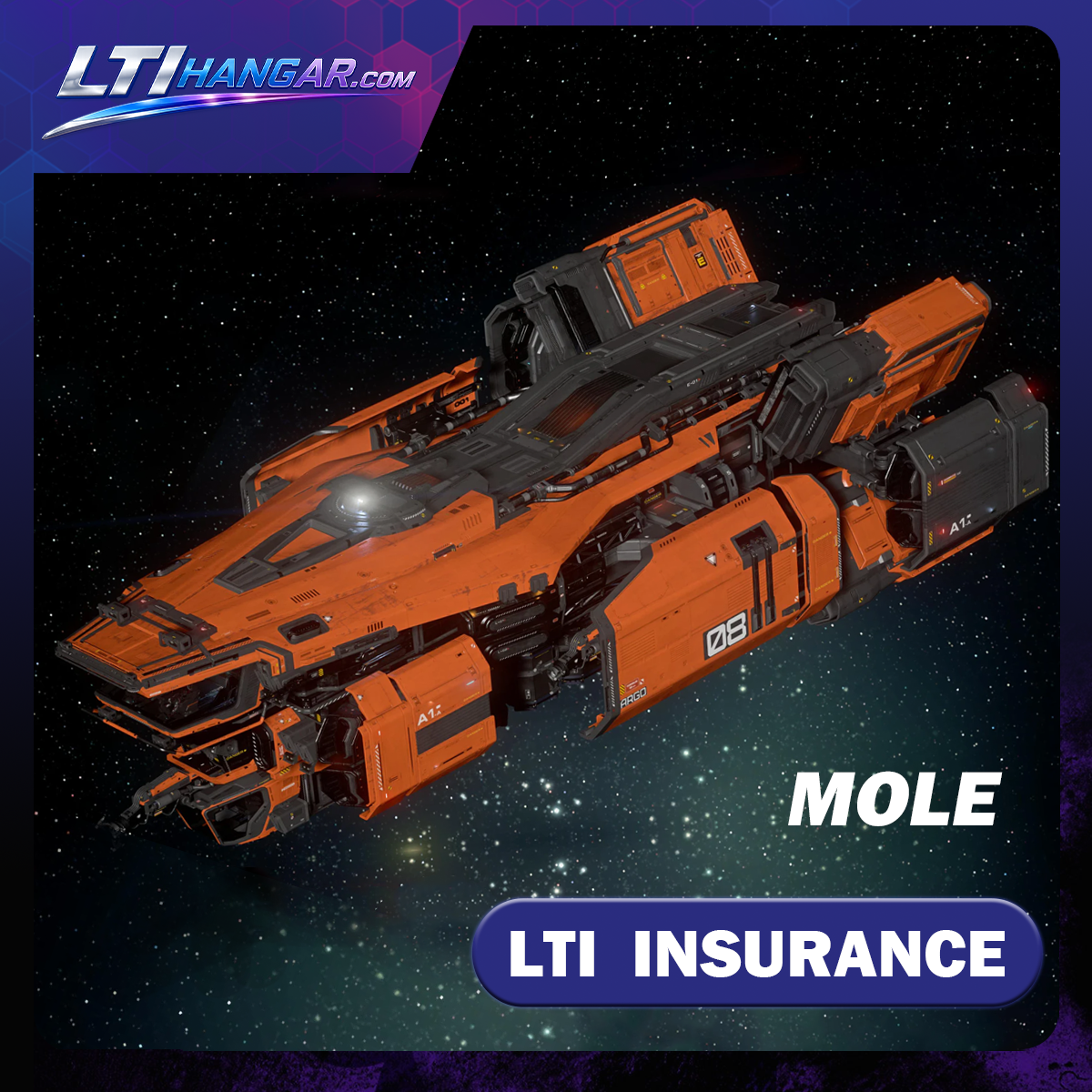
MOLE - Standalone Ship
Controlla i tempi di consegna stimati.
Navi Star Citizen: tempo medio 20–30 minuti; massimo 12 ore.
Star Citizen aUEC: consegna entro 3–5 minuti.
CCU Star Citizen: tempo medio 20–30 minuti; massimo 12 ore.
Paint Star Citizen: tempo medio 5 minuti; massimo 12 ore.
Oggetti Star Citizen: tempo medio 5 minuti; massimo 12 ore.
Come riscattare navi, CCU, paint e oggetti di Star Citizen
Per accettare questo oggetto, devi avere un account su robertsspaceindustries.com. Per accedere a Star Citizen, è necessario possedere un game package.
Tutti gli ordini verranno inviati all’indirizzo email inserito al momento del checkout. Riceverai un’email da no-reply@robertsspaceindustries.com con oggetto “Someone sent you a gift from Roberts Space Industries”.
Apri l’email e clicca sul pulsante blu “Claim Gift” per riscattare il tuo ordine.
Se vuoi ricevere l’ordine su un account diverso da quello collegato all’email fornita, ti basta accedere all’account RSI corretto in un’altra scheda prima di riscattare l’oggetto. Ti consigliamo di aggiornare la pagina RSI per assicurarti di essere connesso all’account giusto.
Se stai acquistando questo oggetto come regalo, clicca con il tasto destro sul pulsante blu “Claim Gift” e copia l’indirizzo del link. Assicurati di essere uscito dal tuo account RSI, così da non riscattare accidentalmente il regalo sul tuo account.
Istruzioni di sicurezza importanti
ATTENZIONE: tutte le navi e gli oggetti possono essere regalati una sola volta. Una volta riscattato, l’oggetto — nave, CCU, paint, armatura, arma o altro item — sarà collegato in modo permanente all’account che lo ha accettato.
Per questo motivo, prima di riscattare l’email regalo, assicurati di essere connesso allo specifico account RSI su cui vuoi ricevere l’oggetto, usando lo stesso browser.
Non siamo responsabili se l’oggetto viene riscattato sull’account RSI sbagliato.
Come applicare una CCU (Ship Upgrade)
Se hai acquistato una Cross Chassis Upgrade (CCU) per trasformare una nave in un’altra, segui questi passaggi:
Riscatta la CCU
Segui i passaggi di consegna indicati sopra per aggiungere la CCU al tuo RSI Hangar.
Trova la CCU nel tuo hangar
Vai nella sezione “My Hangar” sul sito RSI e cerca la CCU che hai ricevuto.
Applica l’upgrade
Clicca sulla freccia accanto alla CCU per aprire i dettagli.
Poi clicca sul pulsante “Apply Upgrade”.
Seleziona la “Source Ship”, cioè la nave di partenza che vuoi usare per l’upgrade, e inserisci la password del tuo account RSI per completare l’operazione.
Nota importante
L’assicurazione, come ad esempio LTI, e gli eventuali bonus della nave base verranno trasferiti alla nuova nave dopo l’upgrade.
In alcuni casi, per passare da una nave di valore più basso a una nave di valore più alto, l’upgrade può essere composto da più CCU in sequenza.
Ad esempio: se acquisti un upgrade da Merchantman a Polaris, potremmo inviarti due CCU: una da Merchantman a Hammerhead e una da Hammerhead a Polaris.
Più grande è la differenza di prezzo tra la nave di partenza e quella finale, maggiore potrebbe essere il numero di CCU che riceverai.
Acquista in sicurezza: protezione cliente
Protezione sull’acquisto
Acquistando sul nostro sito, hai la garanzia di ricevere l’item corretto, esattamente come descritto nella pagina prodotto.
Se per qualsiasi motivo non fossimo in grado di consegnare l’item acquistato, ti offriremo una sostituzione oppure un rimborso completo. Potrai scegliere l’opzione che preferisci.
Protezione post-vendita
Tutti gli item che vendiamo provengono dal nostro inventario diretto e sono coperti dalla nostra protezione post-vendita.
Se si verifica un problema con un item durante la consegna o entro 6 mesi dal completamento della consegna, effettueremo una verifica. Se il problema risulta essere causato da un nostro errore, forniremo una sostituzione oppure un rimborso.
Nella maggior parte dei casi, questo significa una sostituzione completa, un rimborso completo oppure, se lo stesso item non è più disponibile, un upgrade a un item migliore.
Assistenza clienti 24/7
Ricevi supporto quando ne hai bisogno con il nostro servizio clienti online 24/7.
Che tu abbia domande, abbia bisogno di assistenza o voglia una soluzione rapida, il nostro team è sempre pronto ad aiutarti. A qualsiasi ora e in qualsiasi giorno, siamo a portata di click per offrirti il supporto di cui hai bisogno.
Unisciti ora al nostro Discord e scopri la differenza di LTI Hangar!
Disponibile · Invio tramite RSI Gift · Consegna media 20 min

Contact our Discord live support; we are online 24/7.

Perché i player scelgono LTI Hangar
Consegna rapida delle navi, supporto reale e una procedura RSI Gift chiara — pensato per i player di Star Citizen che vogliono un’esperienza d’acquisto più semplice e fluida.
Consegna media 20–30 min
Supporto Discord 24/7
Un team di gamer con oltre 10 anni di esperienza nel settore.
Acquisto sicuro, Vendiamo solo dal nostro stock, senza seller esterni o inserzioni di terze parti.
Supporto post-vendita affidabile
Segui il tuo ordine in tempo reale.
Domande frequenti
Quanto tempo richiede di solito la consegna?
Gli ordini di navi, CCU, paint e item di Star Citizen vengono solitamente consegnati entro 20–30 minuti.
In rari casi, la consegna può richiedere fino a 12 ore a causa del volume degli ordini, dei limiti RSI per l’invio dei gift, dello stato dell’account o di eventuali verifiche manuali necessarie.
Nella maggior parte dei casi, cerchiamo di non superare le 12 ore per la consegna delle navi, salvo problemi eccezionali come limitazioni del sistema RSI, restrizioni dell’account o verifiche richieste al cliente.
Il mio ordine della nave è protetto?
Sì. Sicurezza e affidabilità sono tra le nostre priorità principali.
Tutte le navi vendute da LTI Hangar provengono dal nostro stock diretto, senza seller esterni o fornitori terzi sconosciuti.
Ogni ordine viene gestito con registri di consegna chiari, così il processo può essere verificato e tracciato in caso di bisogno di supporto.
Offriamo inoltre una protezione post-vendita a vita per eventuali problemi idonei legati alla consegna.
Questo controllo tramite stock diretto, insieme alla consegna tracciabile e alla protezione post-vendita, è uno dei motivi per cui molti clienti scelgono LTI Hangar per acquistare navi Star Citizen in modo più sicuro.
Che cos’è la protezione post-vendita a vita?Perché altri marketplace non possono offrire questo livello di protezione?
Nel rarissimo caso in cui si verifichi un problema con un item durante la consegna o in qualsiasi momento dopo il completamento della consegna, effettueremo una verifica.
Se dalla verifica risulta che il problema è stato causato da un nostro errore, forniremo una sostituzione oppure un rimborso.
Per aiutarci a controllare il caso in modo accurato, potremmo chiederti di fornirci prove rilevanti, come screenshot del tuo RSI Hangar, dettagli dell’ordine e registri dell’RSI Hangar Log.
L’RSI Hangar Log può aiutare a tracciare lo stato e la cronologia di ogni nave, incluso se l’item è stato riscattato, scambiato, meltato, trasferito o modificato in altro modo dopo la consegna.
Esamineremo le prove fornite per determinare la causa del problema.
Questo livello di protezione non è comunemente offerto da molti marketplace di terze parti, perché spesso si affidano a seller esterni o a fonti di stock miste.
Su LTI Hangar, invece, tutte le navi provengono dal nostro stock diretto e ogni ordine dispone di registri di consegna chiari. Questo ci permette di offrire un supporto più sicuro, tracciabile e affidabile.
Posso richiedere un rimborso dopo aver riscattato una nave, CCU, paint o item?
Una volta che l’RSI Gift è stato riscattato, la nave, CCU, paint o item viene collegato all’account RSI che lo ha ricevuto.
A causa delle limitazioni del sistema di gifting di Star Citizen, un item già riscattato normalmente non può essere regalato di nuovo, restituito, annullato o riconsegnato.
Per questo motivo, gli item già riscattati normalmente non sono idonei alla cancellazione o al rimborso.
Una correzione, sostituzione o rimborso può essere fornito solo se confermiamo che il problema è stato causato da noi, ad esempio l’invio di un item sbagliato, un errore nella consegna dell’ordine o un altro problema di consegna verificato e causato dal nostro lato.
Prima di riscattare l’RSI Gift, assicurati di essere connesso all’account RSI corretto.
Una volta che il gift viene riscattato sull’account sbagliato, normalmente non può essere spostato su un altro account.
Cosa succede se viene consegnata la nave, CCU, paint o item sbagliato?
Se confermiamo che l’item sbagliato è stato consegnato a causa di un nostro errore, esamineremo il caso e forniremo una correzione, una sostituzione o un rimborso, ove applicabile.
Ti invitiamo a contattarci fornendo il numero d’ordine, l’email usata al checkout e screenshot chiari del tuo RSI Hangar.
Perché la nave Star Citizen che ho ricevuto mostra un nome diverso?
Una Standalone CCU’ed è una nave o un veicolo completo. Non è un upgrade!
“CCU’ed” significa semplicemente che la nave o il veicolo è stato creato partendo da un modello più piccolo e facendo upgrade fino a quello che stai acquistando.
Tieni presente che, nell’email regalo RSI, potrebbe comparire solo il nome della nave usata come base per l’upgrade. È normale, non devi preoccuparti: la nave effettiva che vedrai nel tuo hangar sarà esattamente quella che hai ordinato.
Ad esempio, ecco come appare una Polaris CCU’ed nell’hangar sul sito RSI.

COME FUNZIONA
Veloce, semplice e sicuro: scopri come funziona!

QUANTO È SICURO?
La sicurezza è la nostra priorità numero uno.
A differenza di altri siti, vendiamo solo dal nostro stock diretto. Non permettiamo seller esterni sulla nostra piattaforma.
Questo garantisce maggiore sicurezza, più tranquillità per il cliente e consegne molto più rapide.

COME CONSEGNIAMO?
L’item verrà consegnato tramite il sistema RSI Gift.
Dopo aver effettuato l’ordine, invieremo l’item all’indirizzo email inserito al checkout.
Quando ricevi l’email regalo, ti basterà aprirla e cliccare su “Claim”: l’item verrà aggiunto all’account RSI su cui sei già connesso.

PROTEZIONE POST-VENDITA
Tutti gli item che vendiamo provengono dal nostro stock diretto e sono coperti dalla nostra policy di protezione post-vendita.
Se si verifica un problema con un item durante la consegna o entro 6 mesi dal completamento della consegna, effettueremo una verifica.
Se viene confermato che il problema è stato causato da un nostro errore, forniremo una sostituzione oppure un rimborso.

CONTATTACI
Star Citizen è un universo complesso! Se hai domande, siamo sempre felici di aiutarti.
Siamo online 24 ore su 24 per offrirti supporto quando ne hai bisogno.
In più, sul nostro canale Discord puoi trovare ancora più codici sconto e giveaway!
ARGO MOLE Standalone Ship Gameplay Guide
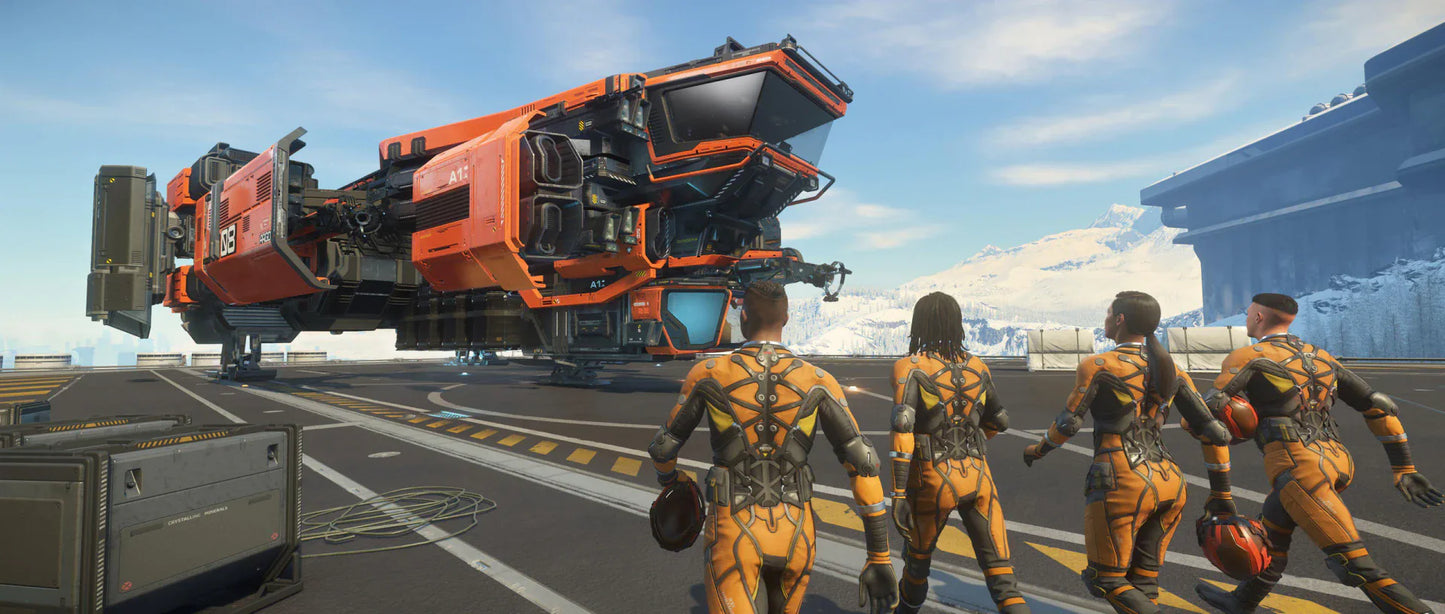
The ARGO MOLE is a dedicated multi-crew mining ship built for Star Citizen players who want larger crewed mining output, coordinated gameplay, and a practical step above the solo-focused MISC Prospector. Developed by Argo Astronautics, the MOLE is not a cargo hauler, combat ship, refinery ship, or casual daily driver. It is a working industrial mining platform designed around three independent mining stations and a crew that can break larger rocks faster when properly coordinated.
Official RSI material describes the MOLE as a multi-crew mining ship with three independently controlled articulated extraction stations, built to make bigger mining jobs feel smaller. The ship also uses ARGO’s trilateral mining system and carries 24 mineral pods, each holding 12 SCU, with official sale material referencing 96 SCU flying capacity.
The MOLE is the mining ship you choose when you want crewed extraction power, not solo convenience or built-in refining.
Build Your ARGO Mining Fleet with the MOLE
The MOLE is one of the more direct upgrades for players who enjoy mining but feel limited by the standalone Prospector's yield boundaries. If you are looking to acquire this ARGO industrial miner, you can explore our available options in the Star Citizen Ships and Vehicles Collection.
MOLE Key Specifications
| Specification | ARGO MOLE | Gameplay Meaning |
|---|---|---|
| Manufacturer | Argo Astronautics | Industrial manufacturer focused on practical work ships and utility craft. |
| Role | Multi-Crew Mining | Built for coordinated extraction, not cargo hauling or combat. |
| Status | Flight Ready / current gameplay reference | The MOLE launched as part of Star Citizen Alpha 3.8’s ship content, with RSI describing ARGO’s new miner as taking to the stars. |
| Mining Stations | 3 independent crew-operated stations | The main reason to buy the MOLE; each laser requires a player in its dedicated mining seat and cannot be toggled from the pilot deck. |
| Mineral Pods | 24 pods, 12 SCU each | Gives the MOLE a significantly larger operational mining loop than the Prospector. |
| Flying Capacity | 96 SCU current reference capacity | Supports longer mining runs than smaller single-seat hulls, though yield relies heavily on crew skill and ore composition. |
| Crew Focus | Multi-operator mining crew | Designed around a dedicated pilot plus mining turret operators, not a solo flight deck setup. |
| Refinery | No onboard refinery | The MOLE extracts and stores unrefined material; refining requires orbital station workflows or external cargo loops. |
| Crew Facilities | 4 bunk beds, rest area, shower, toilet | Fully supports extended industrial operations and multi-player deployment out in the field. |
| Core Gameplay | Asteroid, surface, and group mining | Best for players who want accelerated mining output with friends or organizational fleets. |
Note: Star Citizen mining balance, mining modules, HUD behavior, refinery economy, and ore values can change between patches. Current RSI support material also notes a temporary Prospector loaner for the MOLE due to a mining HUD issue, so product pages should treat current mining usability notes as patch-dependent.
What Makes the MOLE Valuable?
The MOLE is valuable because it gives mining players more extraction power without jumping all the way into capital-scale logistics. It acts as the definitive intermediate step between the solo Prospector and massive future industrial platforms like the Arrastra or Orion.
Its core selling point centers directly on its three specialized mining lasers. RSI’s Q&A confirms that each laser is controlled entirely independently from its respective turret station. There is no method for a single pilot to direct all three lasers simultaneously from the cockpit seat.
The MOLE is not a bigger solo miner. It is a proper crewed mining ship.
For a player who mines alone every day, the Prospector remains the easier loop. For a player with friends, crew networks, or an industrial organization, the MOLE becomes much more appealing because multiple people can contribute directly to fracturing, extraction, and load management at the exact same time.
Multi-Crew Mining Gameplay Role
The MOLE’s main role is coordinated mining. It is designed for a crew that wants to locate, fracture, extract, and store mass quantities of high-value ore far more efficiently than a solitary mining laser can manage.
In practical gameplay, the MOLE excels across several roles:
| Gameplay Use | Why the MOLE Fits |
|---|---|
| Group mining sessions | Three independent mining seats give multiple players active, highly engaging jobs. |
| Larger rock breaking | Multiple lasers can converge energy outputs on exceptionally difficult or massive deposits. |
| Industrial org gameplay | Integrates cleanly alongside dedicated refinery systems, transport hauling, and combat escorts. |
| Mining training ship | Allows newer miners to practice laser management safely while a pilot handles flight position. |
| Longer mining trips | Expanded pod arrays and complete crew living quarters facilitate sustained orbital or surface loops. |
The MOLE should be described as a crew mining ship, not a casual solo profit button.
Three Independent Mining Lasers
The defining mechanical layout of the MOLE is its three independently operated mining stations. RSI’s Q&A highlights this framework clearly: each laser requires an active player inside the mining seat, and the laser array will instantly safely deactivate if the operator leaves their terminal.
This creates a completely different gameplay rhythm compared to single-seat extraction. The pilot focuses on scanning and ship placement, maintaining alignment with the ore face, while the mining operators manage energy sliders, resistance windows, extraction throttles, and rock volatility.
The MOLE is at its best when one player flies and three players mine.
That core dynamic sets the right expectation immediately. Solo use is structurally possible via seat swapping, but it skips the mechanical intent and efficiency limits of the hull's design.
Mineral Pod Capacity and Mining Storage
The MOLE delivers a massive storage workflow expansion. Official documentation specifies 24 integrated mineral pods, each boasting a 12 SCU volume, combining for a referenced 96 SCU operating flight capacity.
The MOLE offers much more mining storage than a Prospector, but it still depends on refinery and logistics support after the ore is collected.
This capacity allows teams to sustain longer operations, collect more high-tier material per run, and make maximum use of group coordination before heading back to port.
No Onboard Refinery
The MOLE does not possess built-in refining capabilities. RSI’s Q&A confirms that ore refinement remains a completely distinct step in the industrial loop, noting that neither the MOLE nor the Prospector filters raw elements inside their frames.
The MOLE extracts ore; it does not refine it.
This means complete industrial loops require strategic planning. After filling the pods, crews must transition their raw hauls to orbital refinery stations, dedicated transport ships, or future logistics partners to process and sell the market commodities efficiently.
Mining Attachments and Laser Setup
The MOLE supports highly customizable laser loadouts. Operators can mount distinct attachments across each individual mining arm, allowing groups to think critically about mixing complementary laser attributes for tricky tasks.
A practical MOLE crew may utilize various configurations:
- Balanced Lasers: Standardized multi-purpose heads ideal for general exploration runs.
- High-Power Cracking: Heavy-output heads configured specifically to break massive, resistant deposits.
- Extraction Focus: Optimization heads optimized for clean material collection after fracturing is complete.
The MOLE rewards preparation, crew coordination, and mining knowledge more than basic point-and-click mining.
Solo Gameplay Expectations
While a lone operator can technically alternate between the pilot deck and the lower turret chairs, the workflow is highly inefficient because lasers instantly power down when a seat is vacated. Lasers cannot be automated or fired from the flight console using computer blades.
Solo MOLE mining is possible, but the Prospector is usually the better solo mining experience.
This is one of the most critical customer expectations to clarify. The MOLE is not intrinsically "better" than the Prospector across the board; it is significantly better with a crew, but less optimized for a completely solo player.
Crew Roles on the MOLE
The MOLE operates at peak efficiency when every player understands their specific job profile:
- Pilot / Captain: Locates mining sectors, manages precise hover positioning, monitors external environment safety, and directs laser focus.
- Mining Operators (1-3): Control their respective independent laser stations, adjusting power throttles to crack or extract materials cleanly.
- Logistics / Escort Partners: Optional external support to scout high-tier deposits, protect the loaded ship from hostiles, or transport refined commodities.
A practical MOLE session should feel like a coordinated mining job, not a solo Prospector run with a larger hold. The pilot searches for deposits, positions the ship, keeps the crew aware of terrain or threats, and decides when the run is worth continuing. The mining operators need to communicate about laser power, fracture windows, instability, and which rocks are worth extracting. Sometimes all three lasers focus on one difficult deposit; other times each operator works a separate target to save time. Once the pods start filling, the crew still needs to think about ore quality, refinery location, route safety, and whether staying longer is worth the risk. In real use, the MOLE rewards communication and mining knowledge more than simply having more mining lasers.
Crew Facilities and Living Spaces
The interior layout features extensive habitability elements, including four bunk beds that double as escape pods, integrated shower and toilet fixtures, gear lockers, and a central rest lounge equipped with basic galley systems. This transforms the hull into a genuine mobile home base capable of supporting operations deep into isolated asteroid belts.
ARGO MOLE vs MISC Prospector
The MOLE and Prospector represent two entirely separate stages of an industrial career path:
| Ship | Best For | Main Difference |
|---|---|---|
| MISC Prospector | Solo mining | Cheaper, highly accessible, and streamlined for individual pilots. |
| ARGO MOLE | Multi-crew mining | Three independent extraction lasers and a quadrupled raw ore pod volume. |
Choose the Prospector if you mostly mine solo. Choose the MOLE if you want a real crewed mining ship.
MOLE vs Arrastra & Orion
| Ship | Best For | Compared with MOLE |
|---|---|---|
| ARGO MOLE | Medium multi-crew mining | Fully flyable, practical, and highly manageable for small teams today. |
| RSI Arrastra | Large mining / refining concept | A larger future-facing industrial platform with built-in refining bays. |
| RSI Orion | Capital-scale industrial mining | Massive, capital-class fleet asset geared for massive corporate operations. |
MOLE vs Other Star Citizen Industrial Ships
| Ship Fleet Option | Primary Core Role | Compared with MOLE |
|---|---|---|
| MISC Expanse | Refining Support | The Expanse focuses purely on processing raw material; the MOLE focuses on raw extraction. They complement each other perfectly. |
| ARGO RAFT | Cargo Transport | The RAFT is built to move standard freight containers; the MOLE is built exclusively to extract raw ore. |
| Drake Vulture | Solo Salvage | The Vulture generates profit via hull scraping and salvaging; the MOLE generates profit through geology loops. |
| Aegis Reclaimer | Heavy Salvage | The Reclaimer is a massive, multi-crew scrap reclamation asset; the MOLE is a medium-sized mining platform. |
| Caterpillar / C2 Hercules | Cargo Hauling | Heavy haulers transport refined commodities to major market hubs; the MOLE feeds material into that logistics chain. |
Explore MOLE CCU Upgrade Options
Ready to upgrade your current pledge or starter ship into a proper crewed industrial miner? View our available Star Citizen MOLE CCU Upgrades to take the next step.
MOLE Strengths and Limitations
| Strategic Strengths | Operational Limitations |
|---|---|
| Three independent mining stations create high multi-crew output value. | Highly inefficient for pure solo gameplay due to seat-swapping constraints. |
| 24 mineral pods providing a referenced 96 SCU capacity for longer runs. | Mining lasers are completely locked out from the pilot console deck. |
| Supports diverse mining attachments across arms for custom setup layouts. | Does not feature an onboard refinery; relies on station drop-offs. |
| Complete habitability facilities provide excellent roleplay immersion. | Lacks offensive weaponry and relies heavily on escorts in dangerous space. |
| Fully flyable, field-tested medium miner available in-game today. | Usability can fluctuate based on live patch HUD behaviors and mining balance. |
Who Should Buy the ARGO MOLE?
The MOLE is best for players who enjoy industrial gameplay and want to move cleanly past the limitations of solo Prospector loops. It is perfectly suited for active mining teams, small corporate organizations, players who fly consistently with friends, and anyone looking for a authentic industrial platform with deeply integrated cooperative loops.
Crews looking for isolated solo profit paths should remain with the Prospector. Those looking for integrated refinery loops or capital-scale investments should evaluate long-term concepts like the Arrastra or Orion. But for an immediately accessible, hard-working multi-laser extraction ship, the ARGO MOLE is an exceptional industrial upgrade.
MOLE FAQ
Is the MOLE worth buying in Star Citizen?
The MOLE is highly worth buying if you regularly mine with a group and want to tackle larger, high-value deposits that solo lasers cannot crack. It is not recommended if you primarily play alone, as the Prospector handles solo extraction much more seamlessly.
Is the MOLE Flight Ready?
Yes. The ARGO MOLE launched officially during Alpha 3.8 and has been an active, fully flyable part of Star Citizen's live industrial gameplay loops ever since.
Can the pilot operate any mining lasers from the cockpit?
No. All three mining lasers are mounted to independent lower articulating turrets. The pilot can scan for rocks and maneuver the vessel, but cannot activate or fire the lasers from the flight deck.
Can the MOLE be used solo?
It can be done by landing the ship, leaving the pilot seat, and climbing into a mining turret. However, because the laser shuts off the moment you exit the chair, you cannot fly and mine at the same time, making solo operation incredibly slow and tedious.
How much cargo/ore storage does the MOLE have?
The MOLE utilizes an external pod framework containing 24 mineral pods at 12 SCU each, resulting in an official flying capacity reference of 96 SCU.
Does the MOLE have an onboard refinery?
No. The MOLE is an extraction and containment platform only. It holds unrefined ore inside its pods, which must be brought to an orbital refinery station or industrial processing hub to turn into sellable cargo.
Can the MOLE mount different mining heads?
Yes. Each mining arm can be customized independently with various lasers, modules, and filtering attachments, allowing your crew to create specialized loadouts for fracturing or pure collection.
Does the MOLE contain crew living quarters?
Yes. The habitability deck contains four bunk beds that serve as escape pods, clothes lockers, a shared bathroom/shower unit, and a small kitchen lounge area for the crew.
Why is there a temporary Prospector loaner listed for MOLE owners?
The RSI Loaner Ship Matrix occasionally assigns a temporary Prospector loaner to MOLE, Arrastra, or Orion owners to ensure players retain basic solo mining access during specific patch phases or HUD issue resolutions. This is temporary and subject to patch notes.
Is the MOLE a good choice for organizations?
Absolutely. It is one of the foundational multi-crew ships for industrial gameplay, offering an excellent team-based activity where everyone has an active role in generating organizational profit.


