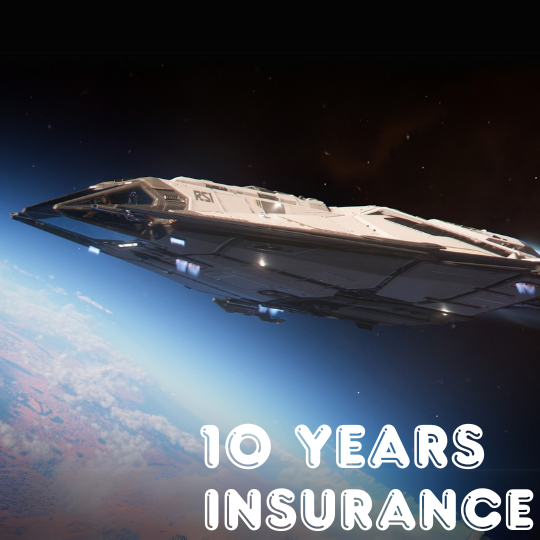
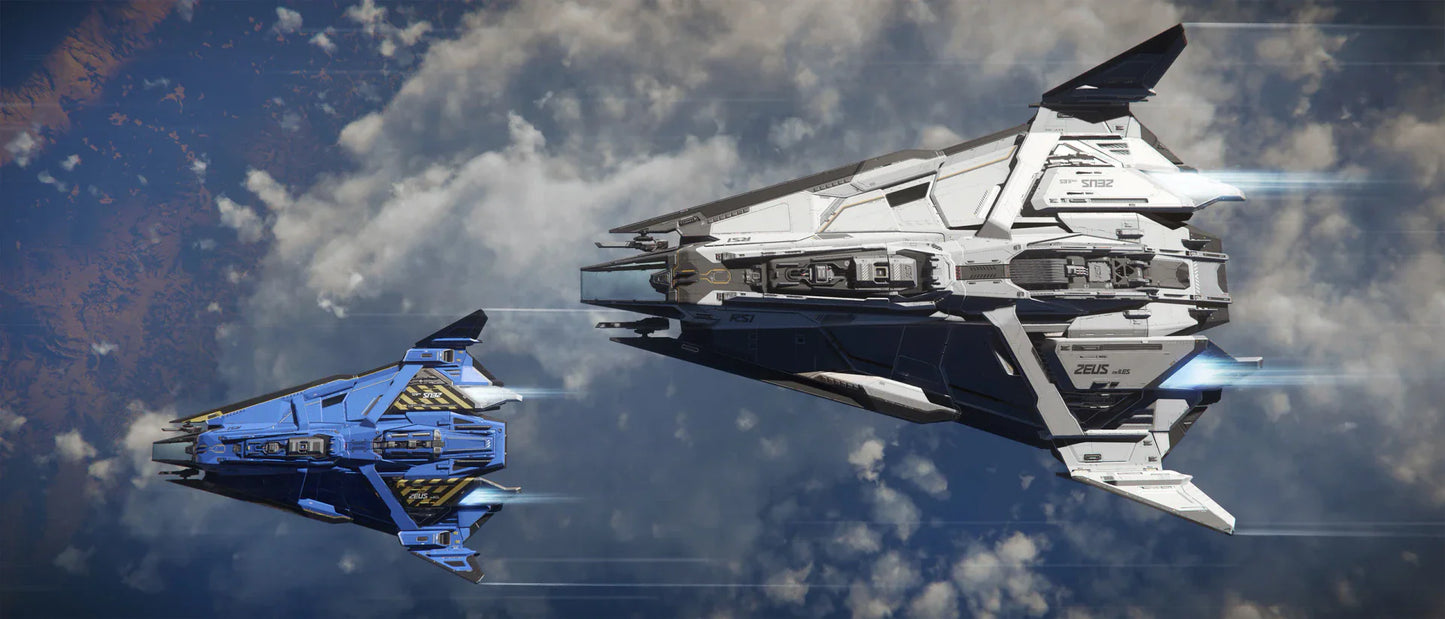
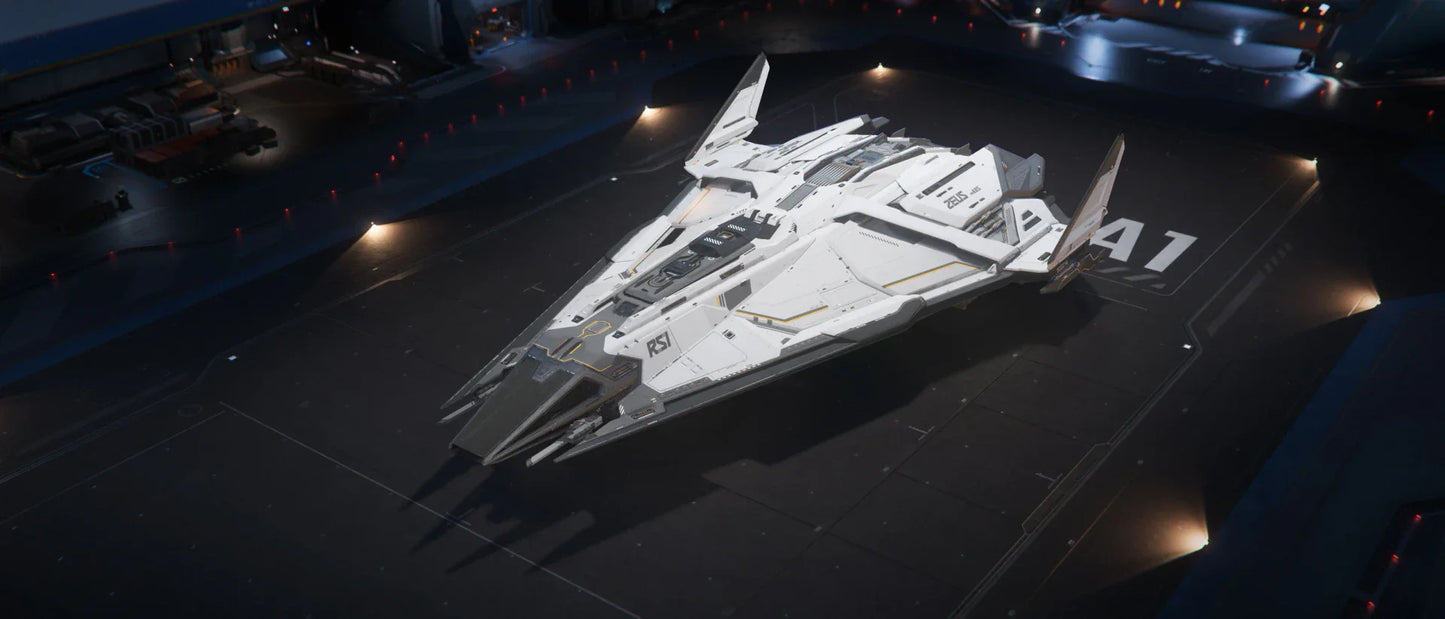
From Roberts Space Industries | Max Crew3 | In-Game Status Flight Ready

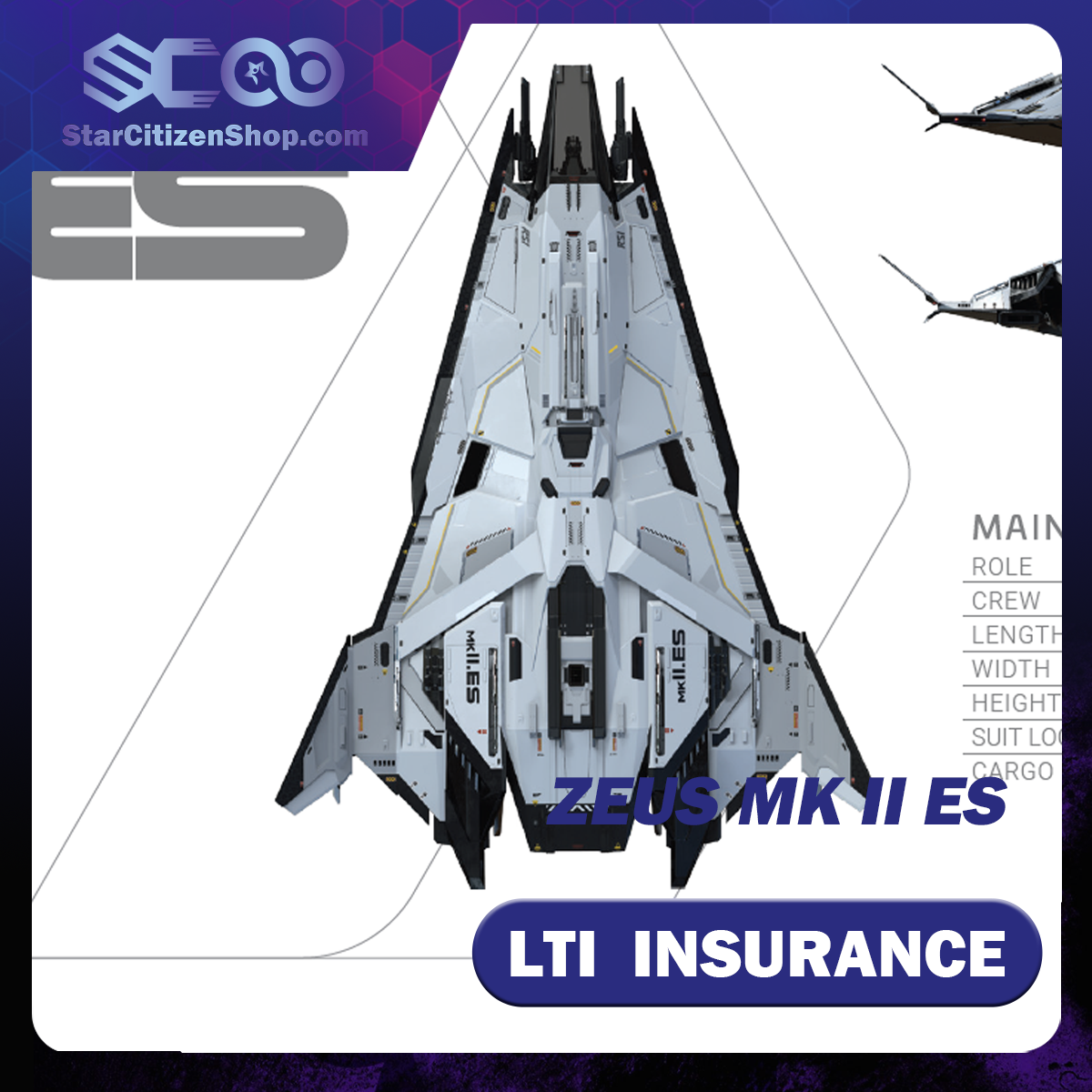
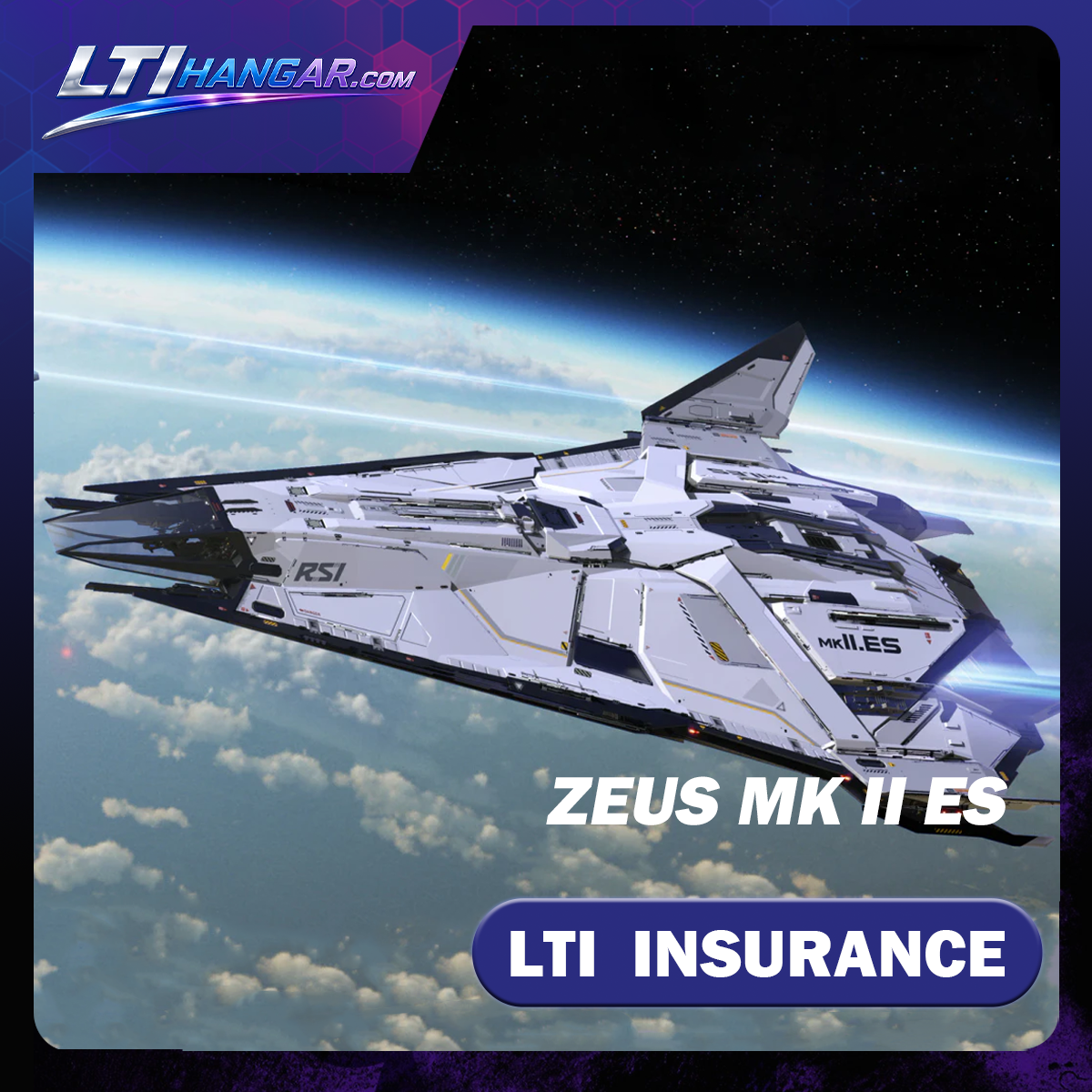
Zeus Mk II ES - Standalone Ship

Prezzo normale $189.99 USD
Prezzo di vendita $189.99 USD
SOLD OUT

CCU'ed-Insurance: LTI

Email

Controlla i tempi di consegna stimati.

Navi Star Citizen: tempo medio 20–30 minuti; massimo 12 ore.

Star Citizen aUEC: consegna entro 3–5 minuti.

CCU Star Citizen: tempo medio 20–30 minuti; massimo 12 ore.

Paint Star Citizen: tempo medio 5 minuti; massimo 12 ore.

Oggetti Star Citizen: tempo medio 5 minuti; massimo 12 ore.

Come riscattare navi, CCU, paint e oggetti di Star Citizen

Per accettare questo oggetto, devi avere un account su robertsspaceindustries.com. Per accedere a Star Citizen, è necessario possedere un game package.

Tutti gli ordini verranno inviati all’indirizzo email inserito al momento del checkout. Riceverai un’email da no-reply@robertsspaceindustries.com con oggetto “Someone sent you a gift from Roberts Space Industries”.

Apri l’email e clicca sul pulsante blu “Claim Gift” per riscattare il tuo ordine.

Se vuoi ricevere l’ordine su un account diverso da quello collegato all’email fornita, ti basta accedere all’account RSI corretto in un’altra scheda prima di riscattare l’oggetto. Ti consigliamo di aggiornare la pagina RSI per assicurarti di essere connesso all’account giusto.

Se stai acquistando questo oggetto come regalo, clicca con il tasto destro sul pulsante blu “Claim Gift” e copia l’indirizzo del link. Assicurati di essere uscito dal tuo account RSI, così da non riscattare accidentalmente il regalo sul tuo account.

Istruzioni di sicurezza importanti

ATTENZIONE: tutte le navi e gli oggetti possono essere regalati una sola volta. Una volta riscattato, l’oggetto — nave, CCU, paint, armatura, arma o altro item — sarà collegato in modo permanente all’account che lo ha accettato.

Per questo motivo, prima di riscattare l’email regalo, assicurati di essere connesso allo specifico account RSI su cui vuoi ricevere l’oggetto, usando lo stesso browser.

Non siamo responsabili se l’oggetto viene riscattato sull’account RSI sbagliato.

Come applicare una CCU (Ship Upgrade)

Se hai acquistato una Cross Chassis Upgrade (CCU) per trasformare una nave in un’altra, segui questi passaggi:

Riscatta la CCU

Segui i passaggi di consegna indicati sopra per aggiungere la CCU al tuo RSI Hangar.

Trova la CCU nel tuo hangar

Vai nella sezione “My Hangar” sul sito RSI e cerca la CCU che hai ricevuto.

Applica l’upgrade

Clicca sulla freccia accanto alla CCU per aprire i dettagli.

Poi clicca sul pulsante “Apply Upgrade”.

Seleziona la “Source Ship”, cioè la nave di partenza che vuoi usare per l’upgrade, e inserisci la password del tuo account RSI per completare l’operazione.

Nota importante

L’assicurazione, come ad esempio LTI, e gli eventuali bonus della nave base verranno trasferiti alla nuova nave dopo l’upgrade.

In alcuni casi, per passare da una nave di valore più basso a una nave di valore più alto, l’upgrade può essere composto da più CCU in sequenza.

Ad esempio: se acquisti un upgrade da Merchantman a Polaris, potremmo inviarti due CCU: una da Merchantman a Hammerhead e una da Hammerhead a Polaris.

Più grande è la differenza di prezzo tra la nave di partenza e quella finale, maggiore potrebbe essere il numero di CCU che riceverai.

Acquista in sicurezza: protezione cliente

Protezione sull’acquisto

Acquistando sul nostro sito, hai la garanzia di ricevere l’item corretto, esattamente come descritto nella pagina prodotto.

Se per qualsiasi motivo non fossimo in grado di consegnare l’item acquistato, ti offriremo una sostituzione oppure un rimborso completo. Potrai scegliere l’opzione che preferisci.

Protezione post-vendita

Tutti gli item che vendiamo provengono dal nostro inventario diretto e sono coperti dalla nostra protezione post-vendita.

Se si verifica un problema con un item durante la consegna o entro 6 mesi dal completamento della consegna, effettueremo una verifica. Se il problema risulta essere causato da un nostro errore, forniremo una sostituzione oppure un rimborso.

Nella maggior parte dei casi, questo significa una sostituzione completa, un rimborso completo oppure, se lo stesso item non è più disponibile, un upgrade a un item migliore.

Assistenza clienti 24/7

Ricevi supporto quando ne hai bisogno con il nostro servizio clienti online 24/7.

Che tu abbia domande, abbia bisogno di assistenza o voglia una soluzione rapida, il nostro team è sempre pronto ad aiutarti. A qualsiasi ora e in qualsiasi giorno, siamo a portata di click per offrirti il supporto di cui hai bisogno.

Unisciti ora al nostro Discord e scopri la differenza di LTI Hangar!

Disponibile · Invio tramite RSI Gift · Consegna media 20 min
Visualizza i dettagli completi
Need Help? Open a Discord Ticket

Contact our Discord live support; we are online 24/7.

Perché i player scelgono LTI Hangar

Consegna rapida delle navi, supporto reale e una procedura RSI Gift chiara — pensato per i player di Star Citizen che vogliono un’esperienza d’acquisto più semplice e fluida.

Consegna media 20–30 min

Supporto Discord 24/7

Un team di gamer con oltre 10 anni di esperienza nel settore.

Acquisto sicuro, Vendiamo solo dal nostro stock, senza seller esterni o inserzioni di terze parti.

Supporto post-vendita affidabile

Segui il tuo ordine in tempo reale.

  • Qual è la differenza tra Original Concept, Standalone Ship e nave CCU’ed?

  • Non sai se la nave che stai acquistando è già flight ready? Controlla la Loaner Matrix ufficiale!

Domande frequenti

Quanto tempo richiede di solito la consegna?

Gli ordini di navi, CCU, paint e item di Star Citizen vengono solitamente consegnati entro 20–30 minuti.

In rari casi, la consegna può richiedere fino a 12 ore a causa del volume degli ordini, dei limiti RSI per l’invio dei gift, dello stato dell’account o di eventuali verifiche manuali necessarie.

Nella maggior parte dei casi, cerchiamo di non superare le 12 ore per la consegna delle navi, salvo problemi eccezionali come limitazioni del sistema RSI, restrizioni dell’account o verifiche richieste al cliente.

Il mio ordine della nave è protetto?

Sì. Sicurezza e affidabilità sono tra le nostre priorità principali.

Tutte le navi vendute da LTI Hangar provengono dal nostro stock diretto, senza seller esterni o fornitori terzi sconosciuti.

Ogni ordine viene gestito con registri di consegna chiari, così il processo può essere verificato e tracciato in caso di bisogno di supporto.

Offriamo inoltre una protezione post-vendita di 6 mesi per eventuali problemi idonei legati alla consegna.

Questo controllo tramite stock diretto, insieme alla consegna tracciabile e alla protezione post-vendita, è uno dei motivi per cui molti clienti scelgono LTI Hangar per acquistare navi Star Citizen in modo più sicuro.

Che cos’è la protezione post-vendita di 6 mesi? Perché altri marketplace non possono offrirla?

Nel rarissimo caso in cui si verifichi un problema con un item durante la consegna o entro 6 mesi dal completamento della consegna, effettueremo una verifica.

Se dalla verifica risulta che il problema è stato causato da un nostro errore, forniremo una sostituzione oppure un rimborso.

Per aiutarci a controllare il caso in modo accurato, potremmo chiederti di fornirci prove rilevanti, come screenshot del tuo RSI Hangar, dettagli dell’ordine e registri dell’RSI Hangar Log.

L’RSI Hangar Log può aiutare a tracciare lo stato e la cronologia di ogni nave, incluso se l’item è stato riscattato, scambiato, meltato, trasferito o modificato in altro modo dopo la consegna.

Esamineremo le prove fornite per determinare la causa del problema.

Questo livello di protezione non è comunemente offerto da molti marketplace di terze parti, perché spesso si affidano a seller esterni o a fonti di stock miste.

Su LTI Hangar, invece, tutte le navi provengono dal nostro stock diretto e ogni ordine dispone di registri di consegna chiari. Questo ci permette di offrire un supporto più sicuro, tracciabile e affidabile.

Posso richiedere un rimborso dopo aver riscattato una nave, CCU, paint o item?

Una volta che l’RSI Gift è stato riscattato, la nave, CCU, paint o item viene collegato all’account RSI che lo ha ricevuto.

A causa delle limitazioni del sistema di gifting di Star Citizen, un item già riscattato normalmente non può essere regalato di nuovo, restituito, annullato o riconsegnato.

Per questo motivo, gli item già riscattati normalmente non sono idonei alla cancellazione o al rimborso.

Una correzione, sostituzione o rimborso può essere fornito solo se confermiamo che il problema è stato causato da noi, ad esempio l’invio di un item sbagliato, un errore nella consegna dell’ordine o un altro problema di consegna verificato e causato dal nostro lato.

Prima di riscattare l’RSI Gift, assicurati di essere connesso all’account RSI corretto.

Una volta che il gift viene riscattato sull’account sbagliato, normalmente non può essere spostato su un altro account.

Cosa succede se viene consegnata la nave, CCU, paint o item sbagliato?

Se confermiamo che l’item sbagliato è stato consegnato a causa di un nostro errore, esamineremo il caso e forniremo una correzione, una sostituzione o un rimborso, ove applicabile.

Ti invitiamo a contattarci fornendo il numero d’ordine, l’email usata al checkout e screenshot chiari del tuo RSI Hangar.

Perché la nave Star Citizen che ho ricevuto mostra un nome diverso?

Una Standalone CCU’ed è una nave o un veicolo completo. Non è un upgrade!

“CCU’ed” significa semplicemente che la nave o il veicolo è stato creato partendo da un modello più piccolo e facendo upgrade fino a quello che stai acquistando.

Tieni presente che, nell’email regalo RSI, potrebbe comparire solo il nome della nave usata come base per l’upgrade. È normale, non devi preoccuparti: la nave effettiva che vedrai nel tuo hangar sarà esattamente quella che hai ordinato.

Ad esempio, ecco come appare una Polaris CCU’ed nell’hangar sul sito RSI.


COME FUNZIONA

Veloce, semplice e sicuro: scopri come funziona!

QUANTO È SICURO?

La sicurezza è la nostra priorità numero uno.

A differenza di altri siti, vendiamo solo dal nostro stock diretto. Non permettiamo seller esterni sulla nostra piattaforma.

Questo garantisce maggiore sicurezza, più tranquillità per il cliente e consegne molto più rapide.

COME CONSEGNIAMO?

L’item verrà consegnato tramite il sistema RSI Gift.

Dopo aver effettuato l’ordine, invieremo l’item all’indirizzo email inserito al checkout.

Quando ricevi l’email regalo, ti basterà aprirla e cliccare su “Claim”: l’item verrà aggiunto all’account RSI su cui sei già connesso.

PROTEZIONE POST-VENDITA

Tutti gli item che vendiamo provengono dal nostro stock diretto e sono coperti dalla nostra policy di protezione post-vendita.

Se si verifica un problema con un item durante la consegna o entro 6 mesi dal completamento della consegna, effettueremo una verifica.

Se viene confermato che il problema è stato causato da un nostro errore, forniremo una sostituzione oppure un rimborso.

CONTATTACI

Star Citizen è un universo complesso! Se hai domande, siamo sempre felici di aiutarti.

Siamo online 24 ore su 24 per offrirti supporto quando ne hai bisogno.

In più, sul nostro canale Discord puoi trovare ancora più codici sconto e giveaway!

RSI Zeus Mk II ES Standalone Ship Gameplay Guide

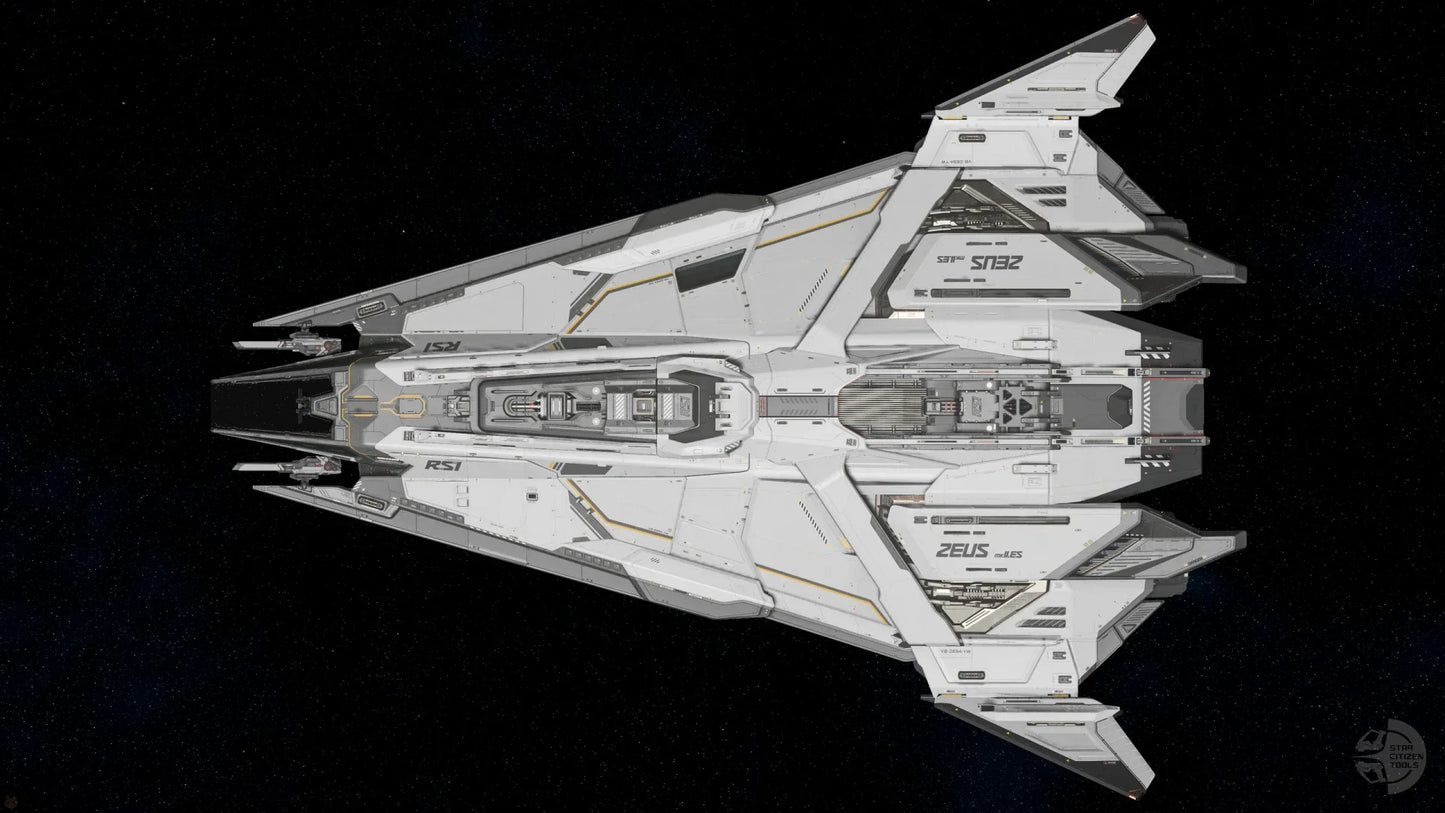
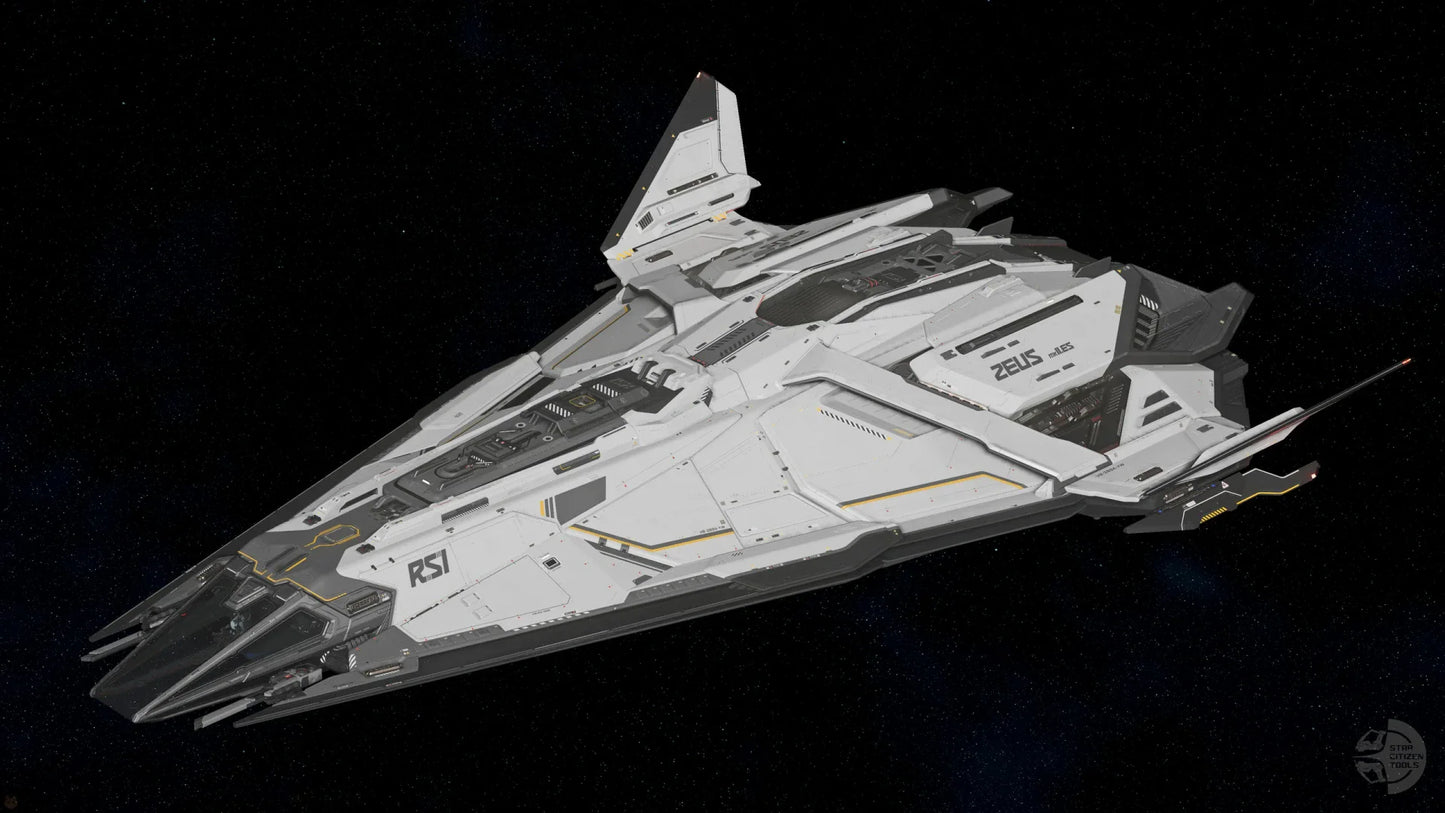
The RSI Zeus Mk II ES is a three-person medium exploration ship built for Star Citizen players who want extended-range travel, enhanced scanning, strong defensive shielding, a practical interior, 32 SCU of cargo capacity, and a manageable multicrew exploration platform.

It is not a dedicated cargo hauler, heavily armed gunship, luxury touring ship, armored reconnaissance craft, or capital-scale expedition vessel. The Zeus Mk II ES is best understood as the small-crew exploration member of the Zeus Mk II family: a compact expedition ship that combines a Size 3 radar, four Size 2 shield generators, crew habitation, cargo space, pilot weapons, a remote turret, and enough range-focused equipment to support travel beyond normal short-distance daily missions.

The Zeus Mk II ES became flyable with Star Citizen Alpha 3.24.2 alongside the Zeus Mk II CL. Current live-reference data lists 32 SCU, approximately 46 × 35 × 9 meters, 205 m/s SCM speed, 1,100 m/s maximum speed, two Size 4 pilot weapons, a two-gun Size 3 remote turret, eight Size 2 missiles, and four Size 2 shield generators. These live values remain subject to patch balancing.

The safest product-page positioning is simple:
The Zeus Mk II ES is the exploration ship you choose for three-person expeditions, enhanced radar, useful shields, practical cargo, and a complete compact interior — not for maximum cargo, maximum firepower, solo-fighter agility, or Carrack-level expedition support.

Build Your RSI Exploration Fleet with the Zeus Mk II ES

The Zeus Mk II ES occupies an useful position between smaller pathfinders and larger multicrew exploration ships. It offers more living space, protection, cargo capacity, and crew functionality than a single-seat explorer, while remaining smaller and easier to organize than ships such as the Constellation Aquila, 600i Explorer, or Carrack.

If you are looking to acquire this RSI expedition ship, you can explore our available options in the Star Citizen Ships and Vehicles Collection.

RSI Zeus Mk II ES Key Specifications

RSI’s current promotional specifications list the Zeus Mk II ES at 45.69 meters long, 34.3 meters wide in flight, 26.3 meters wide when landed, with three bridge crew positions, 32 SCU of cargo, four Size 2 shield generators, a Size 3 radar, and a larger exploration-focused fuel configuration. Current live data rounds the dimensions to approximately 46 × 35 × 9 meters and provides patch-specific weapon and speed values.

Specification RSI Zeus Mk II ES Gameplay Meaning
Manufacturer Roberts Space Industries Part of RSI’s long-running civilian exploration and transport heritage.
Role Expedition / Exploration Designed for scanning, travel, discovery, and small-crew expeditions.
Status Flight Ready Available for current live gameplay.
Intended Crew 3 Built around a pilot, co-pilot, and turret operator.
Length 45.69 m official / approximately 46 m current Medium multicrew ship rather than a small pathfinder.
Width 34.3 m in flight / 26.3 m landed Folding configuration reduces its landed footprint.
Height Approximately 9 m Provides a full interior while remaining below larger exploration-ship scale.
Cargo Capacity 32 SCU Supports supplies, mission cargo, recovered items, or limited commercial hauling.
Current SCM Speed 205 m/s Reasonable medium-ship combat speed, but slower than lighter daily ships.
Current Maximum Speed 1,100 m/s Supports travel and disengagement without making the Zeus a fast interceptor.
Pilot Weapons 2× Size 4 Meaningful forward defense controlled by the pilot.
Remote Turret 2× Size 3 Gives the turret operator defensive coverage away from the pilot’s nose.
Missiles 8× Size 2 Useful secondary defense rather than a missile-ship identity.
Shield Generators 4× Size 2 The main defensive difference from the cargo-focused CL variant.
Radar 1× Size 3 Central exploration advantage over the cargo-focused CL variant.
Power Plants 2× Size 2 current configuration Supports shields, radar, weapons, life support, and ship systems.
Coolers 2× Size 2 current configuration Supports sustained operation of the medium ship’s systems.
Quantum Drive 1× Size 2 current component Current drive can be replaced with compatible alternatives.
Exploration Fuel Specification Larger exploration-focused fuel arrangement Intended to support travel beyond short-distance commercial routes.
Hydrogen Fuel Intakes Included across Zeus variants Can recover hydrogen fuel during suitable normal flight conditions.
Suit Lockers 3 Provides equipment storage aligned with the intended three-person crew.
Escape System Escape-pod beds Crew beds are designed to eject through the lower hull during emergencies.
External Access Rear ramp, docking collar, and ground ladder Provides multiple methods of boarding and connecting with other locations.
Core Gameplay Exploration, scanning, travel, mission support, limited cargo Best as a compact expedition ship with real crew workflow.

The current live weapon setup includes two Size 4 Omnisky XII laser cannons for the pilot, two Size 3 Panther laser repeaters on the remote turret, and eight Size 2 Dominator II missiles. Factory equipment and performance may change between patches, so the permanent purchase decision should be based on the hardpoints and ship role rather than one specific stock loadout.

What Makes the RSI Zeus Mk II ES Valuable?

The Zeus Mk II ES is valuable because it combines exploration equipment, defensive strength, cargo space, and crew habitation inside a relatively compact multicrew hull. Smaller explorers often sacrifice cargo, crew facilities, protection, or long-range capability. Larger expedition ships provide more features but require more crew, more operating preparation, and substantially more space.

The Zeus Mk II ES sits between those groups.

The Zeus Mk II ES is large enough to feel like a real expedition ship, but small enough that a three-person crew can operate it without organizing an entire fleet.

Its defining qualities include:

  • Size 3 exploration radar
  • Four Size 2 shields
  • Three-person bridge
  • 32 SCU cargo grid
  • Complete crew habitation
  • Escape-pod beds
  • Multiple ship entrances
  • Pilot-controlled Size 4 weapons
  • Crewed remote turret
  • Medium-ship travel capability
  • RSI civilian interior design
  • Flight Ready status

The Zeus ES should not be marketed as a replacement for every explorer. Its value comes from balancing several exploration needs rather than maximizing one category.

Medium Expedition Gameplay Role

The Zeus Mk II ES is officially classified as an expedition spacecraft. Its purpose is to carry a small crew beyond routine commercial routes, locate useful contacts or discoveries through its radar system, transport supplies and recovered materials, and provide enough defensive equipment to improve the crew’s chances of returning safely.

RSI describes the ES as carrying a robust radar package alongside enhanced weaponry and shielding. Galactapedia similarly identifies it as a medium exploration spacecraft with an advanced radar system and updated defenses for frontier travel.

In practical gameplay, the Zeus Mk II ES fits several roles:

Gameplay Use Why the Zeus Mk II ES Fits
System exploration Size 3 radar, crew habitation, fuel capacity, and quantum travel support longer routes.
Scanning and reconnaissance The larger radar is the central specialist feature of the ES variant.
Pyro travel Shields, living space, cargo capacity, and crew support suit less predictable regions.
Bunker missions Rear cargo space and equipment storage support ground-combat crews.
Cargo-supported expeditions 32 SCU can carry supplies, mission items, or discoveries.
Small-group daily play Three bridge positions provide meaningful jobs without requiring a large crew.
Escort-independent travel Pilot guns, missiles, turret coverage, and four shields provide basic self-defense.
Jump-point travel Expedition role and jump-drive support fit cross-system travel.
Search and recovery Radar, cargo capacity, and rear access support locating and retrieving items.
Mobile crew base Beds, suit lockers, living facilities, and internal component access support repeated missions.
The Zeus Mk II ES is designed to support the journey, the crew, and the discoveries — not merely travel from one landing zone to another.

Size 3 Radar and Exploration Scanning

The Size 3 radar is the main specialist reason to choose the Zeus Mk II ES over the Zeus Mk II CL. RSI describes the ES as having a robust radar package intended to locate discoveries. The official concept specifications list one Size 3 radar, while the CL uses a smaller cargo-focused equipment configuration.

The Zeus ES is the Zeus variant built to search the space around it, not simply carry cargo through it.

However, buyers should avoid treating a Size 3 radar as automatic omniscience. Practical sensor performance can still depend on distance, target signatures, environmental interference, and version tuning parameters.

The Zeus ES provides stronger exploration hardware, but the crew still needs to interpret and act on the information it finds.

Four Size 2 Shields and Defensive Exploration

The Zeus Mk II ES was originally specified with four Size 2 shield generators, compared with three Size 2 shields for the Zeus Mk II CL. RSI confirmed that the fourth shield was reserved for the exploration model. The additional defensive emphasis supports the ES’s intended role of travelling farther from normal support while protecting its crew and discoveries.

The Zeus ES carries stronger shielding because an exploration crew may not have a repair station or friendly escort nearby.

The four shields do not make the Zeus ES a heavy combat ship. Its survival still depends on early detection, pilot maneuvering choices, and tactical placement. The ship should be presented as a well-defended explorer, not as a gunship or armored frontline vessel.

Pilot Weapons and Defensive Firepower

The current Zeus Mk II ES gives the pilot two Size 4 weapon mounts. The current stock configuration uses two Omnisky XII laser cannons.

Weapon Feature Player Meaning
2× Size 4 pilot weapons Provides meaningful forward damage without requiring the turret operator.
Current laser-cannon loadout Supports controlled medium-range energy fire.
Pilot-controlled The ship remains capable of basic defense when flown alone.
Limited forward weapon count Does not match the concentrated pilot firepower of the Corsair.
Replaceable compatible weapons Final performance depends on the selected loadout and current balance.
The Zeus ES carries enough pilot firepower to defend an expedition, but not enough to turn exploration into its excuse for hunting every ship it sees.

The Zeus ES should avoid prolonged direct engagements against dedicated combat vessels. Its exploration value disappears quickly if the crew repeatedly treats the ship as a medium gunship.

Remote Turret and Three-Person Combat Coverage

The Zeus Mk II ES carries one remote turret fitted with two Size 3 weapons in the current live configuration. RSI’s crew-role explanation identifies one bridge seat as the dedicated turret-operator position. The gunner currently controls the lower remote turret on the Zeus variants.

The turret gives the Zeus ES defensive coverage beyond the pilot’s forward view, but it becomes most valuable when a real third crew member is aboard.

A coordinated crew allows the pilot to focus on movement, the co-pilot to manage radar and systems, and the gunner to maintain defensive pressure.

Missile Capability

The current Zeus Mk II ES carries eight Size 2 missiles through two bespoke Size 4 missile launchers.

The Zeus ES carries missiles for defensive flexibility, not because it is a missile boat.

Players who want missile-heavy gameplay should choose a dedicated combat or missile platform instead.

32 SCU Cargo and Expedition Supplies

The Zeus Mk II ES carries 32 SCU of cargo. This is significantly less than the cargo-focused Zeus Mk II CL, but it gives the ES enough capacity to support real expedition logistics rather than functioning as a ship with only personal storage.

The ES cargo bay exists to support exploration first and generate cargo profit second.

Based on its rear-ramp arrangement and physical cargo area, compact ground vehicles may be usable when their dimensions fit the current interior. However, exact vehicle compatibility should always be tested in the current build, and carrying a vehicle may block or consume part of the cargo area. The ES should not be sold as a freight ship. Players who want maximum Zeus cargo capacity should choose the CL.

Crew Habitation and Expedition Interior

The Zeus Mk II ES provides a complete interior intended for a three-person crew. Official material identifies three suit lockers, three bridge positions, escape-pod beds, an airlock with a small docking collar, a nearby ground-access ladder, and the rear entrance.

The Zeus ES gives a small crew the rooms and equipment needed to treat the ship as a home between missions, not just a cockpit with a cargo box behind it.

The interior is still compact. Three players need to share corridors, equipment areas, cargo access, and bridge space. Buyers looking for large private rooms or luxury accommodations should compare larger Origin or expedition ships.

Escape-Pod Beds and Emergency Design

RSI confirmed that the Zeus’s beds are designed as escape pods that eject through the underside of the ship.

The Zeus does not simply give the crew somewhere to sleep; its beds are also part of the planned emergency-survival system.

This reinforces the ES’s expedition identity because distant crews may be operating far from stations or immediate rescue.

Docking Collar, Ladder, and Multiple Entrances

The Zeus Mk II includes a small-metric docking collar and a ground ladder in addition to its rear cargo entrance.

The Zeus gives its crew more than one way to board, leave, or connect with another location.

Fuel and Long-Range Travel Expectations

The Zeus Mk II ES is designed for expedition travel and carries a larger exploration-focused fuel arrangement than a typical short-range daily ship. The official concept specifications list an exploration-focused fuel tank, while the Q&A confirms that all Zeus variants include fuel intakes capable of recovering hydrogen fuel.

The Zeus ES is designed to remain useful after a starter ship would already be thinking about the next fuel stop.

The Zeus ES does not produce quantum fuel and should not be treated as an indefinitely self-sustaining vessel.

Speed and Handling Expectations

Current live-reference data lists the Zeus Mk II ES at approximately 205 m/s SCM speed and 1,100 m/s maximum speed. RSI stated during development that the Zeus Mk II would be slower than the C1 Spirit, which favors agility and speed over the Zeus’s larger system, shield, and cargo capacity.

The Zeus ES handles like a compact multicrew expedition ship, not like an oversized fighter or a fast Crusader courier.

Solo Gameplay Expectations

The Zeus Mk II ES can be flown solo. The pilot controls flight and the two Size 4 forward weapons, so one player can travel, scan, carry cargo, land, and complete many PvE or ground-based missions without additional crew.

Solo Zeus ES is practical for travel and missions, but a crewed Zeus ES makes better use of the radar, turret, systems, and expedition interior.

The Zeus ES is solo-capable, but it should not be marketed as a ship that gains nothing from crew.

Two-Player Gameplay Expectations

The Zeus ES can work especially well with two players. One player can fly while the second alternates between scanning, co-pilot support, turret use, cargo handling, engineering, and ground-mission preparation.

Two players can cover most Zeus ES activities comfortably, even though three players fill the intended bridge layout.

Three-Person Gameplay Expectations

Three players provide the intended Zeus Mk II ES crew experience. The pilot can focus on flight, the co-pilot can manage navigation and ship systems, and the turret operator can maintain defensive coverage.

Three players let the Zeus ES operate as a small expedition team rather than one pilot carrying two unused seats.

Real Player Use: Where the Zeus Mk II ES Feels Good

The Zeus Mk II ES feels best when a mission involves more than one simple objective. A real expedition may require the crew to fly across a system, scan contacts, land near a hostile site, retrieve equipment, store mission items, repair or reorganize inside the ship, and continue to another destination without returning immediately to a station.

The Zeus ES feels valuable when the crew uses the radar, interior, cargo bay, beds, shields, and multiple stations during the same journey.

A practical Zeus ES session can also feel less special when the ship is used only as a larger daily driver. If the pilot flies alone, ignores scanning, never uses the turret, carries only a few boxes, and stays on short safe routes, the ES can feel slower and heavier than a C1 Spirit or Cutlass Black while carrying far less cargo than the Zeus CL. The ship feels best when the mission actively uses its expedition tools: radar, crew space, shields, cargo support, and the ability to stay out for multiple tasks.

When the Zeus ES Advantage Becomes Less Important

The Zeus Mk II ES should not be presented as the best medium ship for every player. Its exploration advantage becomes less important when the route is short and fully known, the owner only hauls cargo, or the player wants maximum pilot-controlled damage.

When scanning, range, crew space, and expedition support do not matter, the Zeus ES becomes a medium ship carrying exploration equipment the owner is not using.

Cargo and Vehicle Expectations

The Zeus Mk II ES has enough cargo space to support useful equipment and limited freight, but the cargo bay is not the largest in its class.

The Zeus ES can carry supplies or a compact expedition load, but the crew must choose between cargo volume, open working space, and any vehicle it attempts to bring.

Combat and Survivability Expectations

The Zeus ES has useful defense for a medium explorer, but its purpose is to survive danger rather than seek it.

The Zeus ES can protect an expedition, but it should not turn every unknown radar contact into a combat mission.

Direct Vehicle Comparisons

Zeus Mk II ES vs Zeus Mk II CL

The ES is the exploration version. The CL is the cargo version.

Ship Best For Main Difference
RSI Zeus Mk II ES Exploration, scanning, range, and defensive travel Size 3 radar, four Size 2 shields, and 32 SCU hold.
RSI Zeus Mk II CL Medium cargo hauling 128 SCU capacity, specialized cargo tractor-beam, and three Size 2 shields.
Choose the Zeus ES if you want the exploration Zeus. Choose the Zeus CL if you want the cargo Zeus.

Zeus Mk II ES vs Origin 400i & Drake Corsair

Medium multi-crew exploration lines contrast industrial utilitarian setups against heavily armed combat superiority chassis.

Ship Best For Main Difference
RSI Zeus Mk II ES Practical small-crew expeditions RSI working interior, four defensive shields, and integrated Size 3 sensor grid.
Origin 400i Luxury exploration and fast touring Premium structural presentation, customized forward nose bike bay, and high top speeds.
Drake Corsair Armed exploration and pilot firepower Significantly larger frame with devastating front-facing pilot weapon systems.
Choose the Zeus ES if you want a compact protected explorer. Choose the Origin 400i if you want a luxury explorer with style. Choose the Corsair if you want massive pilot firepower and more vehicle capacity.

Zeus Mk II ES vs Constellation Aquila & Anvil Carrack

Ship Best For Main Difference
RSI Zeus Mk II ES Compact small-crew exploration Lower organizational requirements, filled comfortably by a few friends.
RSI Constellation Aquila Large RSI planetary expeditions Larger classic Constellation framework including direct stock support for an Ursa Rover or snub-ship hook.
Anvil Carrack Large deep-space flagship expeditions Sub-capital tier platform providing onboard medical beds, support ship bays, and multiple cargo modules.
Choose the Zeus ES if you want a compact explorer for small teams. Choose the Constellation Aquila for mid-tier planetary rover expeditions. Choose the Carrack for capital-tier deep space operations.

Zeus Mk II ES vs Freelancer DUR & Anvil Terrapin

Ship Best For Main Difference
RSI Zeus Mk II ES Modern medium exploration Modern multi-room habitation layout, larger shield grids, and wider bridge workflow.
MISC Freelancer DUR Compact solo-friendly exploration Older traditional MISC workhorse frame with narrow cockpit viewing lanes. Built on the structural lineage of variants like the Freelancer MAX.
Anvil Terrapin Armored military scouting and recon Heavy armor shell configuration focusing on sensor tracking; lacks an internal cargo grid. Variant options trace into the Terrapin Medic.
Choose the Freelancer DUR if you want a simple solo-friendly long-range workhorse. Choose the Anvil Terrapin for armored scanning depth. Choose the Zeus ES for a modern, well-defended three-person expedition platform.

Zeus ES vs C1 Spirit & Cutlass Black Daily Drivers

Ship Best For Main Difference
RSI Zeus Mk II ES Exploration-style travel and system pathfinding Size 3 exploration scanner arrays and four defensive medium shield units.
Crusader C1 Spirit Fast agile freight running Sleeker lines with a more agile response curve and open cargo utility layouts.
Drake Cutlass Black Broad flexible multi-role combat daily operations Scrappy utility design featuring side doors and twin-manned turret mounts.
Choose the C1 Spirit or Cutlass Black if you want a fast, versatile everyday daily driver. Choose the Zeus ES when cross-system travel, sensor scanning, and advanced shielding are central to your loop.

Cargo, Exploration, and Practical Expectations

The Zeus Mk II ES is a versatile explorer, but it should not be sold as the right ship for every mission.

If the buyer wants:

  • Compact three-person exploration, choose the Zeus Mk II ES.
  • Maximum Zeus cargo capacity, choose the Zeus Mk II CL.
  • Luxury exploration, choose the Origin 400i.
  • Heavy pilot firepower, choose the Drake Corsair.
  • A rover and snub-equipped RSI explorer, choose the Constellation Aquila.
  • A smaller long-range ship, choose the Freelancer DUR.
  • Armored reconnaissance, compare the Terrapin.
  • A complete large expedition platform, choose the Carrack.
  • Fast medium cargo gameplay, choose the C1 Spirit.
  • Solo pathfinding, consider the 315p or another small explorer.
  • Medical expedition support, choose a ship with a medical facility.
  • Large vehicle transport, choose a larger cargo or vehicle carrier.
The Zeus Mk II ES is valuable because it balances exploration hardware, crew space, defense, and cargo inside a manageable hull — not because it is the largest or strongest explorer.

Explore RSI Zeus Mk II ES Upgrade Paths

Players who prefer to build toward the Zeus Mk II ES from another pledge can explore available Star Citizen Zeus Mk II ES CCU Upgrades and plan an RSI, exploration, or medium-multicrew upgrade path.

Before purchasing, buyers should confirm whether the listing is a standalone ship or a CCU upgrade. Standard variants and custom configurations use the same baseline specifications. For full selection options, browse the Star Citizen Ships and Vehicles Collection.

Zeus ES vs Other Exploration and Daily Ships

Ship Fleet Option Primary Core Role Compared with the Zeus Mk II ES
RSI Zeus Mk II ES Medium Small-Crew Expedition Good balance of radar, shields, cargo, and three-person operation.
RSI Zeus Mk II CL Medium Freight Better for cargo, but weaker as a dedicated exploration configuration.
Origin 400i Luxury Exploration Better for premium travel and Origin styling.
Drake Corsair Armed Exploration Better for pilot firepower and larger cargo or vehicle flexibility.
RSI Constellation Aquila Large Exploration Better for rover, snub craft, cargo, and broader expedition capability.
MISC Freelancer DUR Compact Long-Range Exploration Better for smaller-scale and mostly solo travel.
Anvil Terrapin Armored Reconnaissance Better for focused sensor work and hardened scouting.
Anvil Carrack Large Expedition Better for medical, support craft, rover, cargo, and extended multicrew operations.
Crusader C1 Spirit Medium Cargo / Daily Ship Better for speed and straightforward cargo utility.
Drake Cutlass Black Multirole Daily Ship Better for combat, cargo, and general versatility without specialist exploration focus.

RSI Zeus Mk II ES vs Zeus Mk II CL

The Zeus CL is better for players who want the cargo Zeus. Its 128 SCU and rear tractor beam make it much more useful for freight and commercial logistics. The Zeus ES is better for players who want the exploration Zeus with a Size 3 radar, four shields, crew support, and 32 SCU for expedition supplies. Choose the Zeus CL for hauling. Choose the Zeus ES for scanning and protection.

RSI Zeus Mk II ES vs Corsair

The Drake Corsair is better for players who want heavier pilot firepower and a more aggressive armed-explorer identity. The Zeus ES is better for players who want a smaller, more defensive, more expedition-focused ship with a Size 3 radar and four shields. Choose the Corsair for weapons. Choose the Zeus ES for compact pathfinding safety.

RSI Zeus Mk II ES vs C1 Spirit

The Crusader C1 Spirit is better for faster daily hauling and simpler medium-ship utility. The Zeus ES is better for exploration-style travel, radar use, crew habitation, and expedition support. Choose the C1 for easy daily runs. Choose the Zeus ES when the journey itself is part of the gameplay.

RSI Zeus Mk II ES General Strengths and Limitations

Strategic Strengths Operational Limitations
Dedicated medium expedition identity Exploration gameplay remains partly dependent on evolving scanning systems.
Size 3 radar array Larger radar does not automatically reveal every discovery.
Four Size 2 shield generators Still not a heavy combat or frontline ship.
32 SCU cargo capacity Much less cargo than the Zeus Mk II CL version.
Three intended bridge positions Full value requires two or three coordinated players.
Practical solo operation Solo pilots cannot use the turret and bridge support roles simultaneously.
Two Size 4 pilot weapons Considerably less pilot firepower than the Corsair platform.
Two Size 3 turret weapons Turret value is lost when no additional player is aboard.
Complete crew habitation Interior spaces are compact for three active players.
Escape-pod bed installations Full escape and rescue mechanics remain implementation-dependent.
Rear ramp, ladder, and docking collar Cargo and vehicle access may become tight when the bay is heavily loaded.
Hydrogen fuel intakes included Does not produce quantum fuel or remove the need to refuel.

Who Should Buy the RSI Zeus Mk II ES?

The RSI Zeus Mk II ES is best for players who want a compact exploration ship that remains manageable for a small crew. It is especially suitable for two- or three-player groups, solo pilots who regularly invite friends, exploration-focused crews, and pilots upgrading from basic starters who want a well-defended vessel for frontier routes.

It works best when the crew uses the radar, interior, and shield parameters together. Players who only want to haul commodities should look into the Zeus CL, while those seeking heavy pilot guns should evaluate the Corsair.

RSI Zeus Mk II ES FAQ

Is the RSI Zeus Mk II ES worth buying in Star Citizen?

Yes, if you want a medium exploration ship with a Size 3 radar, four Size 2 shields, 32 SCU, crew habitation, and meaningful roles for up to three players. It is not ideal if you only want maximum cargo, heavy combat, luxury, or the smallest possible solo ship.

Is the Zeus Mk II ES Flight Ready?

Yes. The Zeus Mk II ES was added to the live game with Star Citizen Alpha 3.24.2 alongside the Zeus Mk II CL.

What is the main role of the Zeus Mk II ES?

It is a medium expedition and exploration spacecraft. RSI describes it as carrying a robust radar package, enhanced weapons, and stronger shielding to help its crew find discoveries and return safely.

Can the Zeus Mk II ES be flown solo?

Yes. The pilot controls the ship and its two forward Size 4 weapons. However, solo operation leaves the remote turret and some crew-management capacity unused.

How much cargo does the Zeus Mk II ES carry?

It carries 32 SCU of cargo. The cargo-focused CL version carries 128 SCU instead.

What radar does the Zeus Mk II ES have?

The official specification lists one Size 3 radar, which is a central feature of the exploration variant.

How many shields does the Zeus Mk II ES have?

It has four Size 2 shield generators. RSI confirmed that the fourth shield was reserved for the ES exploration model.

Does the Zeus Mk II ES have a tractor beam?

No, the exploration-focused ES does not use the CL’s cargo tractor-beam configuration. Buyers who want the dedicated rear tractor beam and maximum cargo capacity should choose the Zeus Mk II CL.

Can the Zeus Mk II ES carry an Ursa Rover?

The Zeus ES should not be purchased with the expectation that it can reliably carry a full-size Ursa. Buyers who require dedicated Ursa transport should compare the Constellation Aquila or a larger vehicle carrier.

Zeus Mk II ES or Zeus Mk II CL: which should I choose?

Choose the Zeus ES for exploration, a Size 3 radar, stronger shielding, and expedition gameplay. Choose the Zeus CL for 128 SCU and cargo handling.

Will the Zeus Mk II ES specifications change?

Possibly. Star Citizen remains under active development, and weapons, shields, radar, speed, fuel, cargo behavior, components, engineering, and exploration systems can change between patches.

Recently viewed products

Your recently viewed is empty

Continua a fare acquisti