From Aegis Dynamics | Max Crew7 | In-Game Status Flight Ready

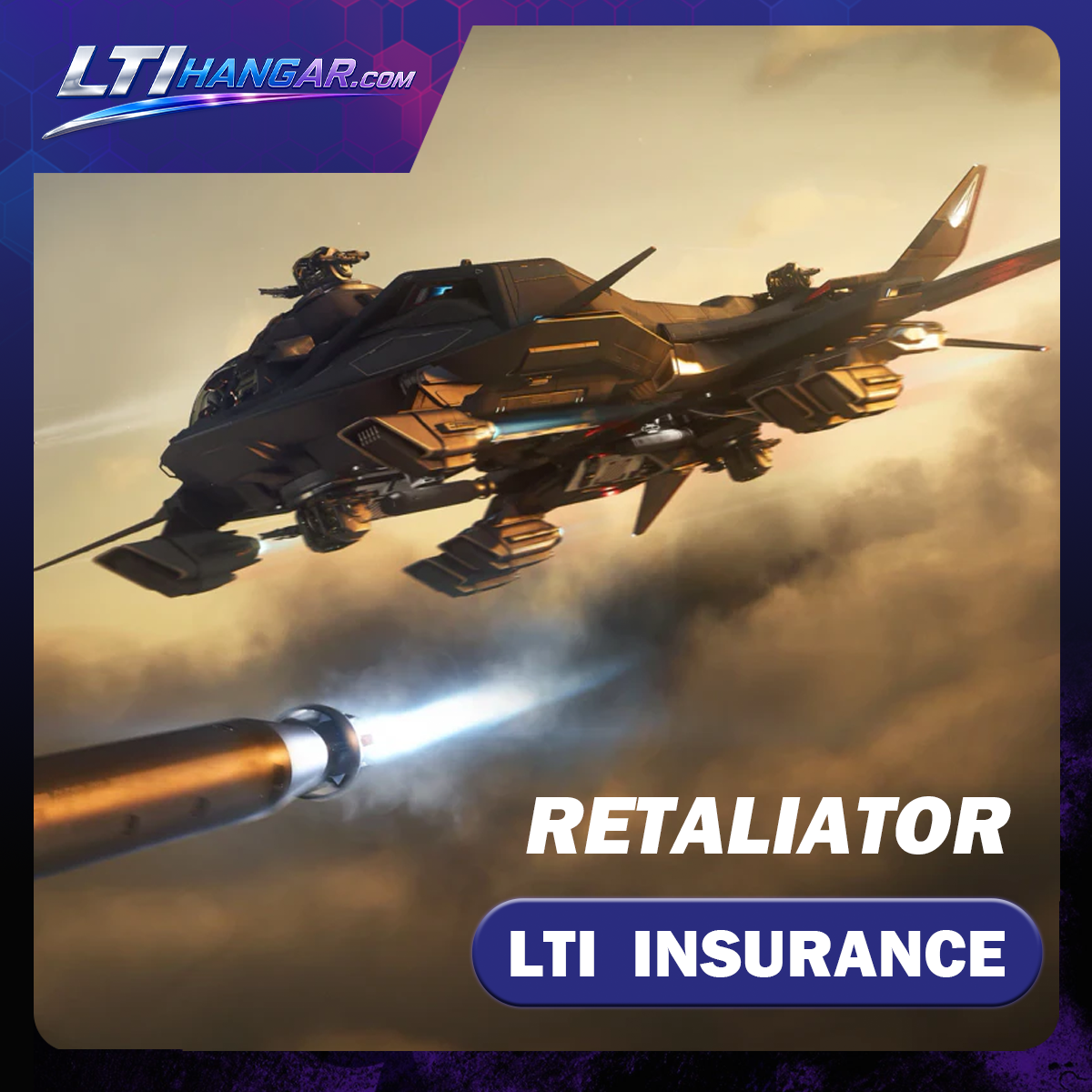
Retaliator - Standalone Ship

Prezzo normale $189.99 USD
Prezzo di vendita $189.99 USD
SOLD OUT

CCU'ed-Insurance: LTI

Email

Controlla i tempi di consegna stimati.

Navi Star Citizen: tempo medio 20–30 minuti; massimo 12 ore.

Star Citizen aUEC: consegna entro 3–5 minuti.

CCU Star Citizen: tempo medio 20–30 minuti; massimo 12 ore.

Paint Star Citizen: tempo medio 5 minuti; massimo 12 ore.

Oggetti Star Citizen: tempo medio 5 minuti; massimo 12 ore.

Come riscattare navi, CCU, paint e oggetti di Star Citizen

Per accettare questo oggetto, devi avere un account su robertsspaceindustries.com. Per accedere a Star Citizen, è necessario possedere un game package.

Tutti gli ordini verranno inviati all’indirizzo email inserito al momento del checkout. Riceverai un’email da no-reply@robertsspaceindustries.com con oggetto “Someone sent you a gift from Roberts Space Industries”.

Apri l’email e clicca sul pulsante blu “Claim Gift” per riscattare il tuo ordine.

Se vuoi ricevere l’ordine su un account diverso da quello collegato all’email fornita, ti basta accedere all’account RSI corretto in un’altra scheda prima di riscattare l’oggetto. Ti consigliamo di aggiornare la pagina RSI per assicurarti di essere connesso all’account giusto.

Se stai acquistando questo oggetto come regalo, clicca con il tasto destro sul pulsante blu “Claim Gift” e copia l’indirizzo del link. Assicurati di essere uscito dal tuo account RSI, così da non riscattare accidentalmente il regalo sul tuo account.

Istruzioni di sicurezza importanti

ATTENZIONE: tutte le navi e gli oggetti possono essere regalati una sola volta. Una volta riscattato, l’oggetto — nave, CCU, paint, armatura, arma o altro item — sarà collegato in modo permanente all’account che lo ha accettato.

Per questo motivo, prima di riscattare l’email regalo, assicurati di essere connesso allo specifico account RSI su cui vuoi ricevere l’oggetto, usando lo stesso browser.

Non siamo responsabili se l’oggetto viene riscattato sull’account RSI sbagliato.

Come applicare una CCU (Ship Upgrade)

Se hai acquistato una Cross Chassis Upgrade (CCU) per trasformare una nave in un’altra, segui questi passaggi:

Riscatta la CCU

Segui i passaggi di consegna indicati sopra per aggiungere la CCU al tuo RSI Hangar.

Trova la CCU nel tuo hangar

Vai nella sezione “My Hangar” sul sito RSI e cerca la CCU che hai ricevuto.

Applica l’upgrade

Clicca sulla freccia accanto alla CCU per aprire i dettagli.

Poi clicca sul pulsante “Apply Upgrade”.

Seleziona la “Source Ship”, cioè la nave di partenza che vuoi usare per l’upgrade, e inserisci la password del tuo account RSI per completare l’operazione.

Nota importante

L’assicurazione, come ad esempio LTI, e gli eventuali bonus della nave base verranno trasferiti alla nuova nave dopo l’upgrade.

In alcuni casi, per passare da una nave di valore più basso a una nave di valore più alto, l’upgrade può essere composto da più CCU in sequenza.

Ad esempio: se acquisti un upgrade da Merchantman a Polaris, potremmo inviarti due CCU: una da Merchantman a Hammerhead e una da Hammerhead a Polaris.

Più grande è la differenza di prezzo tra la nave di partenza e quella finale, maggiore potrebbe essere il numero di CCU che riceverai.

Acquista in sicurezza: protezione cliente

Protezione sull’acquisto

Acquistando sul nostro sito, hai la garanzia di ricevere l’item corretto, esattamente come descritto nella pagina prodotto.

Se per qualsiasi motivo non fossimo in grado di consegnare l’item acquistato, ti offriremo una sostituzione oppure un rimborso completo. Potrai scegliere l’opzione che preferisci.

Protezione post-vendita

Tutti gli item che vendiamo provengono dal nostro inventario diretto e sono coperti dalla nostra protezione post-vendita.

Se si verifica un problema con un item durante la consegna o entro 6 mesi dal completamento della consegna, effettueremo una verifica. Se il problema risulta essere causato da un nostro errore, forniremo una sostituzione oppure un rimborso.

Nella maggior parte dei casi, questo significa una sostituzione completa, un rimborso completo oppure, se lo stesso item non è più disponibile, un upgrade a un item migliore.

Assistenza clienti 24/7

Ricevi supporto quando ne hai bisogno con il nostro servizio clienti online 24/7.

Che tu abbia domande, abbia bisogno di assistenza o voglia una soluzione rapida, il nostro team è sempre pronto ad aiutarti. A qualsiasi ora e in qualsiasi giorno, siamo a portata di click per offrirti il supporto di cui hai bisogno.

Unisciti ora al nostro Discord e scopri la differenza di LTI Hangar!

Disponibile · Invio tramite RSI Gift · Consegna media 20 min
Visualizza i dettagli completi
Need Help? Open a Discord Ticket

Contact our Discord live support; we are online 24/7.

Perché i player scelgono LTI Hangar

Consegna rapida delle navi, supporto reale e una procedura RSI Gift chiara — pensato per i player di Star Citizen che vogliono un’esperienza d’acquisto più semplice e fluida.

Consegna media 20–30 min

Supporto Discord 24/7

Un team di gamer con oltre 10 anni di esperienza nel settore.

Acquisto sicuro, Vendiamo solo dal nostro stock, senza seller esterni o inserzioni di terze parti.

Supporto post-vendita affidabile

Segui il tuo ordine in tempo reale.

  • Qual è la differenza tra Original Concept, Standalone Ship e nave CCU’ed?

  • Non sai se la nave che stai acquistando è già flight ready? Controlla la Loaner Matrix ufficiale!

Domande frequenti

Quanto tempo richiede di solito la consegna?

Gli ordini di navi, CCU, paint e item di Star Citizen vengono solitamente consegnati entro 20–30 minuti.

In rari casi, la consegna può richiedere fino a 12 ore a causa del volume degli ordini, dei limiti RSI per l’invio dei gift, dello stato dell’account o di eventuali verifiche manuali necessarie.

Nella maggior parte dei casi, cerchiamo di non superare le 12 ore per la consegna delle navi, salvo problemi eccezionali come limitazioni del sistema RSI, restrizioni dell’account o verifiche richieste al cliente.

Il mio ordine della nave è protetto?

Sì. Sicurezza e affidabilità sono tra le nostre priorità principali.

Tutte le navi vendute da LTI Hangar provengono dal nostro stock diretto, senza seller esterni o fornitori terzi sconosciuti.

Ogni ordine viene gestito con registri di consegna chiari, così il processo può essere verificato e tracciato in caso di bisogno di supporto.

Offriamo inoltre una protezione post-vendita di 6 mesi per eventuali problemi idonei legati alla consegna.

Questo controllo tramite stock diretto, insieme alla consegna tracciabile e alla protezione post-vendita, è uno dei motivi per cui molti clienti scelgono LTI Hangar per acquistare navi Star Citizen in modo più sicuro.

Che cos’è la protezione post-vendita di 6 mesi? Perché altri marketplace non possono offrirla?

Nel rarissimo caso in cui si verifichi un problema con un item durante la consegna o entro 6 mesi dal completamento della consegna, effettueremo una verifica.

Se dalla verifica risulta che il problema è stato causato da un nostro errore, forniremo una sostituzione oppure un rimborso.

Per aiutarci a controllare il caso in modo accurato, potremmo chiederti di fornirci prove rilevanti, come screenshot del tuo RSI Hangar, dettagli dell’ordine e registri dell’RSI Hangar Log.

L’RSI Hangar Log può aiutare a tracciare lo stato e la cronologia di ogni nave, incluso se l’item è stato riscattato, scambiato, meltato, trasferito o modificato in altro modo dopo la consegna.

Esamineremo le prove fornite per determinare la causa del problema.

Questo livello di protezione non è comunemente offerto da molti marketplace di terze parti, perché spesso si affidano a seller esterni o a fonti di stock miste.

Su LTI Hangar, invece, tutte le navi provengono dal nostro stock diretto e ogni ordine dispone di registri di consegna chiari. Questo ci permette di offrire un supporto più sicuro, tracciabile e affidabile.

Posso richiedere un rimborso dopo aver riscattato una nave, CCU, paint o item?

Una volta che l’RSI Gift è stato riscattato, la nave, CCU, paint o item viene collegato all’account RSI che lo ha ricevuto.

A causa delle limitazioni del sistema di gifting di Star Citizen, un item già riscattato normalmente non può essere regalato di nuovo, restituito, annullato o riconsegnato.

Per questo motivo, gli item già riscattati normalmente non sono idonei alla cancellazione o al rimborso.

Una correzione, sostituzione o rimborso può essere fornito solo se confermiamo che il problema è stato causato da noi, ad esempio l’invio di un item sbagliato, un errore nella consegna dell’ordine o un altro problema di consegna verificato e causato dal nostro lato.

Prima di riscattare l’RSI Gift, assicurati di essere connesso all’account RSI corretto.

Una volta che il gift viene riscattato sull’account sbagliato, normalmente non può essere spostato su un altro account.

Cosa succede se viene consegnata la nave, CCU, paint o item sbagliato?

Se confermiamo che l’item sbagliato è stato consegnato a causa di un nostro errore, esamineremo il caso e forniremo una correzione, una sostituzione o un rimborso, ove applicabile.

Ti invitiamo a contattarci fornendo il numero d’ordine, l’email usata al checkout e screenshot chiari del tuo RSI Hangar.

Perché la nave Star Citizen che ho ricevuto mostra un nome diverso?

Una Standalone CCU’ed è una nave o un veicolo completo. Non è un upgrade!

“CCU’ed” significa semplicemente che la nave o il veicolo è stato creato partendo da un modello più piccolo e facendo upgrade fino a quello che stai acquistando.

Tieni presente che, nell’email regalo RSI, potrebbe comparire solo il nome della nave usata come base per l’upgrade. È normale, non devi preoccuparti: la nave effettiva che vedrai nel tuo hangar sarà esattamente quella che hai ordinato.

Ad esempio, ecco come appare una Polaris CCU’ed nell’hangar sul sito RSI.


COME FUNZIONA

Veloce, semplice e sicuro: scopri come funziona!

QUANTO È SICURO?

La sicurezza è la nostra priorità numero uno.

A differenza di altri siti, vendiamo solo dal nostro stock diretto. Non permettiamo seller esterni sulla nostra piattaforma.

Questo garantisce maggiore sicurezza, più tranquillità per il cliente e consegne molto più rapide.

COME CONSEGNIAMO?

L’item verrà consegnato tramite il sistema RSI Gift.

Dopo aver effettuato l’ordine, invieremo l’item all’indirizzo email inserito al checkout.

Quando ricevi l’email regalo, ti basterà aprirla e cliccare su “Claim”: l’item verrà aggiunto all’account RSI su cui sei già connesso.

PROTEZIONE POST-VENDITA

Tutti gli item che vendiamo provengono dal nostro stock diretto e sono coperti dalla nostra policy di protezione post-vendita.

Se si verifica un problema con un item durante la consegna o entro 6 mesi dal completamento della consegna, effettueremo una verifica.

Se viene confermato che il problema è stato causato da un nostro errore, forniremo una sostituzione oppure un rimborso.

CONTATTACI

Star Citizen è un universo complesso! Se hai domande, siamo sempre felici di aiutarti.

Siamo online 24 ore su 24 per offrirti supporto quando ne hai bisogno.

In più, sul nostro canale Discord puoi trovare ancora più codici sconto e giveaway!

Aegis Retaliator Standalone Ship Gameplay Guide

The Aegis Retaliator is a large modular military gunship and heavy torpedo bomber built for Star Citizen players who want Size 9 anti-ship ordnance, five manned defensive turrets, multicrew engineering, long-range strike missions, and interchangeable front and rear mission modules.

It is not a solo heavy fighter, stealth bomber, agile dogfighter, general-purpose cargo ship, or capital vessel. The Retaliator is best understood as the multicrew modular bomber of the Aegis fleet: a heavily defended military hull that can carry six Size 9 torpedoes when both torpedo modules are installed, transport up to 74 SCU when fitted with both cargo modules, or combine different front and rear modules to support mixed missions.

The Retaliator’s published configuration includes two modular rooms, a maximum crew of seven, five manned turrets, six Size 2 shield generators, and no conventional pilot-controlled gun battery. Its current official description continues to position it as a heavy Aegis warship originally designed for anti-capital and large-target strike missions.

The safest product-page positioning is simple:
The Retaliator is the ship you choose for crewed Size 9 torpedo attacks, defensive turret coverage, and modular military missions — not for solo dogfighting, stealth attacks, maximum cargo efficiency, or capital-ship facilities.

Build Your Aegis Bomber Fleet with the Retaliator

The Retaliator occupies the space between small torpedo bombers and full corvette-scale warships. It carries twice as many Size 9 torpedoes as the Eclipse when both torpedo modules are installed, while also providing five manned turrets, a full walkable interior, component access, several crew positions, and two interchangeable mission rooms.

At the same time, it remains smaller and less complex than the Polaris. It has no fighter hangar, medical bay, capital components, or full corvette support facilities.

If you are looking to acquire this Aegis modular gunship, you can explore our available options in the Star Citizen Ships and Vehicles Collection.

Aegis Retaliator Key Specifications

The following figures come from Aegis’s official Retaliator technical references. Star Citizen remains under active development, so speed, shields, turret behavior, components, engineering requirements, torpedo balance, and module capacities can still change.

Specification Aegis Retaliator Gameplay Meaning
Manufacturer Aegis Dynamics Military manufacturer with strong UEE combat heritage.
Role Modular Gunship / Heavy Bomber Final role depends heavily on the installed front and rear modules.
Status Flight Ready Available for current live gameplay.
Length 71 m Large multicrew ship rather than a heavy fighter.
Width 30 m Narrow relative to its length but still requires large-ship landing space.
Height 9.5 m in flight / 12.5 m landed Landing gear significantly increases its ground height.
Maximum Crew 7 Built around a pilot, turret crews, and additional operational support.
Modular Rooms 2 Separate bow and stern modules can be configured independently.
Pilot Guns No published conventional pilot gun battery Pilot relies on torpedoes, positioning, crew, and defensive turrets.
Large Turrets 3× manned turrets with 2× Size 3 weapons each Main defensive firepower against fighters and nearby ships.
Smaller Turrets 2× manned turrets with 2× Size 2 weapons each Additional coverage around the hull.
Total Turrets 5 manned turrets Requires real crew to reach full defensive potential.
Torpedo Capacity Up to 6× Size 9 Four in the bow module and two in the stern module.
Bow Cargo Module 38 SCU Replaces the four-torpedo bow module.
Stern Cargo Module 36 SCU Replaces the two-torpedo stern module.
Maximum Cargo Configuration 74 SCU Requires both cargo modules and removes all torpedoes.
Mixed Configuration Torpedoes plus cargo One torpedo module and one cargo module can be combined.
Shield Generators 6× Size 2 Useful shield redundancy for a non-capital military ship.
Power Plants 2× Size 2 current configuration Supports the ship’s shields, turrets, systems, and engineering network.
Quantum Drive 1× Size 2 current component Medium-class quantum travel system.
Jump Drive 1× Size 2 Supports intersystem travel where implemented.
Radar 1× Size 2 Standard large military-ship sensor reference.
Published Speed 138 m/s Deliberate gunship handling rather than fighter mobility.
Engineering Support Physicalized component and engineering gameplay Full crews gain value from repair and system management.
Core Gameplay Torpedo attacks, turret defense, engineering, modular missions Best with preparation, crew coordination, and escort support.

The official technical document lists three twin-Size 3 manned turrets, two twin-Size 2 manned turrets, six Size 2 shields, two Size 2 power plants, and a published speed reference of 138 m/s.

What Makes the Aegis Retaliator Valuable?

The Retaliator is valuable because it combines three identities that are usually separated across different ships: a heavy torpedo bomber, a defensive multicrew gunship, and a modular mission platform.

A small bomber such as the Eclipse delivers heavy ordnance but provides little crew gameplay or staying power. A gunship such as the Hammerhead provides defensive turrets but no heavy torpedo battery. A cargo ship may provide more freight capacity but cannot become a six-torpedo anti-ship bomber by changing modules. The Retaliator combines parts of all three.

The Retaliator is not the easiest bomber or a dedicated gunship; it is the modular military platform that can carry heavy anti-ship torpedoes while a crew protects and maintains the ship.

Its defining qualities include:

  • Six Size 9 torpedoes in full bomber configuration
  • Five manned defensive turrets
  • Maximum crew of seven
  • Two interchangeable module rooms
  • Mixed cargo-and-torpedo configurations
  • Six Size 2 shields
  • Full walkable military interior
  • Engineering and component access
  • Long-range strike identity
  • Clear Aegis military styling
  • Flight Ready modular gameplay
  • Clear position between Eclipse and Polaris

The Retaliator is not automatically the right choice in every large-target engagement. Its value depends on whether the owner can support the crew, torpedo cost, module selection, escorts, engineering workload, and mission preparation.

Heavy Torpedo Bomber Gameplay Role

When fitted with both torpedo modules, the Retaliator carries four Size 9 torpedoes in the bow and two Size 9 torpedoes in the stern, totaling six Size 9 torpedoes. RSI’s Shipyard explanation identifies the Retaliator Bomber as the base hull fitted with both torpedo modules and confirms the six-Size 9 payload.

The Retaliator is built to deliver several heavy anti-ship attacks during one deployment, not fire one missile and then fight like a conventional gunship.

Its torpedoes are intended for large ships, heavy transports, gunships, corvettes, and disabled or distracted capital ships. Size 9 torpedoes should not be treated as ideal dogfighting weapons. The official Eclipse Q&A explains that Size 9 torpedoes take time to lock onto smaller ships and are difficult to use against agile fighter targets. The same fundamental limitation applies to a Retaliator attempting to use heavy torpedoes against ships that are too small, too fast, or already within close fighting distance.

Bow and Stern Torpedo Modules

The Retaliator divides its torpedo payload across two separate modules, allowing users to specialize or mix roles dynamically.

Module Capacity Main Value
Bow Torpedo Module 4× Size 9 torpedoes Provides most of the bomber’s heavy ordnance.
Stern Torpedo Module 2× Size 9 torpedoes Completes the six-torpedo bomber configuration.
Both Torpedo Modules 6× Size 9 torpedoes Full anti-large-ship bomber configuration.
The bow module supplies the majority of the Retaliator’s strike power, while the stern module determines whether the ship carries two additional torpedoes or another mission capability.

This creates several possible configurations:

  • Full Bomber: Bow torpedo module + Stern torpedo module (6× Size 9 torpedoes, 0 SCU)
  • Heavy Strike Transport: Bow torpedo module + Stern cargo module (4× Size 9 torpedoes, 36 SCU)
  • Armed Cargo Gunship: Bow cargo module + Stern torpedo module (2× Size 9 torpedoes, 38 SCU)
  • Full Cargo Gunship: Bow cargo module + Stern cargo module (74 SCU, 0 torpedoes)

Size 9 Torpedo Expectations

Size 9 torpedoes are heavy anti-ship weapons, but they are not guaranteed kills. A successful launch still depends on target size, lock completion, countermeasures, and version balance variables.

The Retaliator carries enough torpedoes to threaten large ships, but carrying six heavy weapons does not guarantee that all six will reach the target.

Torpedo Firing and Workflow Logistics

A successful Retaliator attack usually begins before the ship reaches weapons range, demanding deliberate situational alignment.

The Retaliator is most effective when the crew prepares the attack, delivers the ordnance, and leaves before the target’s escorts can turn the bomber into the main objective.

Five Manned Turrets

The Retaliator carries five manned defensive turrets: three turrets with two Size 3 weapons each and two turrets with two Size 2 weapons each, providing ten turret-mounted weapons across the hull.

The torpedoes threaten the main target; the five turrets exist to stop smaller ships from preventing the torpedo attack.

The turrets do not make the Retaliator a Hammerhead replacement. Their limitations include smaller weapon sizes than dedicated anti-fighter gunships and dependence on five additional players for full defensive coverage.

No Conventional Pilot Gun Battery

The Retaliator’s published specification does not list conventional pilot-controlled guns. The pilot focuses on flight, approach alignment, and overall crew command.

The Retaliator pilot flies the weapons platform; the turret crew provides the conventional gunfire.

This has major consequences for solo play. A solo pilot may still operate the ship, travel, select modules, and deploy torpedoes, but cannot reproduce the defensive coverage of a staffed Retaliator.

Maximum Crew and Multicrew Roles

The official Retaliator technical document lists a maximum crew of seven. Responsibilities span across pilot, gunner, and dedicated engineering roles.

Crew Role Main Responsibilities
Pilot / Commander Flight, approach, positioning, escape planning, and overall mission decisions.
Large-Turret Gunner 1 Anti-fighter coverage and assigned firing sector.
Large-Turret Gunner 2 Anti-fighter coverage and assigned firing sector.
Large-Turret Gunner 3 Anti-fighter coverage and assigned firing sector.
Small-Turret Gunner 1 Additional defensive coverage and target support.
Small-Turret Gunner 2 Additional defensive coverage and target support.
Engineer / Systems Crew Component monitoring, repairs, power, fire response, and operational support.
Seven players can fill nearly every intended Retaliator role, but a smaller coordinated crew can still operate the ship by prioritizing the most important turrets and engineering tasks.

Crew Scaling Expectations

The Retaliator can leave the hangar with one pilot, but its combat effectiveness changes significantly based on your organization scale.

The Retaliator can leave the hangar with one pilot, but it becomes a real warship only when enough crew members are aboard to defend and maintain it.

Engineering and Damage-Control Gameplay

The Retaliator’s large interior, multiple shield generators, turret network, power systems, and modular rooms create a meaningful engineering workload. The ship is included in RSI’s current Engineering Gameplay Guide, confirming that physicalized systems and system management are relevant to its operation.

The Retaliator’s durability comes from redundancy and crew response, not from assuming a large military hull can ignore internal damage.

Six Size 2 Shields and Survivability

The Retaliator’s official specification includes six Size 2 shield generators, a substantial shield arrangement for a non-capital military ship.

The Retaliator is protected enough to complete a strike under pressure, but not enough to remain indefinitely beside the capital ship it is attacking.

Speed and Handling Expectations

The published Retaliator technical reference lists a speed of 138 m/s. The ship handles like a long military gunship rather than a fighter or fast bomber.

The Retaliator turns and accelerates like a large weapons platform, so successful pilots plan each attack pass before the ship reaches the target.

Bow and Stern Cargo Module Utility

The bow cargo module provides 38 SCU of capacity and replaces the four-torpedo bow module, while the stern cargo module adds 36 SCU in place of the two-torpedo stern module.

Installing the bow cargo module converts the Retaliator’s largest torpedo bay into its largest freight compartment.

Using the bow torpedo and stern cargo modules together carries four Size 9 torpedoes and 36 SCU, which remains one of the most popular practical utility configurations.

The stern cargo module is the cleaner mixed-role choice when the owner wants to preserve the Retaliator’s four-torpedo bow battery.

Utilizing both cargo rooms allows up to 74 SCU of capacity, entirely stripping out the torpedo mechanics.

The dual-cargo Retaliator becomes a turret-protected military transport, but it stops being a heavy bomber.

The cargo configuration provides military protection, but it faces high operating complexity for only 74 SCU. Dedicated cargo fleets should prioritize specialized commercial freighters.

Concept Modules: Dropship, Personnel and Habitation

The official module specification lists a bow dropship module with 12 jump seats, alongside front and rear personnel modules intended to provide expanded food facilities and long-term crew habitation. These additions are currently marked as in concept.

The dropship module represents a planned troop-transport role, but it should not be marketed as fully available current gameplay until implemented.
The personnel modules are planned to turn the Retaliator into a longer-duration crew transport, but they should not be treated as current finished facilities.

The core purchase decision should rest entirely on the functional torpedo and cargo configurations available in current builds.

Modular Configuration Expectations

The Retaliator is not a collection of separate permanent variants. It is a single modular hull using position-specific mission bays.

You are choosing the Retaliator hull first and deciding what the two internal mission rooms should do second.

Real Player Use: Where the Retaliator Feels Good

The Retaliator feels best when several players have clearly assigned responsibilities and the mission contains a target worthy of heavy torpedoes.

The Retaliator feels like a warship when the crew works together; it feels like an oversized empty corridor when one pilot tries to perform every job alone.

A practical Retaliator session can also feel frustrating when the crew is incomplete. If the lock is delayed, escorts pressure the bomber, or several turret seats are empty, the ship can quickly feel slow and exposed. Once the torpedoes are spent or the target is too small to justify them, the Retaliator depends heavily on crewed turrets, engineering, and withdrawal planning.

When the Retaliator’s Advantage Becomes Less Important

The Retaliator should not be presented as the best bomber or gunship for every player. Its advantages disappear when the owner always flies alone, the target is a light fighter, or the crew cannot staff the defensive turrets.

When there is no large target and no crew to defend the ship, the Retaliator becomes a slow hull carrying systems the pilot cannot fully use.

Rearming and Operating-Cost Expectations

Heavy anti-ship torpedoes can represent a substantial rearming cost. Every launch needs to be weighed carefully against the value of the active mission parameters.

A Retaliator mission should include a rearming plan before the first torpedo leaves the bay.

Direct Vehicle Comparisons

Aegis Retaliator vs Aegis Eclipse

Both ships carry Size 9 torpedoes, but they deliver them through completely different operating styles.

Ship Best For Main Difference
Aegis Retaliator Crewed heavy torpedo attacks Six Size 9 torpedoes, five manned turrets, engineering bays, and modular rooms.
Aegis Eclipse Solo stealth torpedo attacks Three Size 9 torpedoes and a low-signature single-seat approach. Completely solo-friendly.
Choose the Retaliator if you want the crewed heavy bomber. Choose the Eclipse if you want the solo stealth bomber.

Aegis Retaliator vs Vanguard Harbinger & Anvil Gladiator

Fighter-sized bombers emphasize pilot gun configurations and agility over heavy sub-capital ordnance frames.

Ship Best For Main Difference
Aegis Retaliator Large-target torpedo strikes Heavily protected multicrew platform carrying up to six Size 9 anti-ship torpedoes.
Vanguard Harbinger Long-range fighter-bomber missions Heavy fighter frame carrying three Size 5 torpedoes alongside substantial pilot-controlled guns.
Anvil Gladiator Compact carrier-based bombing Smaller two-seat light carrier bomber utilizing lighter ordnance loads for agile deployment.
Choose the Retaliator for heavy multicrew strikes. Choose the Vanguard Harbinger if you want a heavy fighter that can also deliver torpedo attacks. Choose the Gladiator for compact two-player bomber gameplay.

Aegis Retaliator vs RSI Polaris & Crusader A2 Hercules

Ship Best For Main Difference
Aegis Retaliator Dedicated anti-ship torpedo bombing Large non-capital modular frame focusing entirely on Size 9 space ordnance logistics.
RSI Polaris Corvette command and fleet torpedo warfare Full capital-scale warship including an onboard fighter hangar, medical bay, and massive custom torpedo bays.
Crusader A2 Hercules Strategic ground bombardment Heavy Starlifter transport frame carrying heavy unguided area-denial gravity bombs and ground vehicles.
Choose the Retaliator to attack large ships. Choose the Polaris if you want a corvette that carries bombers and launches capital-scale torpedoes. Choose the A2 Hercules to attack ground positions and transport tanks.

Aegis Retaliator vs Aegis Hammerhead & Cargo Transports

Configuration Best For Main Difference
Aegis Retaliator Heavy anti-ship strikes Modular structure built around deleting capital hulls from extreme range. Five defensive turrets.
Aegis Hammerhead Dedicated anti-fighter fleet screens Six massive manned turrets built to shred fighter swarms; lacks any torpedo capability.
Dedicated Freighter Commercial cargo hauling loops Sustained trading profits utilizing open layouts like the Hull C or Caterpillar. Far higher SCU limits.
Choose the Retaliator to kill the large target. Choose the Hammerhead to screen the fleet from fighters. Choose a dedicated hauler like the Caterpillar or Hull C if commercial freight profit is your sole objective.

Aegis Retaliator vs Heavy Bomber and Fleet Strike Family

The Retaliator should be placed carefully within the heavy bomber and fleet-strike family based on crew and module requirements.

Ship / Family Option Best For Main Difference
Aegis Retaliator Crewed heavy torpedo bombing Six Size 9 torpedoes, five manned turrets, two modules, and engineering support.
Aegis Eclipse Solo stealth torpedo attacks Lower crew burden, stealth approach, and three Size 9 torpedoes. Cockpit only.
Vanguard Harbinger Heavy-fighter bomber gameplay Pilot guns, smaller crew needs, and better post-torpedo combat flexibility. Heavy fighter handling.
Anvil Gladiator Compact two-seat bombing Easier deployment, two crew positions, and smaller carrier bomber footprint.
Crusader A2 Hercules Ground bombing and vehicle transport Heavy bombs, military cargo bays, and combined-arms transport parameters.
RSI Polaris Corvette-scale torpedo warfare Hangar bay, medical support rooms, fleet command facilities, and larger sub-capital capital commitment.
Aegis Hammerhead Anti-fighter fleet defense Dedicated turret gunship that protects bombers rather than replacing them.
Choose the Retaliator when you want a crewed heavy torpedo bomber. Choose the Eclipse when you want solo stealth bombing. Choose the Harbinger when you want a heavy fighter with torpedoes and pilot guns. Choose the Gladiator when you want a compact two-seat bomber. Choose the A2 when ground bombing and vehicle transport matter more. Choose the Polaris when you want a true corvette with hangar, medical, and fleet-support facilities.

Cargo, Combat, and Practical Expectations

The Retaliator is highly specialized even though it is modular.

If the buyer wants:

  • Crewed Size 9 torpedo attacks, choose the Retaliator.
  • Solo stealth bombing, choose the Eclipse.
  • Heavy-fighter bombing, choose the Vanguard Harbinger.
  • Compact two-seat bombing, choose the Gladiator.
  • Corvette-scale torpedo warfare, choose the Polaris.
  • Ground bombing and vehicle transport, choose the A2 Hercules.
  • Dedicated anti-fighter turret coverage, choose the Hammerhead.
  • Efficient cargo hauling, choose a dedicated freighter.
  • Solo dogfighting, choose a fighter.
  • Medical and hangar support, choose a larger fleet-support vessel.
The Retaliator is valuable because it combines heavy torpedoes, defensive turrets, engineering, and modules — not because it replaces every bomber, gunship, freighter, and capital ship.

Explore Aegis Retaliator Upgrade Paths

Players who prefer to build toward the Retaliator from another ship can explore available Star Citizen Retaliator CCU Upgrades and plan an Aegis, bomber, gunship, or modular-ship upgrade path.

Before purchasing, buyers should confirm whether the listing includes the base hull, both torpedo modules, or specific cargo arrays. The in-game hull remains the same, but included modules determine what the ship can actually do. For full selection options, browse the Star Citizen Ships and Vehicles Collection.

Aegis Retaliator vs Other Star Citizen Combat Ships

Ship Fleet Option Primary Core Role Compared with the Retaliator
Aegis Retaliator Modular Heavy Bomber / Gunship Good for six Size 9 torpedoes, five turrets, and mixed modules.
Aegis Eclipse Stealth Torpedo Bomber Better for solo concealed attacks. Lower missile counts.
Vanguard Harbinger Long-Range Fighter-Bomber Better for pilot-controlled combat after torpedoes are spent. Built on heavy fighter configurations like the Vanguard Warden hull.
Anvil Gladiator Carrier Bomber Better for compact two-player operations. Lighter footprint.
RSI Polaris Torpedo Corvette Better for fleet command, hangar, medical support, and capital-scale operations.
Crusader A2 Hercules Strategic Bomber / Transport Better for ground bombardment and heavy-vehicle transport. Fits frames like the M2 Hercules or C2.
Aegis Hammerhead Anti-Fighter Gunship Better for sustained large-turret fighter defense. Overlapping arcs.
RSI Perseus Heavy Gunship Better for crewed large-caliber ballistic cannon combat. Armored shell.
Aegis Nautilus Minelayer Better for strategic mine deployment and area control defense matrix arrays.
RSI Constellation Andromeda Multirole Gunship / Freighter Better for cargo, pilot guns, missiles, and smaller-crew daily use. Maps to Constellation Taurus variants too.
Drake Corsair Armed Explorer Better for pilot firepower, cargo, and general mission flexibility.
Aegis Redeemer Multicrew Gunship Better for direct turret-based shielding combat without relying on torpedoes.

Aegis Retaliator vs Eclipse

The Eclipse is better for solo stealth torpedo attacks with minimal crew requirement. The Retaliator is better when the crew wants more torpedoes, turret defense, modular rooms, and engineering gameplay. Choose the Eclipse for solo stealth bombing. Choose the Retaliator for crewed heavy bombing.

Aegis Retaliator vs Harbinger

The Vanguard Harbinger is better for players who want a heavy fighter-bomber with pilot guns and better combat flexibility after torpedoes are spent. The Retaliator is better for larger targets, more torpedo payload, and multicrew bomber operations. Choose the Harbinger for smaller-crew fighter-bomber use. Choose the Retaliator for heavier crewed strikes.

Aegis Retaliator vs Polaris

The Polaris is better for full corvette-scale fleet operations with hangar, medical support, habitation, and capital-scale systems. The Retaliator is better for a lower-commitment heavy bomber role. Choose the Retaliator for a bomber. Choose the Polaris for a fleet-support corvette.

Aegis Retaliator vs Hammerhead

The Hammerhead is better for anti-fighter turret coverage. The Retaliator is better for delivering heavy torpedoes against large targets. Choose the Hammerhead to protect a fleet from fighters. Choose the Retaliator to threaten the large ship those fighters are defending.

Aegis Retaliator General Strengths and Limitations

Strategic Strengths Operational Limitations
Up to six Size 9 torpedoes in full configuration Heavy torpedoes are expensive, finite, and vulnerable to point-defense screens.
Two independent modular rooms The ship’s exact role depends entirely on owning and installing modules.
Can mix torpedo and cargo configurations Mixed configurations sacrifice either ordnance depth or total cargo capacity.
Five manned defensive turrets across the hull Requires several real players for full performance. Pilot has zero guns.
Six Size 2 shield generators Large target profile and slow rotational acceleration make it easy to hit.
Full engineering gameplay support Internal relay damage and fires create substantial crew workloads.
Up to 74 SCU with dual cargo modules Cargo workflow efficiency remains below dedicated freight fleets.

Who Should Buy the Aegis Retaliator?

The Aegis Retaliator is best for players who want a large multicrew bomber with modular mission capability. It is especially suitable for organized bomber crews, anti-capital strike fleets, engineering-focused organizations, and players who find the Polaris too large or complex for regular operations.

It can also serve as a protected transport over dangerous channels when using the dual cargo modules. Solo operators should evaluate smaller single-seat choices like the Eclipse unless dedicated group combat is the primary intent.

Aegis Retaliator FAQ

Is the Aegis Retaliator worth buying in Star Citizen?

Yes, if you want a multicrew modular gunship capable of carrying six Size 9 torpedoes, operating five manned turrets, and switching between bomber and cargo roles. It is not ideal if you mainly play solo, want fighter agility, or need an efficient daily ship.

Is the Aegis Retaliator Flight Ready?

Yes. The Retaliator is Flight Ready and remains part of Aegis’s current playable military lineup.

What is the main role of the Retaliator?

Its official role is modular gunship. With both torpedo modules installed, it becomes a long-range heavy bomber designed to attack large and capital-class targets.

How many Size 9 torpedoes does the Retaliator carry?

It carries up to six: four in the bow torpedo module and two in the stern torpedo module.

Does the Retaliator pilot have guns?

The published technical specification does not list conventional pilot-controlled gun hardpoints. The pilot focuses on flight, positioning, torpedo attacks, and crew coordination.

Can the Retaliator be flown solo?

Yes, but solo operation leaves the five manned turrets and much of the engineering capability unused. A solo retal has zero gun defense once the heavy torpedo bays are emptied.

Should I buy the Retaliator if I mostly play solo?

Usually not as a first choice. A solo pilot can fly the Retaliator and may launch torpedoes where current controls allow, but the ship loses most of its defensive value without turret crew and engineering support. If you mostly play alone and want torpedo gameplay, the Eclipse is usually easier to justify.

Can the Retaliator carry cargo and torpedoes together?

Yes. A bow torpedo module with a stern cargo module gives four Size 9 torpedoes and 36 SCU. A bow cargo module with a stern torpedo module gives 38 SCU and two Size 9 torpedoes.

Does the Retaliator have an onboard medical bay or hangar?

No, the Retaliator completely lacks capital facilities like medical beds or small-craft flight hangars. Organizations requiring those fleet properties must evaluate corvette platforms like the Polaris.

Retaliator or Eclipse: which should I choose?

Choose the Retaliator for six Size 9 torpedoes, five turrets, modularity, and multicrew combat. Choose the Eclipse for three Size 9 torpedoes, stealth, and solo operation.

Will the Retaliator’s specifications change?

Possibly. The official technical sheet states that specifications, features, and appearance remain subject to revision during development.

The Aegis Retaliator is not the easiest bomber, strongest turret gunship, most efficient cargo ship, or most practical solo vessel. Its value comes from combining six Size 9 torpedoes, five manned defensive turrets, six Size 2 shields, two modular rooms, full engineering gameplay, and a seven-person military crew inside one Flight Ready Aegis hull.

For organized crews that want to attack large ships, protect the bomber during its approach, repair damage during withdrawal, and change the internal configuration between torpedo and cargo missions, the Retaliator offers a focused multicrew strike experience.

Choose the Retaliator because you want a modular crewed heavy bomber — not because you expect one pilot and six torpedoes to replace stealth, escorts, engineering, cargo specialists, gunships, and capital fleet support.

Recently viewed products

Your recently viewed is empty

Continua a fare acquisti