Contact our Discord live support; we are online 24/7.
Perché i player scelgono LTI Hangar
Consegna rapida delle navi, supporto reale e una procedura RSI Gift chiara — pensato per i player di Star Citizen che vogliono un’esperienza d’acquisto più semplice e fluida.
Consegna media 20–30 min
Supporto Discord 24/7
Un team di gamer con oltre 10 anni di esperienza nel settore.
Acquisto sicuro, Vendiamo solo dal nostro stock, senza seller esterni o inserzioni di terze parti.
Supporto post-vendita affidabile
Segui il tuo ordine in tempo reale.
Domande frequenti
Quanto tempo richiede di solito la consegna?
Gli ordini di navi, CCU, paint e item di Star Citizen vengono solitamente consegnati entro 20–30 minuti.
In rari casi, la consegna può richiedere fino a 12 ore a causa del volume degli ordini, dei limiti RSI per l’invio dei gift, dello stato dell’account o di eventuali verifiche manuali necessarie.
Nella maggior parte dei casi, cerchiamo di non superare le 12 ore per la consegna delle navi, salvo problemi eccezionali come limitazioni del sistema RSI, restrizioni dell’account o verifiche richieste al cliente.
Il mio ordine della nave è protetto?
Sì. Sicurezza e affidabilità sono tra le nostre priorità principali.
Tutte le navi vendute da LTI Hangar provengono dal nostro stock diretto, senza seller esterni o fornitori terzi sconosciuti.
Ogni ordine viene gestito con registri di consegna chiari, così il processo può essere verificato e tracciato in caso di bisogno di supporto.
Offriamo inoltre una protezione post-vendita di 6 mesi per eventuali problemi idonei legati alla consegna.
Questo controllo tramite stock diretto, insieme alla consegna tracciabile e alla protezione post-vendita, è uno dei motivi per cui molti clienti scelgono LTI Hangar per acquistare navi Star Citizen in modo più sicuro.
Che cos’è la protezione post-vendita di 6 mesi? Perché altri marketplace non possono offrirla?
Nel rarissimo caso in cui si verifichi un problema con un item durante la consegna o entro 6 mesi dal completamento della consegna, effettueremo una verifica.
Se dalla verifica risulta che il problema è stato causato da un nostro errore, forniremo una sostituzione oppure un rimborso.
Per aiutarci a controllare il caso in modo accurato, potremmo chiederti di fornirci prove rilevanti, come screenshot del tuo RSI Hangar, dettagli dell’ordine e registri dell’RSI Hangar Log.
L’RSI Hangar Log può aiutare a tracciare lo stato e la cronologia di ogni nave, incluso se l’item è stato riscattato, scambiato, meltato, trasferito o modificato in altro modo dopo la consegna.
Esamineremo le prove fornite per determinare la causa del problema.
Questo livello di protezione non è comunemente offerto da molti marketplace di terze parti, perché spesso si affidano a seller esterni o a fonti di stock miste.
Su LTI Hangar, invece, tutte le navi provengono dal nostro stock diretto e ogni ordine dispone di registri di consegna chiari. Questo ci permette di offrire un supporto più sicuro, tracciabile e affidabile.
Posso richiedere un rimborso dopo aver riscattato una nave, CCU, paint o item?
Una volta che l’RSI Gift è stato riscattato, la nave, CCU, paint o item viene collegato all’account RSI che lo ha ricevuto.
A causa delle limitazioni del sistema di gifting di Star Citizen, un item già riscattato normalmente non può essere regalato di nuovo, restituito, annullato o riconsegnato.
Per questo motivo, gli item già riscattati normalmente non sono idonei alla cancellazione o al rimborso.
Una correzione, sostituzione o rimborso può essere fornito solo se confermiamo che il problema è stato causato da noi, ad esempio l’invio di un item sbagliato, un errore nella consegna dell’ordine o un altro problema di consegna verificato e causato dal nostro lato.
Prima di riscattare l’RSI Gift, assicurati di essere connesso all’account RSI corretto.
Una volta che il gift viene riscattato sull’account sbagliato, normalmente non può essere spostato su un altro account.
Cosa succede se viene consegnata la nave, CCU, paint o item sbagliato?
Se confermiamo che l’item sbagliato è stato consegnato a causa di un nostro errore, esamineremo il caso e forniremo una correzione, una sostituzione o un rimborso, ove applicabile.
Ti invitiamo a contattarci fornendo il numero d’ordine, l’email usata al checkout e screenshot chiari del tuo RSI Hangar.
Perché la nave Star Citizen che ho ricevuto mostra un nome diverso?
Una Standalone CCU’ed è una nave o un veicolo completo. Non è un upgrade!
“CCU’ed” significa semplicemente che la nave o il veicolo è stato creato partendo da un modello più piccolo e facendo upgrade fino a quello che stai acquistando.
Tieni presente che, nell’email regalo RSI, potrebbe comparire solo il nome della nave usata come base per l’upgrade. È normale, non devi preoccuparti: la nave effettiva che vedrai nel tuo hangar sarà esattamente quella che hai ordinato.
Ad esempio, ecco come appare una Polaris CCU’ed nell’hangar sul sito RSI.

COME FUNZIONA
Veloce, semplice e sicuro: scopri come funziona!
Anvil Ballista Standalone Vehicle Gameplay Guide
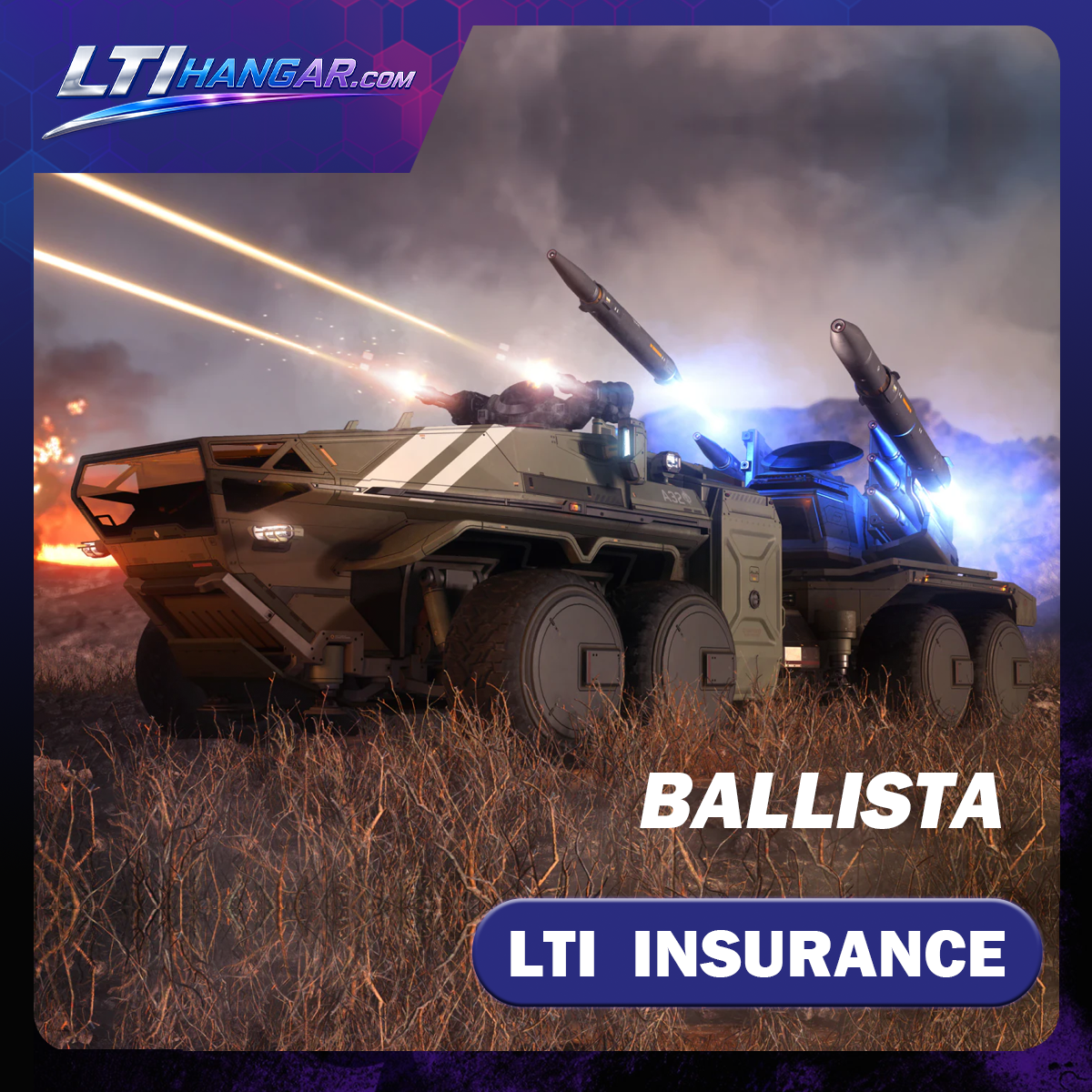
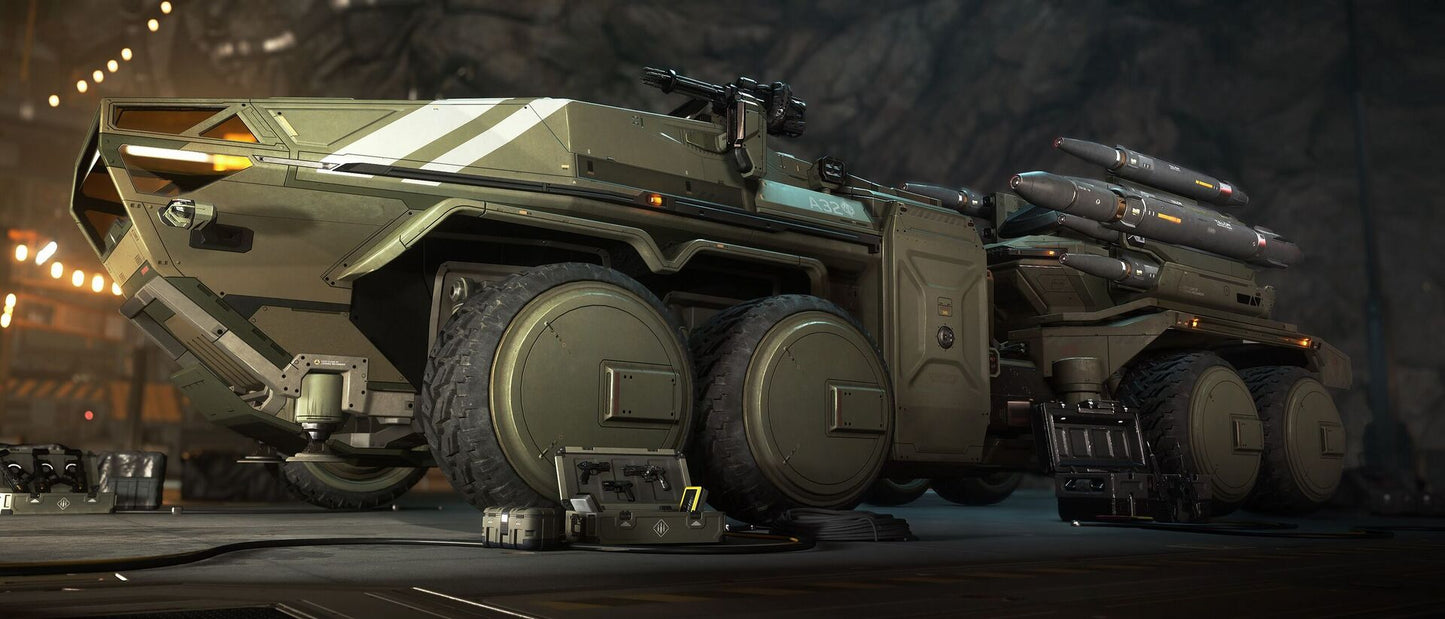
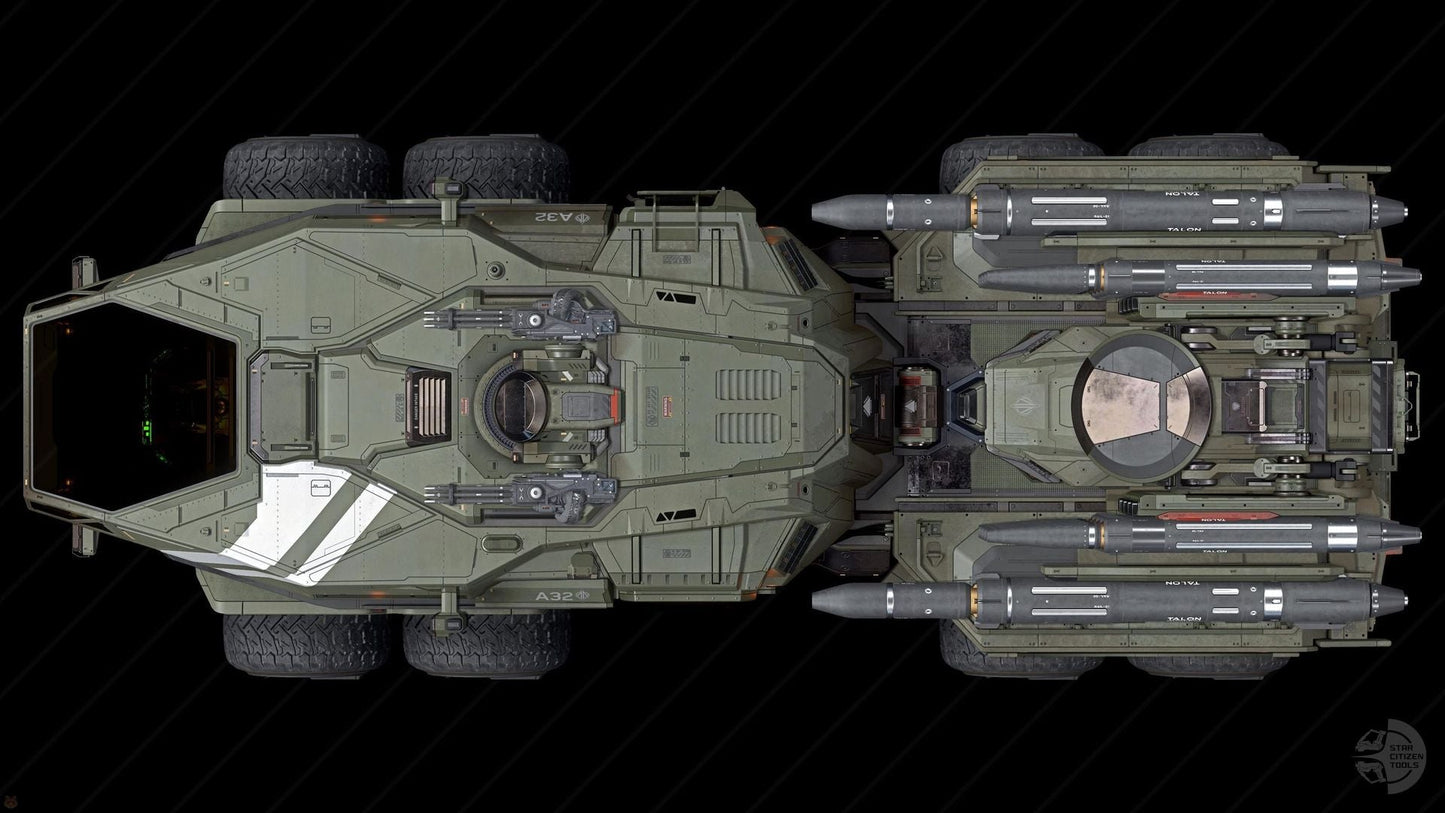
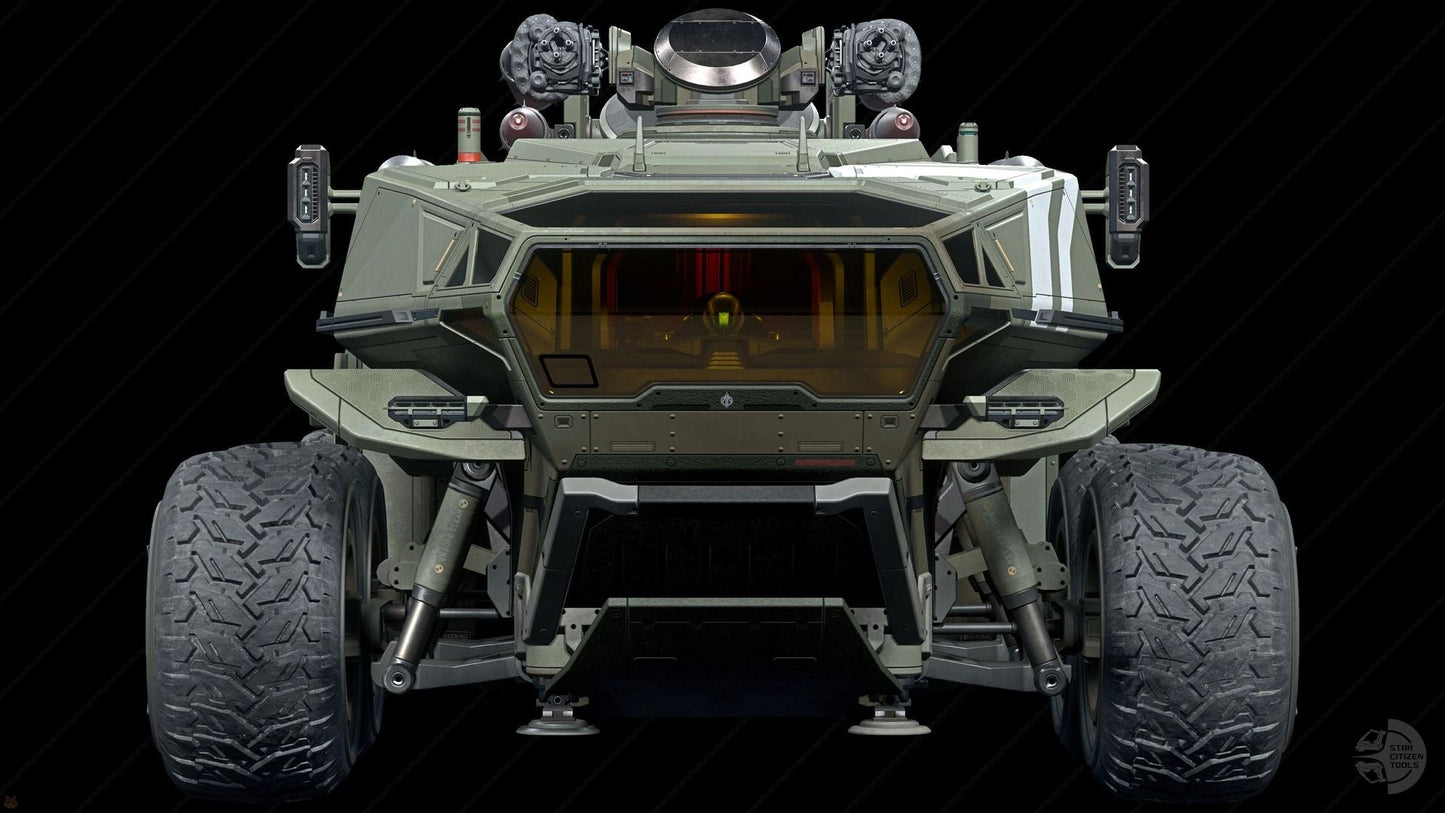
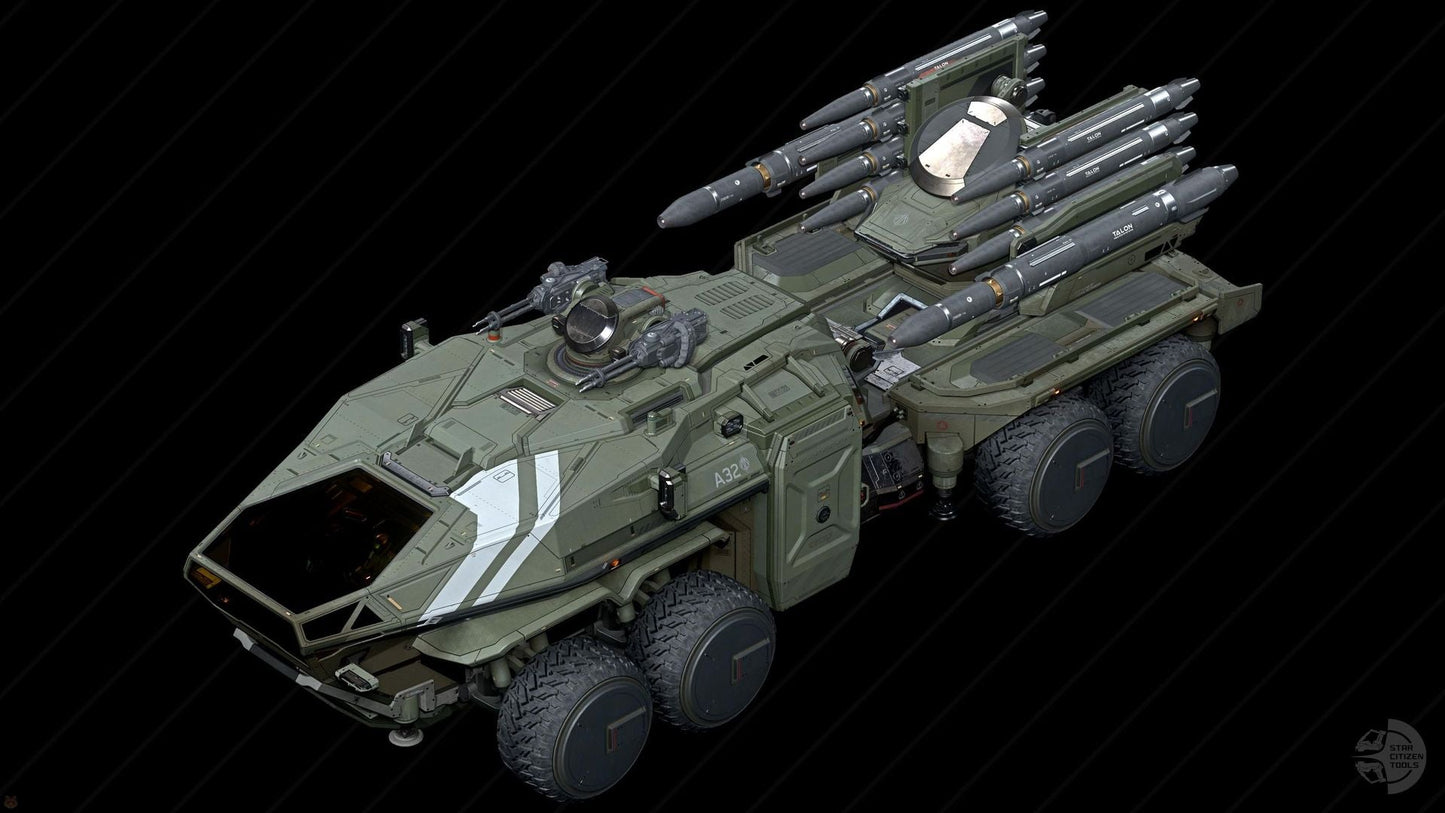
The Anvil Ballista is a two-person self-propelled air-defense vehicle built for Star Citizen players who want long-range surface-to-air missiles, protected ground positions, base defense, convoy support, and organized combined-arms gameplay.
It is not a main battle tank, troop transport, short-range gun platform, cargo vehicle, solo exploration rover, or general-purpose daily vehicle. The Ballista is best understood as the long-range anti-air member of Anvil’s Atlas Platform family: a large ground vehicle that uses heavy missiles to threaten aircraft and spacecraft before they can comfortably attack a defended position.
The Ballista carries eight Size 5 missiles, two Size 7 missiles, and a remotely operated turret fitted with two Size 2 ballistic Gatling guns. Its missile system can engage both airborne and ground targets when a valid lock is available, while the smaller turret provides close-range defense against enemies that move inside the missile platform’s preferred engagement distance.
The safest product-page positioning is simple:
The Ballista is the ground vehicle you choose to create long-range air-defense pressure — not for tank combat, troop transport, cargo, or independent solo roaming.
Build Your Anvil Ground-Defense Fleet with the Ballista
The Ballista is one of Star Citizen’s more specialized ground-combat vehicles. It is built around a simple strategic purpose: deploy to an important location, establish missile coverage, detect approaching threats, and force enemy pilots to respect the ground beneath them.
If you are looking to acquire this Anvil missile-defense platform, you can explore our available options in the Star Citizen Ships and Vehicles Collection.
Anvil Ballista Key Specifications
The Ballista uses the same 17-meter Atlas Platform chassis later shared with the Spartan and Centurion. Its published dimensions are 17 meters long, 7 meters wide, and 5.5 meters high, while the Atlas family’s road-speed reference is 35 m/s. Weapons, missile tracking, lock ranges, armor, signatures, targeting behavior, and component performance remain subject to current game balance.
| Specification | Anvil Ballista | Gameplay Meaning |
|---|---|---|
| Manufacturer | Anvil Aerospace | Military-focused Human manufacturer with a clear ground-combat lineup. |
| Platform | Atlas Platform | Shares its core chassis family with the Spartan and Centurion. |
| Role | Long-Range Ground-Based Air Defense Vehicle | Built to threaten aircraft and spacecraft from prepared ground positions, not to replace tanks, rovers, or close-range anti-air vehicles. |
| Status | Flight Ready / Driveable | Available for current live gameplay. |
| Operational Positions | Driver and missile gunner | Best used by two players with clearly divided responsibilities. |
| Length | 17 m | Requires a large vehicle bay or specialist transport ship. |
| Width | 7 m | Much larger than Cyclone-class vehicles. |
| Height | 5.5 m | Tall enough to require careful carrier and garage planning. |
| Speed Reference | 35 m/s | Mobile enough to reposition, but not a fast scout or pursuit vehicle. |
| Primary Missiles | 8× Size 5 | Main anti-air ammunition for fighter and medium-target pressure. |
| Heavy Missiles | 2× Size 7 | Limited heavy ordnance for larger or more valuable targets. |
| Defensive Turret | 2× Size 2 ballistic Gatling guns | Close-range protection when enemies move inside missile range. |
| Missile Firing Requirement | Vehicle must be stationary | Requires deployment planning before combat begins. |
| Targeting Requirement | Valid target lock | No unrestricted free-fire artillery mode. |
| Cargo Capacity | No practical cargo role | Dedicated combat vehicle rather than a transport platform. |
| Transport Requirement | Requires a large vehicle-capable ship or group deployment plan | Hercules-class ships are the most practical reference, while other compatibility should be checked against current vehicle and hangar behavior. |
| Core Gameplay | Base defense, convoy defense, area denial, anti-air ambush | Best when deployed before enemy aircraft arrive. |
RSI describes the Ballista as carrying eight Size 5 missiles, two Size 7 missiles, and a dual Size 2 ballistic turret. The official Q&A also confirms that the missile launcher must be stationary when firing, while the driver can operate the smaller Gatling turret while the vehicle moves. The safest way to present these numbers is as the official published Tracker Mk II configuration rather than permanent final values. RSI’s Ship Matrix states that vehicle specifications can change during design and game balancing.
What Makes the Anvil Ballista Valuable?
The Ballista is valuable because it allows a ground force to influence the airspace above it. Most ground vehicles can defend themselves only after an aircraft has already approached closely. The Ballista is designed to threaten airborne targets from farther away, forcing pilots to react before they can comfortably line up attacks against a base, convoy, or landing area.
The Ballista does not chase aircraft. It makes aircraft reconsider entering the area.
Its defining qualities are:
- Heavy surface-to-air missile payload
- Long-range defensive identity
- Two missile sizes
- Ground and airborne target capability
- Relatively low electromagnetic-signature concept
- Armored crew cabin
- Close-range Gatling defense
- Mobile Atlas chassis
- Useful combined-arms value
- Clear area-denial role
The Ballista is not valuable because it wins every direct fight. It is valuable because it can change how enemy pilots approach the battlefield.
Long-Range Anti-Air Gameplay Role
The Ballista’s primary role is long-range air defense. Its large missiles are intended to threaten ships before they reach close attack distance. This can discourage low-altitude bombing runs, delay hostile dropships, pressure hovering gunships, and create a protected operating area for friendly infantry and vehicles.
The original Ballista Q&A gave a historical effective detection-and-engagement reference of approximately 10 kilometers against most fighters, with potentially greater distances against larger ships producing stronger infrared or electromagnetic signatures. That figure should be treated as an earlier developer reference rather than a guaranteed current lock range, because sensor and missile systems continue to change.
| Defensive Use | Why the Ballista Fits |
|---|---|
| Base defense | Heavy missiles force approaching ships to respond before beginning an attack run. |
| Convoy protection | Can cover cargo vehicles, troop transports, and industrial assets during movement or unloading. |
| Landing-zone denial | Makes repeated low-altitude approaches more dangerous. |
| Dropship deterrence | Pressures Valkyrie-, Prowler-, or similar assault operations before deployment. |
| Fleet staging defense | Protects ships while they land, refuel, load vehicles, or organize. |
| Objective control | Adds a long-range defensive layer around ground-based PvP objectives. |
| Large-target pressure | Size 7 missiles provide limited heavy ordnance against higher-signature targets. |
The Ballista is most useful before the enemy reaches the objective, not after hostile ships are already hovering directly above it.
Size 5 and Size 7 Missile Payload
The Ballista carries two different missile classes: eight Size 5 missiles and two Size 7 missiles. This gives the crew a limited but meaningful choice between its standard anti-air ammunition and its heavier ordnance.
| Missile Group | Best General Use | Main Limitation |
|---|---|---|
| 8× Size 5 missiles | Fighters, dropships, medium ships, repeated defensive launches | Ammunition can disappear quickly during a prolonged engagement. |
| 2× Size 7 missiles | Larger targets or higher-value attack opportunities | Only two are carried, so poor launches are expensive. |
The Ballista carries heavy missiles, but it does not carry enough ammunition to fire carelessly.
The Ballista’s missile turret is bespoke. RSI stated that the turret type and core launcher configuration were not planned to be replaced with completely different weapon systems, although missile-loadout customization was intended to provide some flexibility.
Stationary Firing Requirement
The Ballista must be parked before firing its main missile artillery. This restriction is central to the vehicle’s gameplay. The crew cannot simply drive at full speed while launching heavy missiles like a lighter combat rover.
The Ballista is mobile between firing positions, but it becomes a deployed weapon system when the missiles are needed.
A practical deployment sequence looks like this:
- Transport the Ballista to the operational area.
- Move away from the carrier or unloading point.
- Select terrain with a clear view of likely approaches.
- Avoid exposing the vehicle directly on the highest visible ridge.
- Stop the vehicle.
- Allow the gunner to search for and lock targets.
- Fire only when the launch path is safe.
- Reposition after the position has been discovered.
- Return for rearming when ammunition becomes too limited.
Target Lock and Line-of-Sight Expectations
The Ballista is not a traditional free-fire artillery vehicle. Its missiles currently require a target lock. The original design Q&A also stated that both airborne and ground targets required sufficient signature and line of sight for the Ballista to lock them. CIG discussed future target-data sharing through ships or forward operators, but that should not be marketed as guaranteed current functionality.
The Ballista fires guided missiles at identified targets; it does not blindly bombard any point on the map.
Low-Signature Ambush Potential
The original Ballista promotion emphasized its relatively small electromagnetic signature for a vehicle carrying such heavy ordnance. That concept allows the platform to function as more than a visible missile tower placed on open ground.
The Ballista can be difficult to notice before it fires, but launching missiles usually reveals that the area is defended.
Close-Range Gatling Defense
The Ballista includes a remotely operated turret fitted with two Size 2 ballistic Gatling guns. These weapons exist to protect the crew when an enemy moves too close for the main missile role, when infantry or light vehicles approach, or when the Ballista must defend itself while changing positions.
| Gatling-Turret Strength | Practical Meaning |
|---|---|
| Dual Size 2 ballistic weapons | Provides real close-range defensive fire. |
| Driver-controlled | The vehicle retains some combat capability while the gunner focuses on missiles. |
| Can operate while moving | Useful during withdrawal or repositioning. |
| Remote operation | Crew members remain inside the protected cabin. |
| Limited size | Not a replacement for the Centurion’s dedicated anti-air gun turret. |
| Ballistic ammunition | Requires ammunition awareness and eventual resupply. |
The Gatling turret helps the Ballista survive close contact; it does not turn the vehicle into a frontline gun tank.
Driver and Gunner Gameplay
The Ballista is best used by two players. The driver manages movement, terrain, concealment, vehicle positioning, withdrawal, and the close-defense turret. The gunner manages target search, missile selection, locks, launch timing, and ammunition discipline.
| Crew Position | Main Responsibilities |
|---|---|
| Driver | Drives, selects terrain, controls positioning, manages escape routes, and operates the defensive Gatling turret. |
| Missile Gunner | Searches for contacts, selects missiles, establishes locks, confirms firing lanes, and controls the primary launcher. |
The Ballista works best when the driver thinks about survival and the gunner thinks about airspace control.
Solo Gameplay Expectations
The Ballista can be moved and partially defended by one player, but it is not an ideal solo combat vehicle. A solo operator must choose between driving and using the dedicated missile station. This creates delays whenever the vehicle needs to move, stop, change seats, search for targets, fire, and then return to the driver position.
Solo Ballista is possible for prepared defense, but two-player Ballista is the practical combat configuration.
Real Player Use: Where the Ballista Feels Good
The Ballista feels best when the crew has time to prepare. A real player does not experience it as a missile tank that can be driven into any random battle and immediately control the fight. Its value appears when the crew understands where the enemy is likely to approach, unloads the vehicle before combat begins, finds a concealed firing position, and coordinates with friendly forces.
The Ballista feels powerful when the battlefield comes toward it; it feels cumbersome when it is forced to chase the battlefield.
When the Ballista’s Advantage Becomes Less Important
The Ballista should not be presented as a universal solution to every ground battle. Its specialist advantage becomes less useful when there are no aircraft present, terrain blocks target locks, or the target is already directly overhead.
When there is no airspace to defend, the Ballista becomes a slow ground vehicle with a small defensive turret and limited practical purpose.
Armor and Survivability Expectations
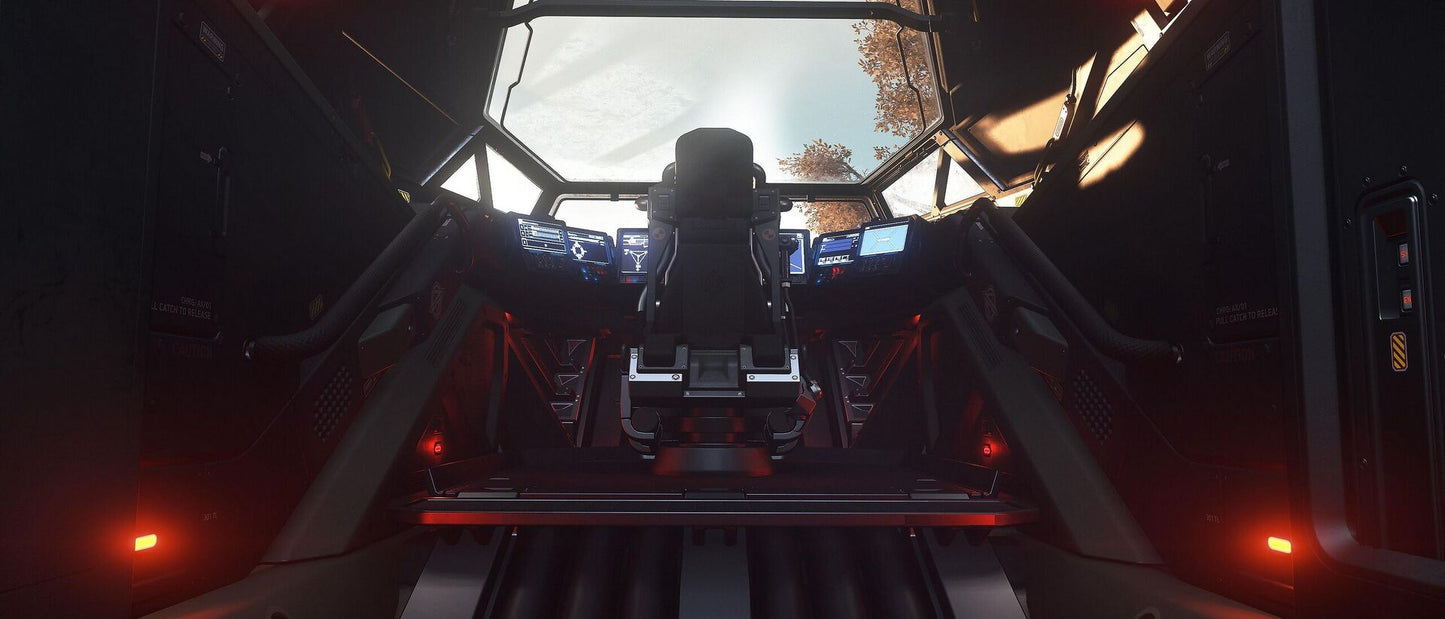
The Ballista uses a heavily fortified cabin intended to keep its operators protected during combat. However, it should not be treated as a main battle tank simply because it is large and armored.
The Ballista is armored enough to operate in a combat zone, but it should avoid becoming the center of the ground fight.
Ammunition and Rearming Expectations
The Ballista’s most useful weapons are expendable. Once its ten main missiles have been used, the vehicle loses the primary capability that defines it.
The Ballista is threatening while loaded, but every deployment needs an ammunition and recovery plan.
Transport and Deployment Requirements
The Ballista cannot travel between planets by itself. It requires a spacecraft with enough internal vehicle space or another suitable transport solution. RSI originally identified the Hercules and Idris series as the ships specifically designed to carry the Ballista securely inside with their doors closed.
Buying a Ballista is also a transport decision.
| Transport Option | Ballista Use |
|---|---|
| C2 Hercules | Practical heavy transport with substantial vehicle space. |
| M2 Hercules | Armored military transport for deploying vehicles into more dangerous areas. |
| A2 Hercules | Can deploy one heavy vehicle while also serving as a bombing platform. |
| Idris Series | Capital-scale military transport and fleet deployment. |
| Liberator / Asgard | Planned light transport carrier options with large flat-bed vehicle surfaces. Supports heavy layouts. |
| 890 Jump | Historically described as physically capable across the rear platform, but not optimized for military deploy roles. |
Cargo and Daily Utility Expectations
The Ballista is not a cargo vehicle. Its interior is designed around the driver, missile operator, military systems, and crew protection rather than freight movement, delivery missions, habitation, or civilian utility.
The Ballista carries missiles and crew, not cargo.
Direct Vehicle Comparisons
Anvil Ballista vs Anvil Centurion
Both vehicles use the Anvil Atlas Platform and defend ground forces from airborne threats. However, the Ballista is a long-range missile platform, while the Centurion is a shorter-range gun-based anti-air vehicle.
| Vehicle | Best For | Main Difference |
|---|---|---|
| Anvil Ballista | Long-range anti-air and heavy missile attacks | Carries 8× Size 5 and 2× Size 7 missiles. Deterring aircraft before they approach. |
| Anvil Centurion | Short-range sustained anti-air gunfire | Uses four Size 4 laser repeaters instead of limited heavy missiles. Fighting aircraft near the position. |
Choose the Ballista if you want long-range missile defense. Choose the Centurion if you want sustained short-range anti-air gunfire.
Anvil Ballista vs Tumbril Storm AA & Cyclone AA
| Vehicle | Best For | Main Difference |
|---|---|---|
| Anvil Ballista | Heavy long-range anti-air area denial | Larger Size 5 and Size 7 missiles with higher individual strike value on an Atlas hull. |
| Tumbril Storm AA | Compact missile-based air defense | More compact tracked platform; trades individual missile size for greater ammo quantity. |
| Tumbril Cyclone AA | Fast light mobile anti-air support | Lightweight buggy footprint; easier transport and repositioning but minimal payload. |
Choose the Cyclone AA for small-team mobility. Choose the Storm AA for compact missile defense. Choose the Ballista if you want heavy long-range missile coverage.
Anvil Ballista vs Tumbril Nova & Anvil Spartan
| Vehicle | Best For | Main Difference |
|---|---|---|
| Anvil Ballista | Anti-air and anti-space defense from ground | Uses heavy guided missiles; completely lacks direct-fire armor-piercing anti-tank guns. |
| Tumbril Nova | Heavy armor frontline ground combat | Main battle tank platform utilizing tracked artillery and heavy direct-fire ground shell arrays. |
| Anvil Spartan | Armored personnel troop transport | Replaces the entire weapon bay assembly with armored jump-seats for up to eight infantry passengers. |
Choose the Spartan to deliver troops safely. Choose the Nova to fight ground vehicles. Choose the Ballista to defend the airspace above your ground force.
Anvil Ballista vs Ground Air-Defense Family
| Ground Air-Defense Option | Best For | Main Difference |
|---|---|---|
| Anvil Ballista | Heavy long-range missile defense | Larger missiles, stronger single-launch threat, and more logistical requirements. |
| Anvil Centurion | Sustained short-range anti-air gunfire | Energy repeaters and closer defensive coverage with infinite ammo capacity. |
| Tumbril Storm AA | Smaller missile-based air defense | More compact tracked chassis with more, smaller missiles. |
| Tumbril Cyclone AA | Light mobile anti-air support | Easier to transport and reposition, but much lighter threat profile. |
Choose the Ballista when you want heavy missiles and area denial. Choose the Centurion when you want sustained close-range anti-air gunfire. Choose the Storm AA when you want a smaller missile vehicle with more shots. Choose the Cyclone AA when mobility and easy transport matter more than heavy missile threat.
Explore Anvil Ballista Upgrade Paths
Players who prefer to build toward the Ballista from another pledge can explore available Star Citizen Ballista CCU Upgrades and plan an Anvil ground-combat or combined-arms fleet over time.
Before purchasing, buyers should confirm whether the listing is a standalone vehicle, an original pledge, or a CCU-upgraded pledge. Standard variants, Snowblind editions, or Dunestalker livery packages use the same baseline specifications.
Anvil Ballista vs Other Star Citizen Ground Vehicles
| Vehicle Fleet Option | Primary Core Role | Compared with the Ballista |
|---|---|---|
| Anvil Ballista | Long-Range Missile Air Defense | Good for heavy surface-to-air missiles and area denial. |
| Anvil Centurion | Short-Range Gun Air Defense | Better for sustained close-range aircraft engagement. |
| Tumbril Storm AA | Compact Missile Air Defense | Smaller and carries more, lighter missiles. |
| Tumbril Cyclone AA | Light Mobile Air Defense | Faster and easier to transport, but less threatening. |
| Tumbril Nova | Main Battle Tank | Better for heavy armored ground combat. |
| Anvil Spartan | Armored Personnel Carrier | Better for transporting infantry forces. |
| Greycat ROC | Mining Vehicle | Better for ground-resource extraction. |
| RSI Ursa Rover | Exploration Rover | Better for general travel, crew transport, and exploration. Fits variants like the Ursa Fortuna or Medivac. |
Anvil Ballista Strengths and Limitations
| Strategic Strengths | Operational Limitations |
|---|---|
| Eight Size 5 and two Size 7 missiles | Only ten primary missiles before rearming is required. |
| Clear long-range anti-air role | Much less useful when no airborne targets are present. |
| Can threaten both airborne and locked ground targets | Requires target lock and suitable line of sight. No blind artillery bombardment. |
| Creates area denial around bases and objectives | Cannot pursue aircraft effectively. Slow top road speed reference. |
| Relatively low-signature defensive concept | Firing can reveal the defended area and launch direction. |
| Heavily protected crew cabin | Not a main battle tank and vulnerable to dedicated heavy ground attacks. |
| Dual Size 2 Gatling defensive turret | Close-defense turret is weaker than specialist gun platforms. |
| Driver and gunner can divide responsibilities | Solo operation requires inconvenient seat changes between stations. |
| Mobile between firing positions | Main missiles require the vehicle to be completely stationary. |
| Works well with Centurion, Nova, and infantry support | Needs combined-arms support when enemies reach close range. |
Who Should Buy the Anvil Ballista?
The Anvil Ballista is best for players who want a dedicated long-range ground-based missile-defense platform. It is especially suitable for organized PvP groups, player organizations, base-defense crews, ground-combat teams, convoy operators, and owners of large logistics ships.
It is also a useful fleet addition for players who already have transport and ground-support roles covered. A Hercules can deliver it, a Centurion can cover its close-air gap, a Nova can protect it from tanks, and infantry can prevent enemy ground teams from reaching the launcher. New players who operate entirely alone or lack large vehicle logistics should evaluate standard starters first.
Anvil Ballista FAQ
Is the Anvil Ballista worth buying in Star Citizen?
Yes, if you want long-range surface-to-air missiles, base defense, convoy protection, and combined-arms gameplay. It is not ideal if you want a versatile daily vehicle, tank combat, cargo, fast scouting, or easy solo operation.
Is the Anvil Ballista Flight Ready?
Yes. The Ballista is Flight Ready and remains part of Anvil’s current playable military lineup. It was originally released directly into Alpha 3.6 and continues to appear in RSI’s current event listings.
What is the main role of the Ballista?
The Ballista is a self-propelled air-defense system designed for terrestrial anti-air and anti-space operations. Its primary purpose is to protect ground positions from airborne attacks.
How many missiles does the Ballista carry?
The Ballista carries eight Size 5 missiles and two Size 7 missiles.
How many crew members does the Ballista need?
It is best operated by two players: one driver and one missile gunner. The driver controls movement and can operate the defensive Gatling turret, while the gunner controls the main missile launcher.
Can the Ballista be used solo?
Yes, but solo operation is less efficient. One player must move between the driving and missile-control positions, making rapid repositioning and engagement more difficult.
Can the Ballista fire while moving?
Its main missile launcher requires the vehicle to be stationary. The driver can still operate the defensive Gatling turret while driving.
Can the Ballista shoot ground targets?
Yes, provided the target produces sufficient signature, has a valid lock, and meets current targeting requirements. The Ballista does not have unrestricted free-fire bombardment.
What is the Ballista’s missile range?
An older developer Q&A gave an effective reference of around 10 kilometers against most fighters, with potentially greater detection and engagement distance against larger, higher-signature ships. Current practical range can differ because sensors, signatures, missiles, and targeting systems continue to change.
Does the Ballista have cargo space?
It has no meaningful cargo role. Its internal space is dedicated to crew, combat systems, and missile equipment rather than freight transport.
Which ships can carry the Ballista?
The Hercules series (C2, M2, A2) was specifically identified by RSI as being designed to transport the Ballista fully inside with the doors closed. The Idris, Liberator, and Asgard are also designed to accommodate vehicles in this heavy size class.
Ballista or Centurion: which should I choose?
Choose the Ballista for long-range missile defense. Choose the Centurion for sustained short-range anti-air fire using laser repeaters. RSI describes the two as complementary defensive systems.
Ballista or Nova: which should I choose?
Choose the Ballista to fight aircraft and spacecraft from the ground. Choose the Nova for heavy direct combat against ground vehicles and fortified positions.
Is the Ballista good for base defense?
Yes. Base and outpost defense are among its clearer uses because the crew can prepare a concealed firing position and cover likely aircraft approaches.
Is the Ballista Snowblind a different vehicle?
No. Snowblind is a special Ballista presentation or paint package rather than a different combat variant. The core missiles, crew roles, chassis, and gameplay purpose remain those of the standard Ballista.