


From MISC | Max Crew1 | In-Game Status Flight Ready
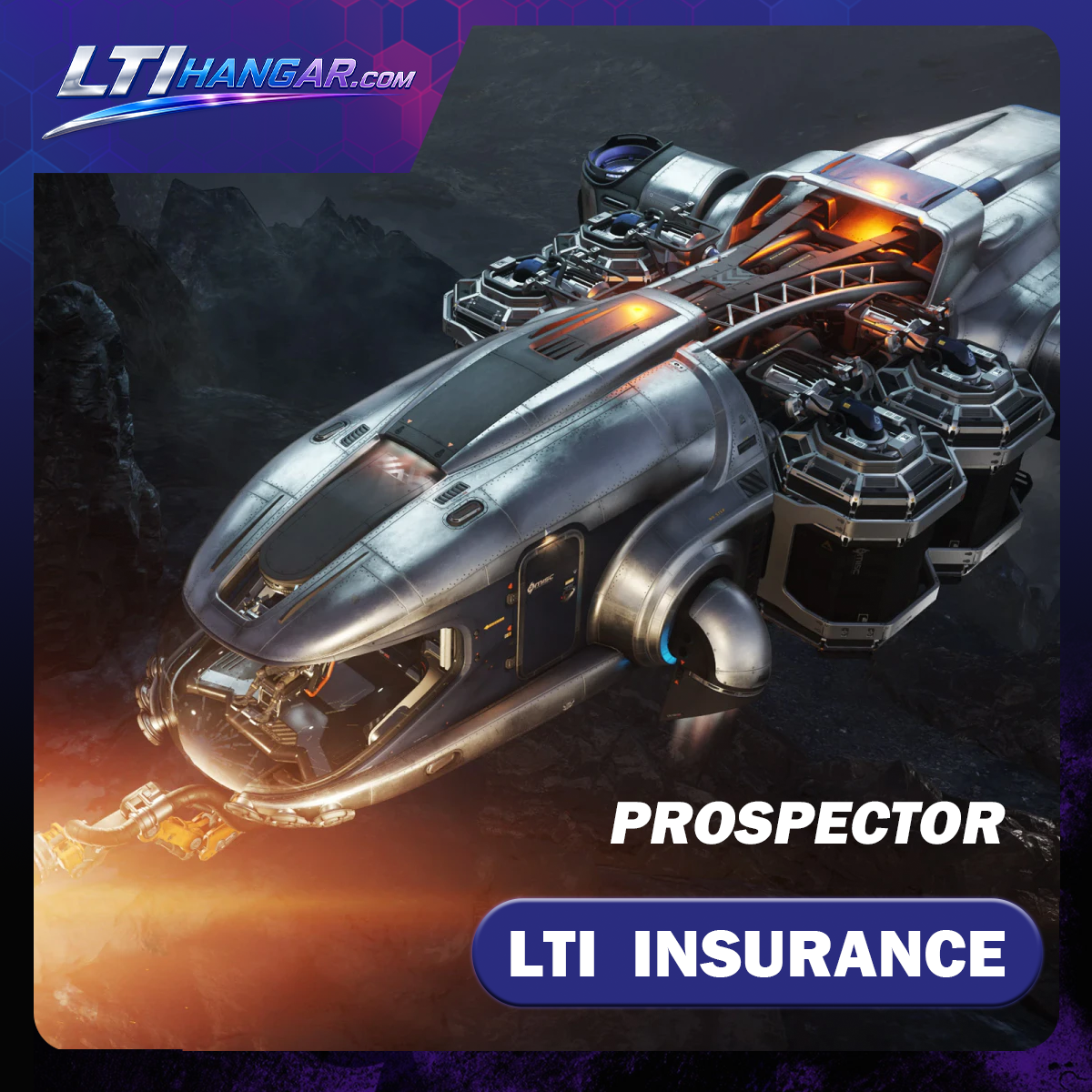
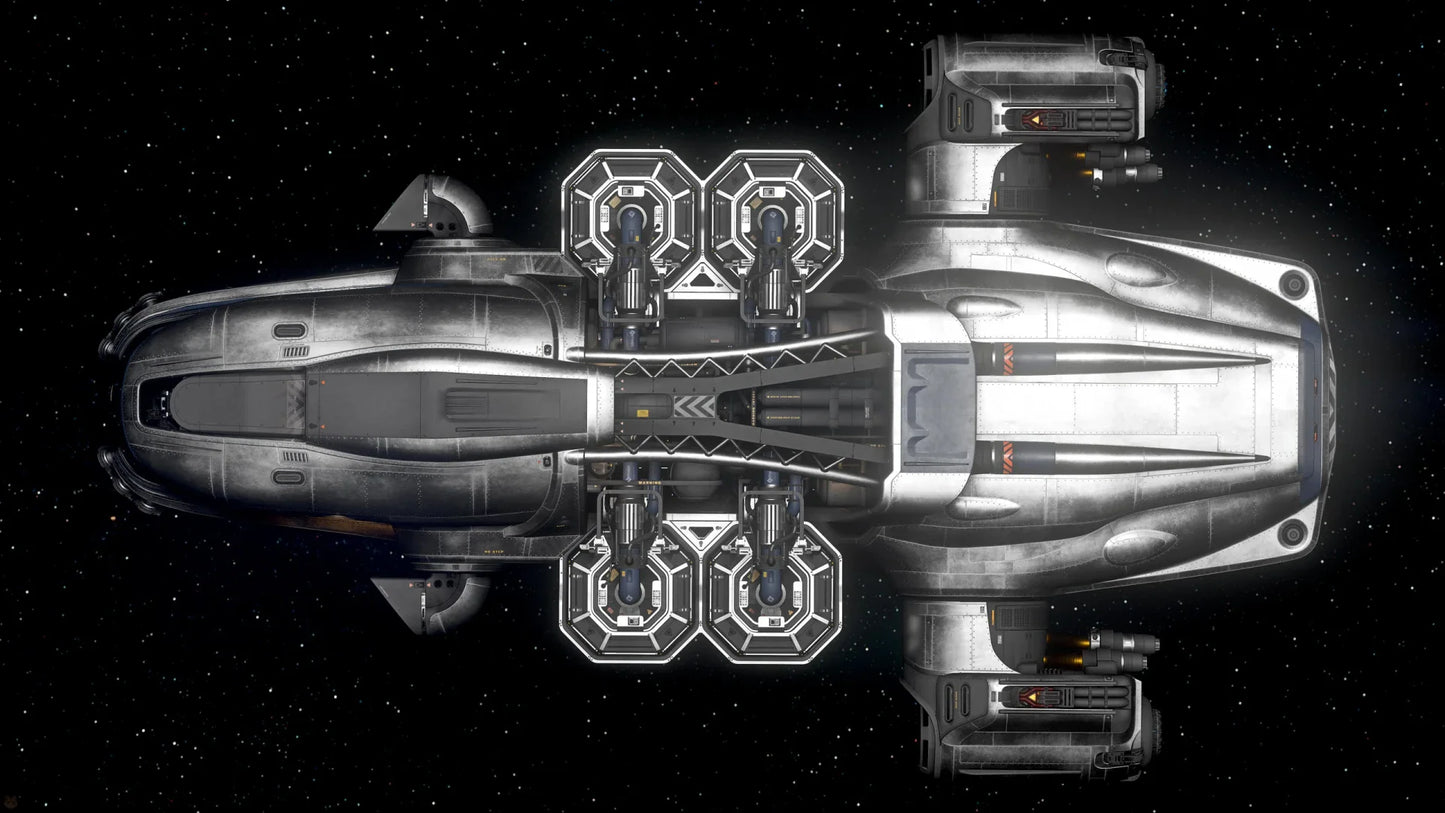
Prospector - Standalone Ship
Bitte beachte unsere Lieferzeiten.
- Star Citizen Schiffe: meist 20–30 Minuten; maximal 12 Stunden.
- Star Citizen aUEC: Lieferung in 3–5 Minuten.
- Star Citizen CCU-Upgrades: meist 20–30 Minuten; maximal 12 Stunden.
- Star Citizen Schiff-Lackierungen: meist 5 Minuten; maximal 12 Stunden.
- Star Citizen Items: meist 5 Minuten; maximal 12 Stunden.
So löst du Star Citizen Schiffe, CCUs, Paints und Items ein
Um diesen Artikel anzunehmen, benötigst du ein Konto auf robertsspaceindustries.com. Für den Zugang zu Star Citizen benötigst du außerdem ein Game Package.
Alle Bestellungen werden an die E-Mail-Adresse gesendet, die du beim Checkout angegeben hast. Du erhältst eine E-Mail mit dem Betreff „Someone sent you a gift from Roberts Space Industries“ von no-reply@robertsspaceindustries.com. Öffne diese E-Mail und klicke auf den blauen „claim gift“-Button, um deine Bestellung einzulösen.
Wenn deine Bestellung auf einem RSI-Konto landen soll, das nicht mit der von dir angegebenen E-Mail-Adresse verbunden ist, logge dich einfach vor dem Einlösen in einem separaten Tab in das richtige RSI-Konto ein. Bitte aktualisiere die RSI-Seite noch einmal, um sicherzugehen, dass du im richtigen Konto angemeldet bist.
Wenn du diesen Artikel als Geschenk kaufst, klicke mit der rechten Maustaste auf den blauen „claim gift“-Button und kopiere die Link-Adresse. Stelle dabei sicher, dass du aus deinem eigenen RSI-Konto ausgeloggt bist, damit du das Geschenk nicht versehentlich selbst einlöst.
Wichtige Sicherheitshinweise
Achtung: Alle Schiffe und Items können nur einmal verschenkt bzw. eingelöst werden. Sobald der Artikel eingelöst wurde, ist er dauerhaft an das RSI-Konto gebunden, das das Geschenk angenommen hat. Das gilt für Schiffe, CCUs, Paints, Rüstungen, Waffen und andere Items.
Bitte stelle sicher, dass du vor dem Einlösen der Geschenk-E-Mail im selben Browser in genau dem RSI-Konto angemeldet bist, auf dem du den Artikel erhalten möchtest.
Wir übernehmen keine Verantwortung, wenn der Artikel auf dem falschen RSI-Konto eingelöst wird.
So wendest du ein CCU-Upgrade an
Wenn du ein Cross Chassis Upgrade (CCU) gekauft hast, um ein Schiff auf ein anderes Schiff upzugraden, kannst du es über deinen RSI Hangar anwenden.
Zuerst musst du das CCU über die oben beschriebenen Lieferanweisungen einlösen, damit es in deinem RSI Hangar erscheint. Gehe anschließend auf der RSI-Website zu „My Hangar“.
Klicke dort auf den Pfeil neben deinem CCU, um die Details zu öffnen. Danach klickst du auf „Apply Upgrade“, wählst das gewünschte „Source Ship“ aus und gibst dein RSI-Passwort ein, um das Upgrade abzuschließen.
Wichtig: Die Versicherung, z. B. LTI, sowie andere Boni deines ursprünglichen Basisschiffs werden auf das neue Schiff übertragen.
Bei Upgrades von einem günstigeren Schiff auf ein teureres Schiff können mehrere CCUs notwendig sein.
Beispiel: Wenn du ein Upgrade von einer Merchantman auf eine Polaris kaufst, erhältst du zwei CCUs: Merchantman → Hammerhead und Hammerhead → Polaris. Je größer der Preisunterschied, desto mehr CCUs können im Upgrade-Pfad enthalten sein.
Sicher einkaufen: Kundenschutz bei LTI Hangar
Käuferschutz
Wenn du auf unserer Website kaufst, garantieren wir dir, dass du den richtigen Artikel genau wie beschrieben erhältst. Falls wir den Artikel nicht liefern können, bieten wir dir entweder einen Ersatz oder eine vollständige Rückerstattung an. Du kannst selbst wählen, welche Option du bevorzugst.
After-Sale-Schutz
Alle Artikel, die wir verkaufen, stammen aus unserem eigenen Bestand und sind durch unseren After-Sale-Schutz abgedeckt.
Sollte während der Lieferung oder innerhalb von bis zu 6 Monaten nach abgeschlossener Lieferung ein Problem mit einem Artikel auftreten, prüfen wir den Fall sorgfältig. Wenn festgestellt wird, dass der Fehler bei uns liegt, bieten wir dir entweder einen Ersatz oder eine Rückerstattung an.
In den meisten Fällen bedeutet das eine vollständige Ersatzlieferung, eine vollständige Rückerstattung oder ein Upgrade auf einen besseren Artikel, falls ein identischer Ersatz nicht verfügbar ist.
24/7-Kundenservice
Erlebe zuverlässigen Support mit unserem 24/7 Online-Kundenservice! Egal ob du Fragen hast, Hilfe benötigst oder eine schnelle Lösung brauchst – unser Team ist jederzeit für dich da.
Ganz gleich, zu welcher Uhrzeit oder an welchem Tag: Wir sind nur einen Klick entfernt und helfen dir genau dann, wenn du Unterstützung brauchst.
Tritt jetzt unserem Discord bei und erlebe den LTI Hangar Unterschied!
Auf Lager · RSI-Geschenk-Lieferung · Ø 20 Min. Lieferzeit

Contact our Discord live support; we are online 24/7.

Warum Star-Citizen-Spieler LTI Hangar wählen
Schnelle Lieferung für Schiffe, echter Support und ein klarer RSI-Geschenkprozess – für Star-Citizen-Spieler, die einfacher und sicherer kaufen möchten.
Ø 20–30 Min. Lieferzeit
24/7 Discord-Support
Ein Team aus Gamern mit über 10 Jahren Erfahrung.
Sicher einkaufen · Eigener Bestand, keine Drittanbieter-Angebote
Zuverlässiger Support nach dem Kauf
Bestellung in Echtzeit verfolgen
Häufig gestellte Fragen
Wie lange dauert die Lieferung in der Regel?
Star Citizen Schiffe, CCUs, Paints und Items werden normalerweise innerhalb von 20–30 Minuten geliefert.
In seltenen Fällen kann die Lieferung bis zu 12 Stunden dauern – zum Beispiel bei hohem Bestellvolumen, RSI-Gifting-Limits, Account-Status-Problemen oder wenn eine manuelle Prüfung erforderlich ist.
Schiff-Lieferungen überschreiten in der Regel nicht 12 Stunden, außer es gibt besondere Gründe wie RSI-Systemlimits, Account-Einschränkungen oder eine notwendige Kundenverifizierung.
Ist meine Schiff-Bestellung abgesichert?
Ja. Sicherheit und Zuverlässigkeit stehen bei uns an erster Stelle.
Alle Schiffe, die du bei LTI Hangar kaufst, stammen aus unserem eigenen Bestand – ohne externe Verkäufer oder unbekannte Drittanbieter.
Jede Schiff-Bestellung wird mit klaren Liefernachweisen bearbeitet. So kann der Ablauf bei Support-Anfragen überprüft und nachvollzogen werden. Für berechtigte Probleme im Zusammenhang mit der Lieferung bieten wir außerdem einen lebenslangen After-Sale-Schutz.
Diese Kombination aus eigenem Bestand, nachvollziehbarer Lieferung und After-Sale-Schutz bieten viele Drittanbieter-Marktplätze nicht in dieser Form. Genau deshalb wählen viele Kunden LTI Hangar für sicherere Star Citizen Schiff-Käufe.
Was bedeutet unser lebenslanger After-Sale-Schutz?Warum bieten viele andere Marktplätze diesen Schutz nicht an?
In dem äußerst seltenen Fall, dass während der Lieferung oder zu irgendeinem Zeitpunkt nach abgeschlossener Lieferung ein Problem mit einem Item auftritt, prüfen wir den Fall sorgfältig.
Wenn festgestellt wird, dass das Problem durch einen Fehler unsererseits verursacht wurde, bieten wir entweder einen Ersatz oder eine Rückerstattung an.
Damit wir den Fall korrekt prüfen können, kann es erforderlich sein, dass du uns relevante Nachweise zur Verfügung stellst, z. B. Screenshots aus deinem RSI Hangar, Bestelldetails und Einträge aus dem RSI Hangar Log.
Das RSI Hangar Log kann dabei helfen, den Status und die Historie eines Schiffs nachzuvollziehen – zum Beispiel, ob das Item geclaimt, getauscht, gemeltet, übertragen oder nach der Lieferung anderweitig verändert wurde.
Wir prüfen die von dir bereitgestellten Nachweise, um die Ursache des Problems zu bestimmen.
Dieses Maß an Schutz wird von vielen Drittanbieter-Marktplätzen nicht in dieser Form angeboten, da sie häufig mit externen Verkäufern oder gemischten Inventarquellen arbeiten.
Bei LTI Hangar stammen alle Schiffe aus unserem eigenen Bestand, und jede Bestellung verfügt über klare Liefernachweise. Dadurch können wir sichereren und zuverlässigeren Support bieten.
Kann ich nach dem Einlösen von Schiffen, CCUs, Paints oder Items eine Rückerstattung beantragen?
Sobald das RSI-Geschenk eingelöst wurde, sind das Schiff, die CCU, der Paint oder das Item an das empfangende RSI-Konto gebunden. Aufgrund der Einschränkungen des Star Citizen Gifting-Systems kann ein eingelöstes Schiff normalerweise nicht erneut verschenkt, zurückgegeben, rückgängig gemacht oder erneut geliefert werden.
Aus diesem Grund sind bereits eingelöste Items normalerweise nicht für eine Stornierung oder Rückerstattung berechtigt.
Eine Korrektur, ein Ersatz oder eine Rückerstattung kann nur angeboten werden, wenn wir bestätigen, dass das Problem durch uns verursacht wurde – zum Beispiel durch einen falsch gesendeten Artikel, einen Lieferfehler oder ein anderes nachweisbares Lieferproblem auf unserer Seite.
Bitte stelle vor dem Einlösen des RSI-Geschenks sicher, dass du im richtigen RSI-Konto angemeldet bist. Sobald das Geschenk auf dem falschen Konto eingelöst wurde, kann es normalerweise nicht auf ein anderes Konto übertragen werden.
Was passiert, wenn ein falsches Schiff, eine falsche CCU, ein falscher Paint oder ein falsches Item geliefert wurde?
Wenn wir bestätigen, dass aufgrund eines Fehlers unsererseits ein falsches Item geliefert wurde, prüfen wir den Fall und bieten – sofern zutreffend – eine Korrektur, einen Ersatz oder eine Rückerstattung an.
Bitte kontaktiere uns mit deiner Bestellnummer, der beim Checkout verwendeten E-Mail-Adresse und klaren Screenshots aus deinem RSI Hangar.
Warum sehe ich andere Schiffsnamen in meinem RSI Hangar?
Standalone CCU’d Ship
Ein Standalone CCU’d Ship ist ein vollständiges Ship oder Vehicle. Es ist kein Upgrade!
CCU’d bedeutet nur, dass dieses Ship erstellt wurde, indem ein kleineres Ship oder Vehicle auf das Ship upgegradet wurde, das du kaufst.
Bitte beachte außerdem: In der Gift-E-Mail wird möglicherweise nur das Base Ship angezeigt, das für das Upgrade verwendet wurde.
Keine Sorge – das tatsächliche Ship, das du in deinem Hangar siehst, ist das Ship, das du bestellt hast.
Zum Beispiel sieht ein CCU’d Polaris im Hangar auf der RSI-Website so aus:
SO FUNKTIONIERT ES
Schnell, einfach und sicher – erfahre, wie es funktioniert!

IST DER KAUF SICHER?
Sicherheit hat für uns höchste Priorität.
Im Gegensatz zu vielen anderen Websites verkaufen wir ausschließlich unseren eigenen Bestand. Wir erlauben keine externen Verkäufer auf unserer Plattform.
So stellen wir maximale Sicherheit, ein gutes Gefühl beim Kauf und besonders schnelle Lieferungen sicher.

SO FUNKTIONIERT DIE LIEFERUNG
Das Item wird über das RSI-Gifting-System geliefert. Nach deiner Bestellung senden wir das Item an die E-Mail-Adresse, die du beim Checkout angegeben hast.
Sobald du die Gift-E-Mail erhalten hast, öffne sie einfach und klicke auf „Claim“. Das Item wird dann dem RSI-Konto hinzugefügt, in dem du gerade eingeloggt bist.

After-Sale-Schutz
Alle Items, die wir verkaufen, stammen aus unserem eigenen Bestand und sind durch unseren After-Sale-Schutz abgedeckt.
Sollte während der Lieferung oder innerhalb von bis zu 6 Monaten nach abgeschlossener Lieferung ein Problem mit einem Item auftreten, prüfen wir den Fall sorgfältig.
Wenn festgestellt wird, dass der Fehler bei uns liegt, bieten wir entweder einen Ersatz oder eine Rückerstattung an.

Kontakt aufnehmen
*Star Citizen* ist ein komplexes Universum! Wenn du Fragen hast, helfen wir dir jederzeit gerne weiter. Wir sind 24/7 online, um dich zu unterstützen.
Außerdem findest du in unserem Discord-Channel zusätzliche Rabattcodes und Giveaways!
MISC Prospector Standalone Ship Gameplay Guide
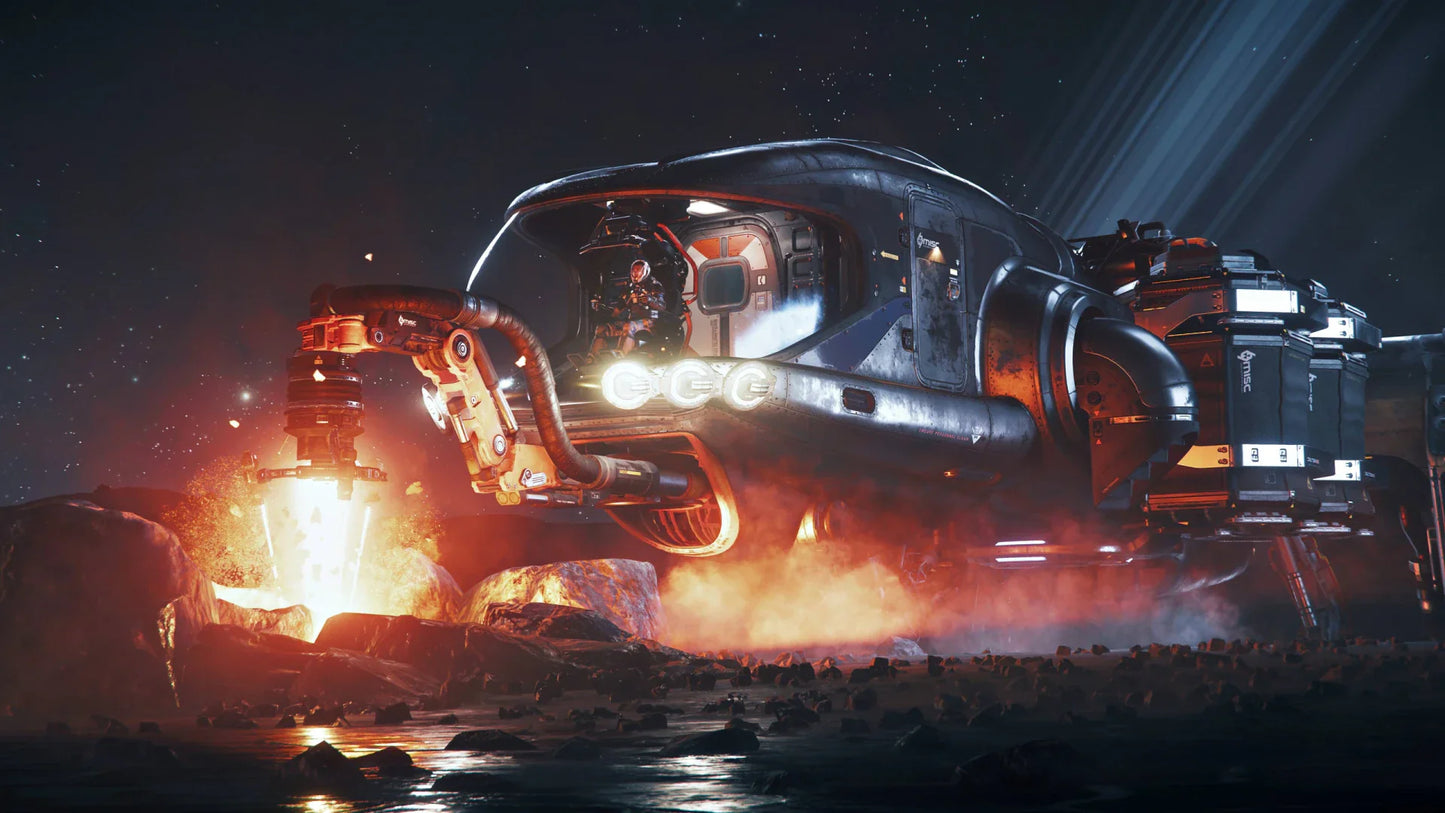
The MISC Prospector is a single-seat light mining ship built for Star Citizen players who want independent asteroid and planetary mining, precision resource extraction, interchangeable mining equipment, 32 SCU of raw-ore capacity, and a practical personal industrial ship that can be operated without a crew.
It is not a cargo hauler, refinery ship, multicrew mining platform, salvage vessel, combat ship, or ground-mining vehicle. The Prospector is best understood as the standard solo ship-mining platform: a compact MISC industrial vessel that allows one pilot to locate deposits, fracture mineable rocks, extract valuable material, carry raw ore in dedicated mining bags, and return the haul for direct sale or refining.
MISC originally designed the Prospector specifically around one-person mining. RSI describes it as particularly effective at locating smaller, valuable mineral deposits and extracting selected resources rather than operating at the mass-production scale of larger industrial ships.
The safest product-page positioning is simple:
The Prospector is the mining ship you choose for independent resource hunting, precision extraction, and manageable solo operation — not for multicrew production, onboard refining, normal cargo hauling, or combat.
Build Your MISC Mining Fleet with the Prospector
The Prospector is one of the more direct entry points into dedicated ship-based industry in Star Citizen. It gives one player almost everything required for the extraction side of the mining profession: resource scanning, ship-based mining, rock fracturing, ore extraction, dedicated mineral storage, interchangeable mining equipment, planetary mining, asteroid mining, crew habitation, and quantum travel.
Unlike the ARGO MOLE, the Prospector does not require separate mining-laser operators. Unlike the ROC, it does not require a transport ship to reach distant deposits. Unlike larger future mining vessels, it can be launched, operated, and returned to a refinery entirely by one player. RSI explicitly designed the Prospector around one miner operating from the pilot seat.
If you are looking to acquire this MISC mining vessel, you can explore our available options in the Star Citizen Ships and Vehicles Collection.
MISC Prospector Key Specifications
Current Alpha 4.9.0 reference data lists the Prospector at approximately 26.5 × 16.5 × 8 meters, with one crew member, 32 SCU of ore capacity, 156 m/s SCM speed, 994 m/s maximum speed, a Size 1 Arbor MH1 mining laser, two Size 1 defensive guns, and dedicated mining ore pods. These values remain subject to live-game balancing.
| Specification | MISC Prospector | Gameplay Meaning |
|---|---|---|
| Manufacturer | Musashi Industrial & Starflight Concern | MISC’s purpose-built personal mining platform. |
| Role | Light Mining | Designed for one-player asteroid and surface resource extraction. |
| Status | Flight Ready | Available for current mining gameplay. |
| Crew | 1 | Mining and flight systems are designed around one operator. |
| Length | 26.5 m current reference | Compact industrial ship suitable for normal hangars and pads. |
| Width | 16.5 m | Manageable footprint for planetary and asteroid mining. |
| Height | 8 m | Includes cockpit, living area, equipment, and ore-storage structures. |
| Current SCM Speed | 156 m/s | Industrial handling rather than fighter mobility. |
| Current Maximum Speed | 994 m/s | Adequate for travel but not an interceptor or fast courier. |
| Normal Cargo Grid | 0 SCU | It is not a conventional cargo hauler. |
| Ore Capacity | 32 SCU | Dedicated mineral storage for extracted raw ore, not normal freight or commodity cargo. |
| Ore Storage | 4 mining pods / bags | Current standard arrangement divides ore capacity across external mining storage. |
| Mining Equipment | 1× Size 1 mining arm | Main resource-fracturing and extraction system. |
| Current Mining Laser | Arbor MH1 | Standard Size 1 mining laser in the current reference loadout. |
| Pilot Weapons | 2× Size 1 | Emergency self-defense only. |
| Current Factory Guns | 2× CF-117 Bulldog repeaters | Light defensive energy weapons. |
| Current Shield Listing | 3× Size 1 Bulwark positions | Industrial protection rather than combat durability. |
| Radar | Surveyor-Lite | Supports resource searching and general ship awareness. |
| Quantum Drive | Size 1 | Standard small-ship travel capability. |
| Crew Facilities | Bed and personal living space | Supports longer independent mining sessions. |
| Core Gameplay | Scanning, fracturing, extraction, ore transport | Complete solo extraction workflow before refining or selling. |
Current data clearly separates 0 SCU conventional cargo from 32 SCU ore capacity. The 32 SCU should therefore be marketed as mineral storage, not ordinary freight capacity.
What Makes the MISC Prospector Valuable?
The Prospector is valuable because it gives one player a dedicated mining vessel without requiring the larger operating scale of a multicrew industrial ship.
A hand tool is too small for major ship-mining deposits. A ROC specializes in deposits between handheld and spacecraft scale. A MOLE increases mining power but introduces multiple mining stations and crew requirements. The Prospector sits directly between those approaches.
The Prospector is not the largest mining ship — it is the mining ship designed to make one pilot economically useful without a mining crew.
Its defining qualities include:
- Single-player operation
- Dedicated mining scanner
- Ship-sized mining laser
- 32 SCU raw-ore capacity
- Swappable mining equipment
- Asteroid mining
- Planetary mining
- Crew habitation
- Independent quantum travel
- Low logistical complexity
- Established mining gameplay
- Clear progression into larger industrial ships
The Prospector’s main strength is independence. A player can decide to mine, retrieve the ship, travel to a resource location, complete the extraction, and deliver the ore without waiting for several friends to fill specialist seats.
Solo Mining Gameplay Role
The Prospector is specifically designed for one-person mining. RSI’s original design notes state that the ship is operated by a single miner and relies on the ship’s scanning system to locate nearby mineral deposits rather than requiring a separate dedicated scanner operator.
The Prospector gives one player control over every stage of extracting the ore, which is why it remains the standard solo mining ship.
The mining itself is only half of the profession. Choosing what not to collect can be just as important as breaking the rock.
Resource Scanning and Prospecting
The Prospector’s name reflects one of its most important roles: finding valuable deposits. RSI described its scanning system as a larger and more advanced mineral detector suited to locating pockets of resources across local space and planetary surfaces.
The Prospector makes money by finding the right rock before it worries about breaking the rock.
The value of the Prospector depends heavily on the pilot becoming good at this decision-making loop.
Size 1 Mining Laser and Mining Arm
Current Alpha 4.9.0 data lists one Size 1 mining arm with an Arbor MH1 mining laser in the factory configuration.
One mining laser keeps the Prospector simple, but it also means every difficult rock must be handled by that one mining system.
Mining rewards controlled input rather than simply maximum laser power.
Mining Heads, Modules, and Loadout Flexibility
The Prospector’s mining equipment can be changed to suit different deposits. RSI has long positioned mining equipment around trade-offs: some tools may apply more power, others provide greater control, improved resistance characteristics, or other specialized advantages.
The correct Prospector setup depends on the rocks you intend to mine; there is no single mining head that is automatically ideal for every deposit.
The safest product-page wording is to emphasize interchangeable mining equipment, not promise one permanent “best loadout,” because mining balance can change between patches.
Fracturing and Rock Management
Mining is not simply a damage system. The pilot needs to increase the target’s energy while avoiding an uncontrolled reaction.
The Prospector rewards a pilot who controls the fracture rather than one who simply uses maximum power.
Rock difficulty can vary, and some deposits will simply be beyond the comfortable capability of a particular Prospector setup. That is part of the difference between solo mining and larger multicrew mining platforms.
Extraction Gameplay
Once a deposit has been fractured into collectible sections, the Prospector extracts the useful material into its ore bags.
Breaking the rock creates the opportunity; choosing the right fragments determines what actually fills the ship.
Mining efficiency often comes from resource selection, not simply faster extraction.
32 SCU Ore Capacity
The Prospector currently carries 32 SCU of raw ore across its mining storage system. This is not 32 SCU of normal freight.
The Prospector carries 32 SCU of mined material, not 32 SCU of ordinary cargo boxes.
Ore Bags and Industrial Logistics
The Prospector uses dedicated external ore pods. Current Alpha 4.9.0 vehicle data lists four MISC Ore Pod positions, with a combined standard ore capacity of 32 SCU.
The Prospector stores mining output in purpose-built ore bags so the mineral load can remain part of an industrial workflow rather than ordinary box cargo.
RSI’s Expanse design specifically describes compatibility with standardized mineral storage pods from mining ships such as the Prospector. This makes the Prospector part of a larger industrial logistics ecosystem rather than a conventional cargo vessel.
Refining Expectations
The Prospector does not have an onboard refinery. RSI explicitly confirms that neither the Prospector nor the MOLE can refine their own ore. Refining is a separate industrial function.
The Prospector extracts the ore; another facility or refinery ship turns that raw ore into refined commodities.
Current mining gameplay generally gives the pilot two choices after returning with a load: sell raw ore immediately or refine the ore at a refinery deck.
The Prospector can complete the mining trip alone, but maximizing the value of refined ore usually introduces a second logistics step.
Prospector and Cargo-Ship Workflow
Once ore has been refined at a refinery station, the player needs appropriate cargo capacity to move the refined commodities to their final buyer.
This creates a common two-ship industrial fleet: Prospector → Refinery → Cargo Ship → Trade Terminal. This is one reason the Prospector pairs naturally with ships such as the Freelancer, Freelancer MAX, Cutlass Black, C1 Spirit, Zeus Mk II CL, or Constellation Taurus.
The Prospector earns the minerals; the cargo ship finishes the logistics.
Planetary and Asteroid Mining
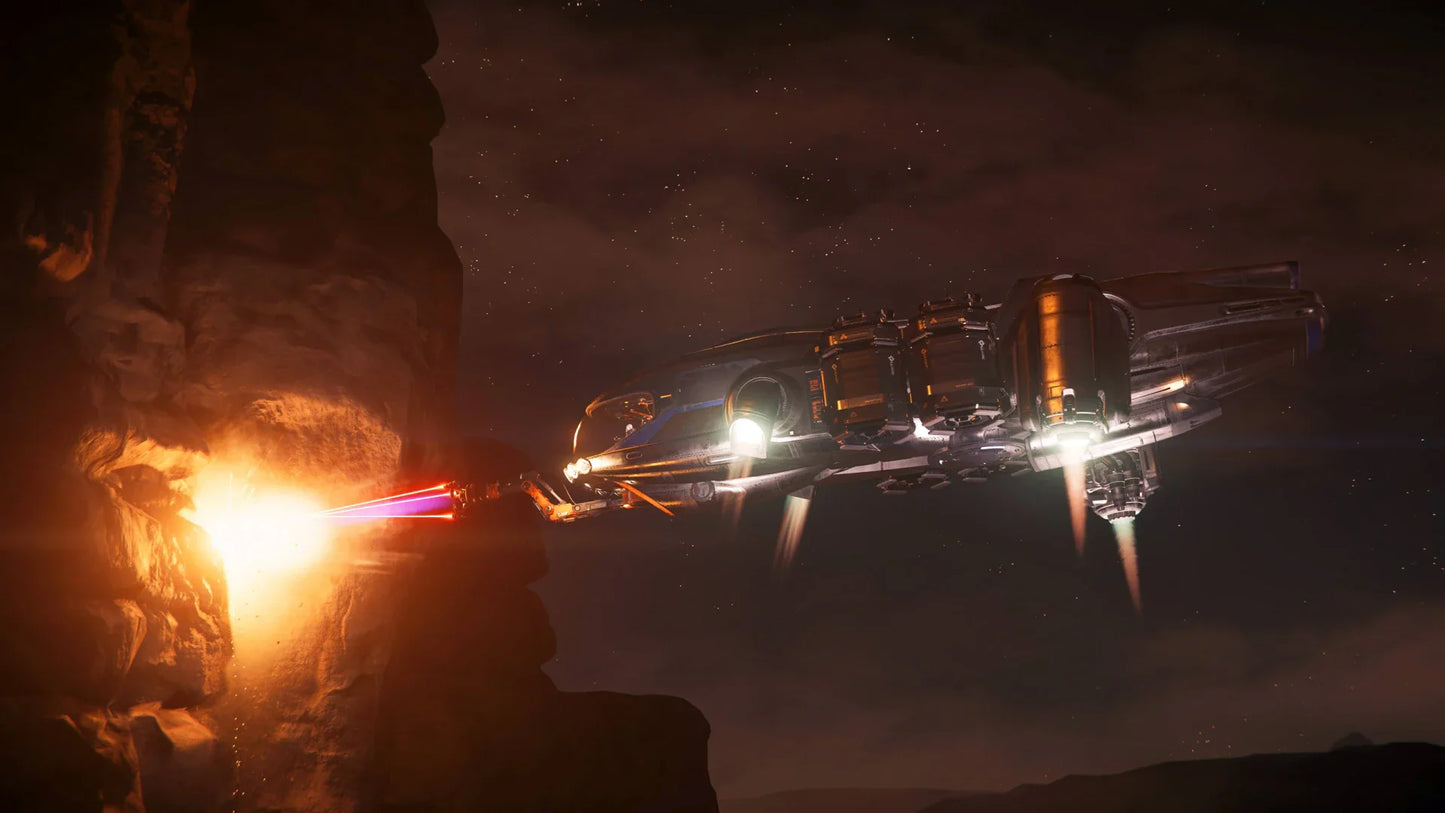
The Prospector can mine both in space and on planetary surfaces. RSI’s original Q&A specifically described both forms of operation, with the ship able to mine exposed asteroid resources in space and planetary deposits when operating near the surface.
The Prospector is not tied to one mining environment — the pilot can search both asteroid fields and planetary terrain for suitable deposits.
Solo Gameplay Expectations
The Prospector is one of Star Citizen’s more direct dedicated solo profession ships. One player controls the mining laser and ship directly from the pilot position.
Solo operation is not a compromise on the Prospector — it is the design goal.
Living Quarters and Independent Operation
The Prospector includes a bed and personal crew facilities for its single operator.
The Prospector is small, but it is still designed as a working spacecraft rather than a mining laser attached to an open cockpit.
Defensive Weapons and Combat Expectations
The Prospector is not built for combat. Current Alpha 4.9.0 data lists two Size 1 CF-117 Bulldog laser repeaters.
The Prospector has guns because mining can be dangerous — not because the Prospector is meant to win fighter battles.
The mining laser itself should not be treated as a combat weapon. RSI notes that its high power draw, low combat damage, and short effective combat range make it poorly suited for fighting ships.
Shields and Survivability
Current Alpha 4.9.0 component data lists three Size 1 Bulwark shield positions on the Prospector.
The Prospector’s defenses are there to give the miner time to leave — not permission to finish the rock while someone is shooting at the ship.
Speed and Handling Expectations
Current Alpha 4.9.0 data lists approximately 156 m/s SCM speed and 994 m/s maximum speed. The Prospector handles like a compact industrial ship.
The Prospector is maneuverable enough to work precisely around rocks, but it is not fast enough to rely on speed after a fighter has already reached it.
Real Player Use: Where the Prospector Feels Good
The Prospector feels best when the player enjoys the entire search-and-selection process rather than only the final sale.
The Prospector feels rewarding when finding the right deposit matters as much as operating the mining laser.
A practical Prospector session can also include long periods where the ship’s solo advantage feels less exciting. In those moments, the Prospector feels less like a quick-money ship and more like a profession tool that rewards patience, preparation, and good judgment.
When the Prospector’s Advantage Becomes Less Important
The Prospector should not be presented as the best mining platform for every player. Its solo advantage becomes less important when several miners are already working together or when massive deposit power is required.
When several miners are already working together, the Prospector’s greatest advantage — complete solo independence — matters less.
Direct Vehicle Comparisons
MISC Prospector vs ARGO MOLE
The Prospector is built for one player. The ARGO MOLE is designed around several mining operators and three independently controlled mining lasers. RSI confirms that each MOLE mining laser requires its own operator and cannot all be controlled simultaneously by one player.
| Ship | Best For | Main Difference |
|---|---|---|
| MISC Prospector | Solo ship mining | One pilot controls flight and one mining laser directly. |
| ARGO MOLE | Multicrew mining | Three independent mining stations support larger group operations. Supports Carbon Edition variants. |
Choose the Prospector if you want to mine alone. Choose the MOLE if you regularly have a real mining crew.
MISC Prospector vs Greycat ROC & ROC-DS
Surface extraction vehicles scale from single-seat buggies up to multi-crew ground platforms.
| Vehicle | Best For | Main Difference |
|---|---|---|
| MISC Prospector | Spacecraft-scale mineral deposits | Flies directly to mining sites in space or atmosphere; 32 SCU ore capacity. |
| Greycat ROC | Surface gem mining | Ground vehicle designed for gem deposits; needs a carrier ship like the Cutlass Black. |
| Greycat ROC-DS | Two-player ground mining | Two-seat ground vehicle with a dedicated external seat for the mining arm operator. |
Choose the Prospector for ship mining. Choose the ROC for ground-vehicle gem mining. Choose the ROC-DS for cooperative surface mining.
MISC Prospector vs MISC Expanse & RSI Arrastra
| Ship | Best For | Main Difference |
|---|---|---|
| MISC Prospector | Mineral extraction | Finds, fractures, and collects raw ore into external pods. |
| MISC Expanse | Mobile refining | Processes raw ore extracted by mining ships into refined commodities. |
| RSI Arrastra | Large deep-space mining operations | Larger lasers, onboard refining, vehicle support, and multicrew capability. Compare to capital Orion platforms. |
Choose the Prospector to mine the ore. Choose the Expanse to refine the ore. Choose the Arrastra if you want to operate a complete deep-space mining expedition.
MISC Prospector vs MISC Fortune & Drake Vulture
| Ship | Best For | Main Difference |
|---|---|---|
| MISC Prospector | Solo ship mining | Extracts natural minerals and ore from rocks and asteroids. |
| MISC Fortune | Solo light salvage | Recycles ship wrecks with an automated external box dispenser. |
| Drake Vulture | Solo light salvage | Scrapes hull, processes structural salvage, and recovers ship components manually. |
Choose the Prospector if you want to mine natural resources. Choose the Fortune or Vulture if you want to recycle abandoned ships.
MISC Prospector vs Mining and Industrial Progression Family
The Prospector should be placed carefully within the mining and industrial progression family.
| Mining / Industrial Option | Best For | Main Difference |
|---|---|---|
| MISC Prospector | Solo spacecraft mining | One pilot, one mining laser, 32 SCU raw-ore capacity, and independent extraction. |
| Greycat ROC | Ground-vehicle gem mining | Surface deposits between handheld mining and ship mining. |
| Greycat ROC-DS | Two-player surface mining | Cooperative ground mining with a dedicated mining-arm operator. |
| ARGO MOLE | Multicrew ship mining | Three independent mining lasers for several mining players. |
| MISC Expanse | Mobile refining support | Refines raw ore pods rather than extracting deposits. |
| RSI Arrastra | Large mining expedition | Larger lasers, onboard refining, vehicle support, and greater crew/logistics. |
| Cargo Ships | Refined commodity transport | Move refined products like C1 Spirit or Freelancer MAX after refining orders are complete. |
Choose the Prospector when you want to mine alone from a spacecraft. Choose the ROC when surface gems are the target. Choose the MOLE when several mining players are available. Choose the Expanse when refining raw ore is the goal. Choose the Arrastra when the operation needs larger mining lasers, onboard refining, and a larger crew.
Cargo, Mining, and Practical Expectations
The Prospector is specialized. It should not be sold as a universal industrial or daily-use ship.
If the buyer wants:
- Solo ship mining, choose the Prospector.
- Multicrew mining, choose the MOLE.
- Surface-gem mining, choose the ROC.
- Two-player ground mining, choose the ROC-DS.
- Mobile refining, choose the Expanse.
- Larger deep-space mining and refining, choose the Arrastra.
- Solo salvage, choose the Fortune or Vulture.
- Commercial cargo hauling, choose a dedicated cargo ship.
The Prospector is valuable because it gives one player the extraction side of the mining profession — not because it replaces every mining, refining, cargo, and industrial ship.
Explore MISC Prospector Upgrade Paths
Players who prefer to build toward the Prospector from another pledge can explore available Star Citizen Prospector CCU Upgrades and plan a MISC or industrial upgrade path over time.
Before purchasing, buyers should confirm whether the listing is a standalone ship or a CCU upgrade. Standard variants and special paint packages use the same baseline specifications. For full selection options, browse the Star Citizen Ships and Vehicles Collection.
MISC Prospector vs Other Star Citizen Industrial Ships
| Ship Fleet Option | Primary Core Role | Compared with the Prospector |
|---|---|---|
| MISC Prospector | Solo Ship Mining | Good for independent spacecraft mining and 32 SCU ore storage. |
| ARGO MOLE | Multicrew Mining | Better when several players can operate independent mining lasers. |
| Greycat ROC | Ground Mining | Better for smaller surface-gem deposits. |
| Greycat ROC-DS | Two-Player Ground Mining | Better for cooperative surface extraction. |
| MISC Expanse | Mobile Refining | Processes ore rather than extracting it. |
| RSI Arrastra | Large Mining / Refining | Better for larger crews, bigger deposits, and onboard refining. |
| MISC Fortune | Solo Salvage | Better for wreck scraping and automated salvage handling. |
| Drake Vulture | Solo Salvage | Better for structural salvage and component recovery. |
| Aegis Reclaimer | Heavy Salvage | Better for organization-scale wreck processing. |
| Crusader C1 Spirit | Medium Cargo | Better for transporting refined commodities. |
| MISC Freelancer MAX | Cargo Transport | Better for industrial logistics after refining. |
| RSI Zeus Mk II CL | Medium Freight | Better for moving finished commodities rather than extracting them. |
MISC Prospector vs ARGO MOLE
The MOLE is better for organized mining groups with several players who want active mining roles. The Prospector is better for independent miners who want to launch, search, fracture, extract, and return without organizing a crew. Choose the Prospector for solo mining. Choose the MOLE for crew mining.
MISC Prospector vs Greycat ROC
The ROC is better for ground-vehicle gem mining. The Prospector is better for spacecraft-scale mining in asteroid fields, moons, and planetary mining areas. Choose the ROC for smaller surface deposits. Choose the Prospector for ship mining.
MISC Prospector vs MISC Expanse
The Expanse is a refining ship, not a mining ship. The Prospector creates raw ore. The Expanse processes that ore. Choose the Prospector when you want to extract minerals. Choose the Expanse when your industrial fleet needs mobile refining support.
MISC Prospector vs RSI Arrastra
The Arrastra is better for larger mining and refining operations with more crew, more logistics, and a larger industrial footprint. The Prospector is better for low-complexity personal mining. Choose the Prospector for independent extraction. Choose the Arrastra for a larger expedition.
MISC Prospector vs Drake Vulture
The Vulture is better for salvage and wreck processing. The Prospector is better for mining natural mineral deposits. Choose the Vulture if you want to dismantle ships. Choose the Prospector if you want to search for and extract ore.
MISC Prospector General Strengths and Limitations
| Strategic Strengths | Operational Limitations |
|---|---|
| Purpose-built solo mining ship | Only one mining laser. |
| 32 SCU dedicated ore capacity | No conventional cargo capacity (0 SCU). |
| Four dedicated ore pods | Storage fills quickly during productive mining sessions. |
| Interchangeable mining equipment | Difficult rocks may require more specialized equipment or a larger ship. |
| Dedicated resource scanning | Searching for valuable deposits can take significant time. |
| Can mine asteroids and planetary deposits | Industrial handling makes dangerous environments risky. |
| Pilot controls the full mining loop | No second player can increase mining output simultaneously. |
| Bed and personal habitation | No passenger or multicrew facilities. |
| Two defensive guns | Very weak against dedicated combat ships. |
Who Should Buy the MISC Prospector?
The MISC Prospector is best for players who want to mine independently without relying on a regular crew. It is especially suitable for solo industrial players, mining-focused pilots, MISC collectors, and drivers progressing up from ROC surface mining.
It is also a useful fleet addition for players who already own a cargo ship like the Freelancer MAX or C1 Spirit. The Prospector can extract the raw ore while the cargo ship handles the transport of refined commodities after refinery orders are completed.
MISC Prospector FAQ
Is the MISC Prospector worth buying in Star Citizen?
Yes, if you want a dedicated solo mining ship capable of scanning, fracturing, extracting, and transporting 32 SCU of raw ore. It is not ideal if you want combat, normal cargo hauling, multicrew mining, or onboard refining.
Is the MISC Prospector Flight Ready?
Yes. The Prospector is Flight Ready and its mining gameplay is currently available.
What is the main role of the Prospector?
The Prospector is a single-seat light mining ship designed to locate and extract mineral deposits in space and on planetary surfaces. RSI specifically designed it around independent miners.
How many crew members does the Prospector need?
One. The ship and its living facilities were designed for a single operator.
How much ore does the Prospector carry?
Current Alpha 4.9.0 data lists 32 SCU of raw-ore capacity.
Does the Prospector have 32 SCU of normal cargo?
No. Current data lists 0 SCU conventional cargo and 32 SCU ore capacity. Its mining bags are designed for extracted mineral material rather than ordinary freight.
Can the Prospector refine its own ore?
No. RSI explicitly states that the Prospector and MOLE do not contain refinery capability. Ore can be sold raw or processed through refinery gameplay.
Prospector or MOLE: which should I choose?
Choose the Prospector if you normally mine alone. Choose the ARGO MOLE if you regularly have a crew available to operate several independent mining lasers.
Prospector or ROC: which should I choose?
Choose the Prospector for spacecraft-scale asteroid and planetary mining. Choose the ROC for smaller surface deposits that fall between handheld and full ship-mining scale.
Prospector or Vulture: which should I choose?
Choose the Prospector if you want to search for and extract natural mineral resources. Choose the Vulture if you want to recover value from wrecked spacecraft through salvage.
Will the Prospector’s specifications change?
Possibly. Current figures such as speed, shield setup, mining head performance, ore capacity behavior, mining values, and component balance remain subject to Star Citizen development and patch balancing.
The MISC Prospector is not the largest mining ship, strongest industrial vessel, safest ship in hostile space, or most versatile daily driver. Its value comes from giving one pilot a dedicated scanner, Size 1 mining system, 32 SCU of ore capacity, interchangeable mining equipment, habitation, and a complete extraction workflow inside one manageable spacecraft.
For players who enjoy searching for valuable deposits, carefully fracturing rocks, selecting the best material, and building a mining-and-refining economy without depending on several crew members, the Prospector remains a natural standard for personal ship mining.
Choose the Prospector because you want to be an independent miner — not because you expect one small mining ship to replace the MOLE, refinery ships, cargo haulers, ground miners, and large industrial platforms at the same time.


